
More than half of Spaniards will continue to work from home during the summer months
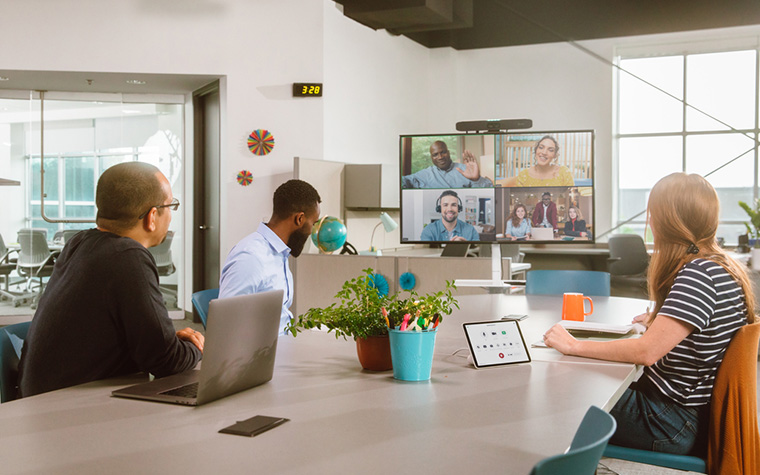
Teleworking has become an established reality among Spanish professionals. According to a Zoom survey, 55.4% say they will continue to telework from home during the summer months, confirming the definitive consolidation towards hybrid models beyond the pandemic context and the subsequent return to the office that many companies have implemented.
In addition, recent data from the INE indicate that approximately 14.6% of the working population, about 3.2 million people according to the Economically Active Population Survey (EPA), telework on a regular or occasional basis.
Teleworking in each generation: differences in frequency and preferences
Teleworking habits vary between generations. The baby boomersare the most likely to telework once a week, with 50 percent, followed by Generation Z with 45.15 percent, and millennials with 41 percent. As for teleworking twice a week, Generation Z leads with 26.45%, followed by millennials with 23.91% and baby boomers with 22.8%. For three days of weekly telecommuting, Generation Z stands out with 20?%, followed by millennials (14.91?%), baby boomers (10.88?%) and Gen X (12.42?%).
This pattern is evidence of how Generation Z is betting on a greater number of telecommuting days, reflecting their expectations of flexibility and work-life balance.
Artificial intelligence and remote work: a growing trend
The tools most commonly used in remote work continue to be email (28%), office software (21.2%) and video calls (18.4%). However, tools with artificial intelligence are positioning themselves strongly, as 45.7% of professionals already use them to search for informationón and 65.2% value them as akey resource for automating simple tasks.
The adoption of AI-driven technology solutions is especially marked by younger generations, with 49% of Generation Z using them on a daily basis, followed closely by millennials (47.2%) and Generation X (47.27%). Likewise, 69% of Gen Z and 67.88% of Gen X highlight AI as a fundamental tool to simplify routine tasks. In the previous 2024 survey, 61% of Spaniards rated these technologies positively, but the current trend points to a deeper integration of AI.
A bet on home-based productivity
Nearly half of the Spaniards surveyed (50.4?%) consider that teleworking increases the attractiveness of a job offer, a perception that is especially marked in Generation Z (58?%), followed by millennials (50.93?%) and Generation X (48.79?%). Regarding productivity, approximately 42.6% of Spaniards say that they optimize their work from home in a better way.
On the other hand, when faced with a possible total return to the office, 61.7% of Spaniards say that they would like to return to work from home.% of Spaniards negotiateíto maintain an híbrid model or lookífor another job with optionalóremote. This stance is especially strong among younger people: 50.32% among Gen Z and 42.55% among millennials, while among Gen X it drops to 35.45%.
According to this Zoom study telecommuting, in any of its modalities (hybrid or 100% remote) has ceased to be a temporary solution to become a preferred model and defended by the majority of Spanish professionals. Flexibility, higher productivity and work-life balance are the main drivers of this preference, especially in the younger generations.
In short, the growth in the adoption of tools based on artificial intelligence indicates that technology not only facilitates remote work, but also makes it more efficient and attractive. In this context, companies that are committed to flexibility and digitization will be better positioned to attract and retain talent in the short, medium and long term.