
Portable Translators: Travel Without Barriers, Even Offline
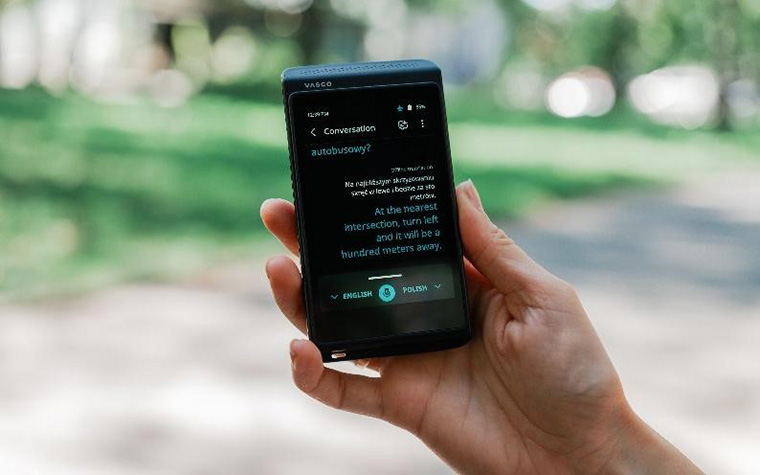
Portable translators are establishing themselves as a useful tool for overcoming language barriers during business trips. Offline translation, automatic language recognition, and new AI-powered features expand their capabilities during meetings, business trips, and international events?especially in situations where internet access isn?t guaranteed.
Connectivity is part of the everyday experience of any trip. However, having Internet access at all times isn?t always guaranteed. A flight, a rural or mountainous area, certain indoor spaces, or simply poor coverage can temporarily leave travelers without Internet access.
When this situation is compounded by a language barrier, simple actions such as asking for directions, requesting help, understanding instructions, or having a conversation can become complicated.
Portable voice translators have become an alternative for handling these situations without relying exclusively on a cell phone. As these devices have evolved, they?ve incorporated an increasing number of languages and features designed to enable faster and more natural communication.
Translate Even Without an Internet Connection
One of the features that expands the capabilities of these devices is offline translation. Some models allow you to download language packs in advance so you can use them later without mobile data or a Wi-Fi connection.
This feature is especially useful for business travelers who frequently travel between different countries and who may encounter connectivity issues at airports, on airplanes, on public transportation, at industrial facilities, in rural areas, or in certain meeting and event venues.
Pre-downloading languages provides a support tool even when coverage is unavailable. Travelers can thus hold basic conversations, ask for information, or understand certain directions without relying on an Internet connection.
A tool for business travel
Although translation apps installed on cell phones have greatly facilitated communication while traveling, devices specifically designed for this purpose offer an alternative for those who need to use translation frequently during their business trips.
Their usefulness ranges from a conversation with a driver or with staff at an establishment to a business visit, a meeting, or an encounter with international counterparts.
They can also be helpful in the MICE sector, especially at conferences, trade shows, and events with participants of different nationalities. In these settings, understanding an explanation, a direction, or an informal conversation can enhance the attendees? experience and foster better relationships among professionals.
Artificial Intelligence and Language Recognition
The evolution of these devices is not limited to increasing the number of available languages. The most recent models incorporate artificial intelligence and automatic language recognition systems, capable of identifying the speaker?s language based on a brief voice sample.
These features aim to reduce the steps required before starting a conversation and ensure that the technology interferes as little as possible with the interaction between people.
Another feature these devices include is listening mode, designed to analyze and translate speech in the surrounding environment. This can be useful for following a tour guide?s explanations, understanding announcements while traveling, or following presentations and conferences in other languages.
Less Reliance on Cell Phones
Portable translators also offer an alternative for those who want to reduce their reliance on smartphones while traveling. Having a device specifically dedicated to translation eliminates the need to constantly rely on a cell phone to communicate.
The ability to operate offline reinforces this autonomy and expands the scenarios in which these devices can be used.
For the business traveler, the ability to communicate remains a necessity even when cellular coverage is unavailable. The evolution of portable translation devices is moving precisely in that direction, with devices that are increasingly autonomous and designed to facilitate communication between people who do not share the same language.