
Searching for parking, more stressful than traffic jams
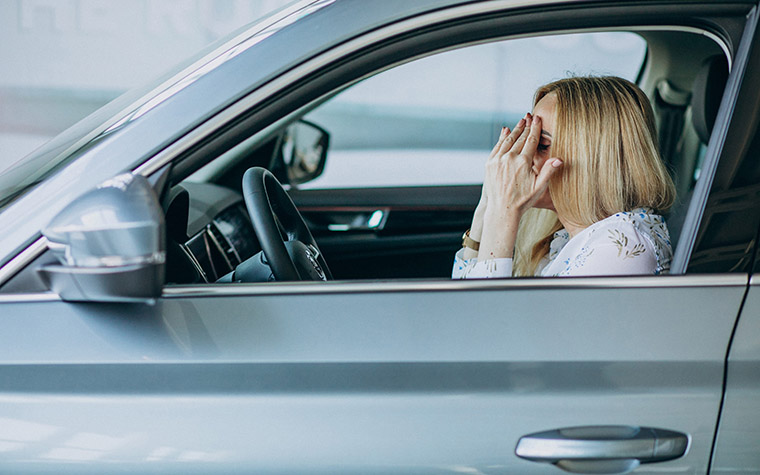
Although traffic usually makes the headlines when talking about urban mobility, a new survey conducted by Parclick, the online parking reservation app, reveals a significant fact: what most stresses Spanish drivers is not traffic or traffic jams, it's looking for parking.
According to the data, 52.3% of those surveyed cited lost time when parking as the factor that causes them the most anxiety, surpassing other concerns such as the high cost of parking (23.9%), urban restrictions and possible fines (12.8%) or vehicle safety (11%).
This reality highlights a daily problem that millions of people face every day, especially in large cities.
This daily stress, far from being anecdotal, has real implications for road safety: according to the Directorate General of Traffic (DGT), driving under stress increases the chances of having an accident by up to 28%.
Parking, a pending subject
The anxiety generated by not finding a parking space causes more than just inconvenience: it delays agendas, multiplies unnecessary turns and increases fuel consumption and polluting emissions. In a context where cities are moving towards more sustainable mobility models, planning parking becomes a key gesture to reduce stress at the wheel.
«Parking should not be a source of stress. At Parclick we work so that booking a parking space from your mobile phone is as common as ordering food or paying with an app. If you have a mobile phone, you have parking. Our goal is to make this action a natural part of your daily routine, making mobility easier, faster, more convenient and hassle-free," says Natalia González Donate, CCO of Parclick.
In fact, 86.2% of respondents say that their driving experience has improved since booking a parking space in advance, demonstrating the direct impact of anticipating this part of the journey on the driver's quality of life.
The survey results also shed light on the times when users most frequently resort to reserving a parking space. Most do so when traveling (41.3%), especially for trips involving the use of airports, or when accessing the city center (40.4%), two situations in which predictability and convenience are key, especially in light of the increasing restrictions and expansion of LEZs.
To a lesser extent, users use the app to attend events such as concerts, plays or other cultural plans (12.8%), and 5.5% say they use it in their day-to-day life;This shows that, although its use is still more common in specific contexts, advance booking is also beginning to establish itself as a practical solution for daily routine.
Another important fact is that 44.1% of those surveyed book a parking space between one and three times a month, which indicates a growing trend to integrate parking reservations as part of the regular commute and as a new mobility habit.