
Humanoid robots are back on the hospitality industry's radar
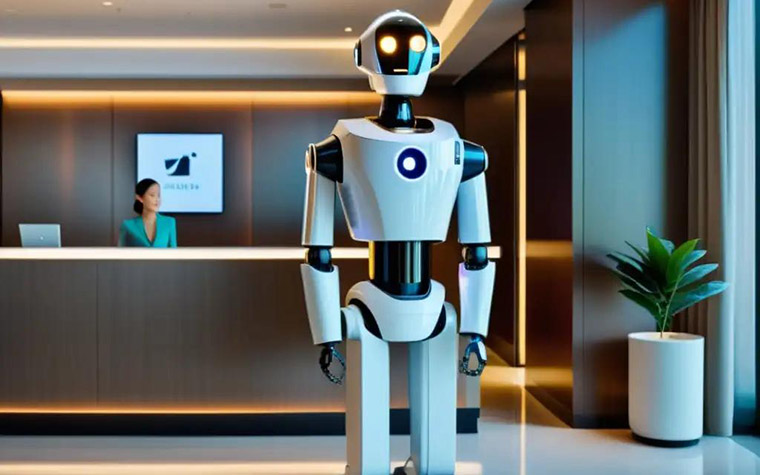
For years, humanoid robots were seen as a futuristic promise that was difficult to bring to life in the day-to-day operations of the hospitality industry. However, recent advances in artificial intelligence are reigniting their potential as an operational tool in the sector, opening the door to new models of customer interaction.
As Enchanted Tools explains to Travolution, the emergence of generative AI has radically changed the approach to robotics. Unlike older systems, which required each task to be programmed individually, the new models allow robots to interpret their environment, make decisions, and act autonomously.
?For a long time, robots needed thousands of lines of code to perform a single function, which made their widespread use unfeasible. Today, thanks to artificial intelligence, they can interact and adapt to different ??????ations”, explains Brieuc Colas, Sales & Partnership Manager at the company.
From automation to intelligent interaction
Technological evolution doesn?t just affect robotics. The hospitality sector is already incorporating AI-based solutions to optimize dynamic pricing, automate customer service through multilingual chatbots available 24 hours a day, or generate personalized marketing content.
In this context, humanoid robots are no longer merely mechanical tools but are becoming a physical extension of artificial intelligence. Technologies such as VLM (Vision Language Model) or VLA (Vision Language Action) allow the robot to identify what is happening around it, interpret it, and act accordingly.
Design to Build Trust
One of the main challenges remains customer acceptance. To address this, developers have focused on aspects such as design and ergonomics. In the case of the robots created by Enchanted Tools, a height of approximately 1.30 meters was chosen, with the aim of conveying a sense of approachability and avoiding the perception that they are replacing human staff.
?The design aims for the customer to see the robot as an assistant, not a replacement. It is an implicit promise that facilitates interaction,? the company notes.
Applications in the hotel environment
The Mirokaï robot, developed by Enchanted Tools, illustrates this approach. Initially designed for healthcare settings, its adaptation to the hospitality industry allows it to perform functions such as reception services, multilingual assistance, or accompanying guests to their rooms.
Unlike traditional digital kiosks, these robots can integrate with hotel systems and offer a more dynamic and personalized experience. However, their implementation is still constrained by factors such as cost?estimated between 40,000 and 60,000 euros?and the need to create a unique selling point that justifies the investment.
A future still under construction
Although their presence remains limited, the combination of advanced artificial intelligence and robotics suggests that humanoid robots could find a new role in the hospitality industry. Rather than replacing staff, their role is aimed at complementing the guest experience, providing operational efficiency and an innovative element that is increasingly valued in the sector.