
Behaviors That Drive Passengers Crazy During a Flight
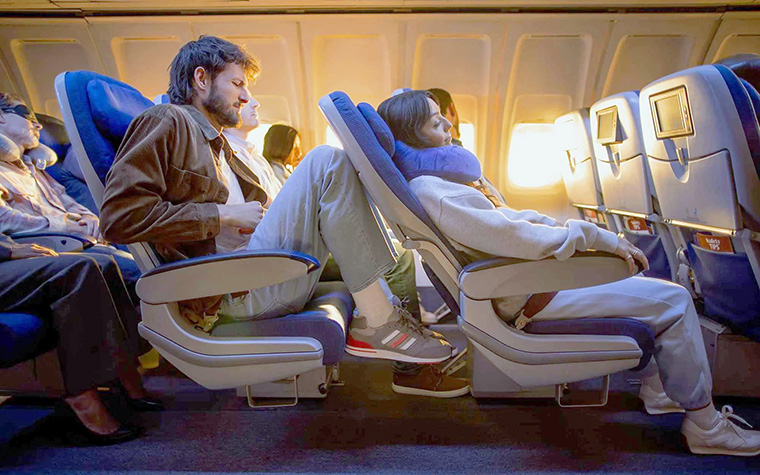
Air travel is part of the routine for millions of professionals every year, but getting along with fellow passengers on board remains an endless source of tension. A study by eDreams reveals which behaviors irritate Spanish travelers the most and how the unwritten rules of courtesy in the cabin are changing. From the age-old debate over reclining seats to the battle over armrests, the results paint a curious portrait of the psychology of the modern passenger.
Air travel has made traveling thousands of kilometers an everyday occurrence. However, spending hours in a confined space with dozens or hundreds of strangers continues to test the patience of many travelers. A survey conducted by eDreams among 9,000 passengers from seven countries reveals that seemingly innocent behaviors can lead to real, silent conflicts on board.
Among all of them, there is a clear winner. For 53% of Spaniards, the most annoying behavior during a flight is when the passenger in front reclines their seat abruptly or without warning. This action is completely legal, but it continues to fuel one of the most recurring debates in commercial aviation: how far does the right to recline a seat extend when available legroom is becoming increasingly limited?
The second major source of irritation arises even before takeoff. Thirty-two percent of respondents say they get frustrated when other passengers take too long to stow their luggage in the overhead bins. Among those over 65, this percentage rises to 39%, reflecting a lower tolerance for delays that slow down boarding.
Passengers who get up from their seats before the plane has come to a complete stop after landing also cause discomfort. One in four Spanish travelers finds this practice annoying, while 12% admit to feeling uncomfortable when another passenger asks to switch seats with them.
Courtesy has its limits
The study also reveals interesting cultural differences. British travelers are the most sensitive to movements of the seat in front of them: six out of ten consider reclining it to be the most irritating behavior during a flight. The French, for their part, are the least tolerant of delays caused by carry-on luggage, while applause upon landing continues to have particularly numerous detractors in the United Kingdom and Italy.
To Help or Not to Help with the Suitcase
Handling carry-on luggage is another moment that puts cabin etiquette to the test. In Spain, 43% of travelers say their willingness to help another passenger stow a suitcase depends on the circumstances and whether they perceive that the person truly needs assistance. Thirty-five percent say they would always help.
Italians and Germans top the list of travelers most willing to help unconditionally, while the British display a more reserved attitude and prefer to let the flight crew intervene.
The contested territory of the armrest
Few issues generate as many unspoken rules as the use of armrests in the middle seat. Most Spaniards favor a conciliatory solution: 56% believe it should be shared among the passengers in the row.
This attitude is particularly common among older travelers, as well as among Italians and Portuguese. In contrast, American passengers have a more individualistic view of personal space and are less willing to give up part of their armrest.
When the problem hits you right in the nose
If there is one nuisance that trumps all others in sensory terms, it is the body odor of other passengers. 78% of Spaniards identify it as the worst possible experience during a flight.
Far behind are other common nuisances, such as odors coming from the restroom or the excessive use of perfume. Personal hygiene thus emerges as one of travelers? main concerns when sharing a confined space for hours on end.
Chatting? or pretending to sleep
Being together on board also poses a social dilemma: should you talk to your seatmate or keep your distance? Most Spaniards lean toward the second option. Thirty-six percent admit to using short answers to end the conversation as quickly as possible.
Younger travelers show a more open attitude. Nearly half of travelers between the ages of 18 and 24 believe that a conversation during the flight can turn into an interesting story. However, they are also the ones most likely to resort to strategies to avoid unwanted conversations, such as pretending to be asleep.
Beyond generational or cultural differences, the survey confirms that coexistence in the cabin remains a delicate balancing act between individual comfort and collective respect. And although aviation has evolved tremendously in recent decades, some of the passenger?s little battles seem destined to stay with us for many years to come.