
The latest trends that are defining the technology landscape
Advances in technology are creating opportunities in all industries, but they are also creating new challenges to be faced. DES – Digital Enterprise Show 2025, the largest event in Europe on exponential technologies and AI held in Málaga, has analyzed the challenges and possibilities that digital tools have ahead as a lever for geopolitical leadership, cyber defense or competitiveness of organizations. From the 612 experts gathered at the meeting, DES2025 has drawn the conclusions to develop the 10 trends that are defining the technological landscape of 2025.
Technological leadership, a geopolitical power: Digital dependence on powers such as the United States and China has placed Europe in an uncertain scenario. This was stated at DES2025, where different specialists considered that the talent drain, the scarce investment in science and training, and the lack of unity with multiple innovation hubs threaten to relegate the continent to a dependent position. The professionals also agreed on the importance of relying on technology to boost defense at a time of geostrategic uncertainty.
Generative AI boom: DES2025 has corroborated that AI will remain one of the fastest growing technologies with a global market that will reach a value of $900 billion by 2026. Among its modalities, generative AI will offer increasingly powerful tools that will allow programming by indications or creating content on its own initiative. The benefits of applying this solution will be felt in both private and public organizations, where the widespread adoption of generative AI could improve profitability by 9% in the latter case.
The potential of LQMs: AI and quantum computing are beginning to converge, exploring a new generation of models beyond LLMs (Large Language Models). These, while useful, remain statistical tools without a true understanding of the world. Firms such as SandboxAQ are fostering an evolution towards so-called LQMs (Large Quantum Models), capable of integrating molecular dynamics, physics, chemistry and biology to generate deep, hitherto unknown knowledge. DES2025 anticipated that LQMs represent the next big step for AI to stop estimating and start truly changing the environment.
More hyper-automation: The hyper-automation of processes is impacting all industries, from retail to human resources, allowing to optimize actions and free up time for higher-value tasks. DES2025 has shared that non-human identities will increase 50-fold in the coming years, so the challenge lies in having control over access credentials and prioritizing security.
&ítica and conscious use of technology: At DES2025, the leaders have shared the need to build a committed technology by establishing, for example, a model where AI systems are registered, catalogued and evaluated according to their level of risk, always from a moral perspective. In this field, new roles are emerging, such as responsible AI managers, ethics committees and specialized offices, which are essential in the early stages of implementing digital solutions. This is coupled with incorporating a humanistic vision into the academic curricula of universities and promoting the standardization of AI regulation.
Cybersecurity in the face of AI: At DES2025, the impact of AI on cybercrime, which has increased significantly in recent years, was highlighted: 1 in 5 crimes is already computer-related, according to the National Police. To protect against digital offensives, experts have called for the incorporation of protection mechanisms in any AI project, including the secure use of data, robust models and continuous monitoring. They also called on SMEs to invest in cybersecurity – currently, around 60% of them do not –.
Leadership of data: The differential value for companies currently lies in data and its strategic use. In this sense, the meeting revealed that 65% of managers recognize that their organization does not fully understand the data and 58% that their decisions are based on inconsistent information. For this reason, specialists have highlighted the potential of its analytics, economy and connectivity. However, to reach a digital single market for data sharing requires a de facto standard, a climate of trust and the consolidation of interoperability pushed by the EU since 2024.
Quantum computing, a future with challenges:The global quantum computing market will reach $72 billion by 2035. These figures show the role that technology will play in the new digital era. As for the challenges, specialists estimate that in the coming years it will be necessary to deal with post-quantum cryptology, since current encryption systems could become obsolete by 2030. The answer to this problem is to design a robust cyberprotection strategy, with Zero Trust approaches, and to carry out a phased transition to hybrid models that combine traditional algorithms with new post-quantum formulas.
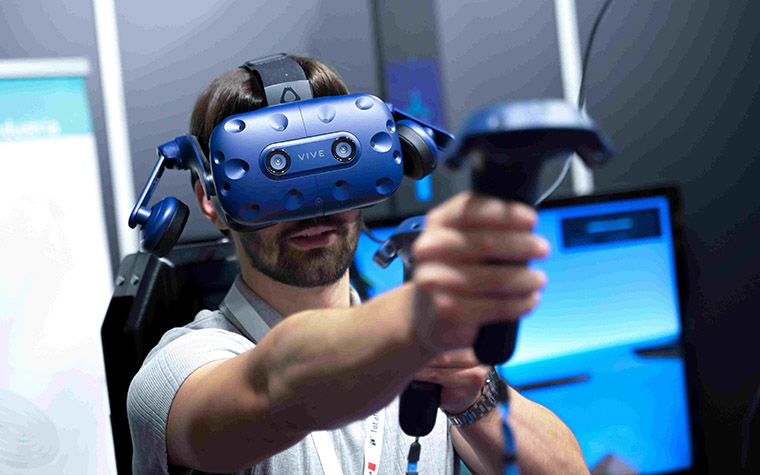
Immersive technologies are gaining momentum: Beyond AI and quantum computing, other technologies that are expanding are immersive. Projections estimate that the European AR/VR market will have a compound annual growth rate of 40.96% between 2025 and 2033. The sector that is betting the most on these initiatives is manufacturing, followed by others such as healthcare, retail and entertainment.
New digital skills: Technologies are increasingly impacting the development and emergence of new professional profiles. In fact, as has been exposed in DES2025, in Spain there are more than 4,000 unfilled AI and data positions, and where a greater mismatch is observed is in positions specialized in computer vision and AI & eacute;tica. To alleviate this inequality, experts have considered training, dissemination and learning of digital and social skills, where critical thinking is crucial, to be of paramount importance.