
The Internet of Things (IoT) in hotels for the Business Traveler 3.0
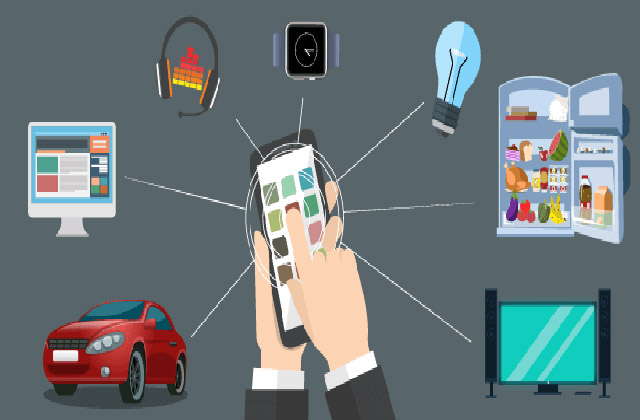
I'm sure many of you have heard about the Internet of Things (IoT), but what are we really talking about? This concept was born at MIT (Massachusetts Institute of Technology) in Boston and is something simple and complex at the same time that refers to the most everyday electronic devices become more intelligent and independent, making your life easier on a daily basis.
Let's take some examples to understand it more quickly: Surely at home you already have at least one Smart TV, which allows connections to Internet and you can watch your favorite series online. You no longer have a conventional watch, but a Smart Watch that in addition to being able to see the time, you can connect your watch to your smart phone, connect to Internet, know the weather forecast, see messages and many other features that your Smart Phone allows your Smart Watch to show you.
Summarized in a nutshell, it is the digitization of the physical world. Thanks to the RFID system (abbreviation of radio frequency identification, i.e., «radio frequency identification&quo;), it will suffice to integrate a chip of a few thousand meters in any object at home, at work or in the city to be able to process and transmit information from él constantly. It is estimated that by 2020, between 22 billion and 50 billion devices will be connected to the Internet in order to provide citizens with an unprecedented array of smart services and applications. Ericsson CEO Hans Vestberg made this clear in a recent statement: «If a person connects to the network, it changes his or her life. But if all things and objects are connected, it is the world that changes."
Recently the ITH (Instituto Tecnológico Hotelero) has pointed out that it will certainly be the biggest focus of digital transformation when it comes to personalizing the customer experience. These advances have become an ultimate quality factor.
In hoteliería there is already a majority of customers who have become hyperconnected hosts that demand an increasingly personalized and efficient service in this regard, which leads the hotel industry not to lag behind;s in details such as the increase in connection speed, the 4G, which will soon reach the 5G, especially considering that there are recent studies that ensure that this trend will reach each customer with up to 9 devices connected to the Internet per day.
Smartphones are currently used as keys in some exclusive hotels, which also through tablets and applications can make reservations of their services within its catalog of services. However, the IoT does not have to be considered as a service that benefits only the customer, also the hotel establishment will have the benefits of knowing their guests: who they are, their habits, tastes and of course their experience within the Hotel, which will translate into service improvements for the business passenger, and end up making him/her loyal and in the face of other passengers, it will be the best letter of introduction.
This is precisely what it is about, to achieve a win-win with the Internet of Things (IoT)integrating the Hotel, the traveler and the social networks to be benefited in balance.All this innovation is wonderful, but let's always keep in mind the human factor, that is, very connected to technology, but also offer a personalized treatment by the hotel staff.
BUSINESS TRAVELER 3.0
Technology has advanced a lot and has undergone an epic transformation, but business passengers have also evolved. We are talking about the first generation who always planned their vacations through their trusted travel agency; the second generation, those who obtained information through the websites they were going to visit, looking for the most recommended hotels and places for leisure within the business trip; and finally we reach the travelers of the future;Third Generation, they are travelers connected to their devices, especially to their mobile phones, from which, through social networks and apps, they plan and organize their trips, booking a large number of services simply with that mobile phone., But in addition, he immediately connects with social networks to comment on his passenger experience and help others with comments about his trip.
Hotels are also adapting to this type of travelers, finding many Third Generation hotels that offer services based on the Internet of Things (IoT), some of these aspects considered in IoT services are:
Personalizable Rooms: Where the traveler can adjust from their mobile phone the temperature of their room, the light, the TV, or calibrate a smart bed that can be moved ergonomically.
Communication through the mobile phone:
It is the best way to connect with the guest, know their opinions, habits, tastes and maintain an active communication to make their stay in the Hotel pleasant during their business trip. In many occasions you only come to sleep, but in many others, the hotel room is usually an extension of the office before going to sleep after a dinner with clients, after breakfast before starting the working day, or even some bleisure.
Direct check-in: If we already use the mobile for everything, why not save the check-in in and go directly to the door of the room? Well, it is now possible to forget about always looking for the room entrance card. With a QR code that the hotel can activate throughout the stay and deactivate at the end of the stay. This innovative system does not replace the lock or the card system that the hotel or a tourist apartment may have, but equips the lock with a chip that connects to the guest's mobile phone. Let's keep in mind that some people don't want/can't have everything digitized.
All these aspects are already being reflected in some apps that are already developed and on the market today, which are only aimed at making the customer experience as satisfactory as possible. Let's take some examples, surely some of you have already experienced it:
Smart Mini-Bar: They warn the hotel establishment of the lack of stock, if there are snacks that are already expired, or provide the passenger exclusively drinks of your preference and that has been possible to know thanks to Big Data.
Wearable Technology: it allows the hotel to know the tastes of its guests, their identity when they enter the hotel or to know better their daily routine when they get up to have a massage prepared in the Spa or the table next to the restaurant window at breakfast.
Smart Keys:
They give the guest the opportunity to know when his room has been arranged and can be ready, which means that when he stands in front of the door with his smartphone, it opens automatically.
Smart Keys: They give the guest the opportunity to know when his room has been arranged and can be ready, which means that when he stands in front of the door with his smartphone, it opens automatically.