
The importance of digital disconnection during a corporate trip
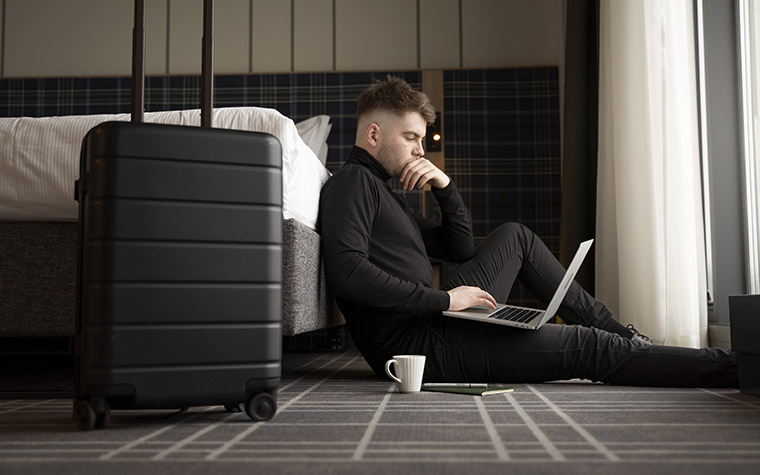
Meetings, transfers, hotels, changing time zones and, in the middle of it all, constant notifications. Corporate travel has accelerated the pace this 2025 and, despite the positive aspects of this data, it also brings with it an old acquaintance: hyperconnectivity.
73% of Spanish workers admit to not disconnecting completely outside working hours.
There are more and more voices in the business world warning of the negative effects of not disconnecting, even -or especially- during commuting. A recent Infojobs report reveals that 73% of Spanish workers admit not disconnecting completely outside working hours, a figure that has increased compared to the previous year. The situation is exacerbated in contexts such as business travel, where free time is scarce and the pressure to be always available intensifies.
Fortunately,some companies are beginning to take action. New approaches to managing wellness in mobility incorporate not only physical aspects such as nutrition, rest, ergonomics, etc., but also mental and digital ones. And this is where more sophisticated practices come in that go far beyond "not looking at your cell phone at night".
“With an increasingly competitive job market and a workforce that values personal balance like never before, companies that fail to address this issueón risk falling behind”, explains Luca Carlucci, CEO of BizAway. And furthermore, “disconnecting is not a luxury, it is a real need that, in addition” contributes to the value that employees can bring to companies”.
FIVE TIPS
In order to promote healthier business travel, BizAway experts share five keys to maintain balance during work travel:
1. Define clear and clear boundaries. It is not about being disconnected, but about connecting better. Establish high-availability time blocks according to your schedule and local time zone, and avoid constant multitasking. This will protect your attention and reduce mental fatigue.
2. Design recovery micro-protocols between travel segments. Every change of environment (airplane, cab, hotel, meeting) impacts your nervous system. Use small adjustment routines —such as controlled breathing or a nonstressed pause — to ease the transition and keep performance stable.
3. Align your rest with your circadian peaks. If you have jet lag or time zone changes, adapt your rest to the real biological rhythm: sleep in blocks compatible with your chronotype, avoid stimulants from mid-afternoon and prioritize the quality of sleep, not just the quantity.
4. Manage your energy as if it were your scarcest asset. Sometimes less is more: organize your schedule according to your stretches of greatest mental clarity. Delegate mechanical tasks to low-energy hours and protect key moments of the day to make decisions or generate impact.
5. Incorporating deliberate moments of pause (not impromptu) improves working memory and adaptability. Ten minutes a day of mindfulness, journaling or natural exposure can make all the difference in your performance.