
Ten keys to cryptocurrencies
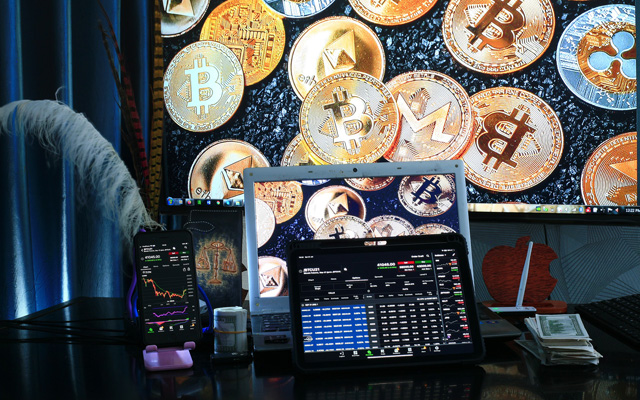
IMF Institución Académica has prepared a practical guide on cryptocurrencies that illustrates in a simple and dynamic way the most relevant aspects of this new monetary trend, essential to know the current financial forms of collection and payment. Thanks to their characteristics and financial possibilities, these new currencies open an enormous field for innovation and financial engineering in means of payment. Therefore, this guide considers the use of cryptocurrencies in different contexts, from investment to means of payment, among others.
The objective is to adapt the subject matter to the needs of companies and investors, and to be able to apply it to other business realities without any recommendation other than financial prudence in investments.
The guide explains each area of cryptocurrencies from a simple point of view with different scenarios and different contexts without implying any recommendation at the investment level and being a guide to better understand key concepts.
A cryptocurrency is a decentralized digital/virtual currency that is represented by a non-duplicable string of code that is transferred between users.
They are therefore a new form of money, which generates a new monetary world, since it changes the way of thinking about él, from how to store and transfer it to organize and understand it, which generates a multitude of financial effects.
2. ?How are cryptocurrencies obtained?
There are two ways. The most obvious is by purchasing a cryptocurrency or by admitting the cryptocurrency as a means of payment on a professional or private level. The second is more complicated, as you can manufacture new cryptocurrency units through mining, they are not actually generated, but put into circulation. The problem is that as “cryptocurrencies are “mined” it is more difficult to obtain new ones as it requires a lot of programming power and high-powered computers. This makes the expression “server farms” where such power can be achieved.
3. ?What"is the blockchain?
It is a database. Its designño is transactional and distributed, i.e., it isá formed by blockchains replicated in different places (not centralized) that cannot be altered, so its security is maximum. It would take a company of Google's size and capacity to be able to do this, which makes it impossible. Because the management is decentralized, the middlemen are eliminated. It is like a ledger where block records are linked together in a chain and protect the security and privacy of the information using cryptography.
4. How many types of cryptocurrencies exist?
The best known is Bitcoin (BTC), created in 2009 by Satoshi Nakamoto (alias of the creator/creators). It became very popular because of its decentralized nature and open source code. Ethereum was created in 2015 by Vitalik Buterin, which is currently the second most used cryptocurrency. Bitcoin Cash: this is a division of Bitcoin born in 2017, with the intention of continuing Bitcoin's original vision of using the Internet as a system without relying on third parties. There are also others such as XRP (Ripple) derived from Bitcoin and created by the RippleNet platform in 2012. Dash known as Darkcoin and XCoin, Litecoin, Dogecoin Namecoin or QuarkCoin by economist Bill Still.
5. ?How much are cryptocurrencies worth?
The value of virtual currency fluctuates according to its supply and demand. Unlike other financial assets, fluctuations are not always related to the behavior of the macroeconomy, an industrial sector or a company. In the case of Bitcoin, the best known, in the last year its exchange value has increased almost tenfold.
6. How many Bitcoins are there?
This is one of the most striking features. The maximum number of coins that can be created is 21 million Bitcoin, because originally its creators designed a deflationary currency, unlike Ethereum which is an inflationary currency. By pure supply and demand logic, as it becomes a scarce commodity, it is naturally more likely to increase in value. As to what will happen when the limit amount is reached, it will depend on the acceptance of the cryptocurrency and its competition.
7. Why is Bitcoin fashionable?
Cryptocurrencies first became popular because of their independence from other means of payment and financial intermediaries, outside the control of governments and central banks and their monetary policies. The advantages of existing digital money were preserved, but intermediary commissions were eliminated. However, their popularity has begun to grow exponentially due to their constant increases in value, and they have also become a speculative tool already used by numerous traders and financial institutions. It is also helped by the public support of certain countries, as in the case of Japan, or by influential figures, such as Elon Musk, who announced that Tesla accepts this form of payment.
8. ¿Do cryptocurrencies have to be taxed in Spain?
Transactions carried out with cryptocurrencies constitute financial transactions. Therefore, any income or expense derived from the purchase and sale of cryptocurrencies must be considered as a capital gain for corporate or individual income taxation purposes. If losses in value have occurred, the result will be included in the offsetting of future capital gains, for up to four years. The creation of cryptocurrencies by miningía implies an economic activity, with the corresponding taxes as any other professional activity.
9. ¿Will we ever be able to pay for a coffeeí with cryptocurrencies?
Currently we can pay for a coffeeí with a credit card, with a digital banking app on the mobile phone or using Bizum. The problem is that all these options involve transaction costs (commissions) that are borne by the seller and, of course, end up being passed on to the consumer in the price. With cryptocurrency these costs disappear. We will be able to pay for a coffee with cryptocurrency, although it will be a long time away, despite the enormous development it is undergoing. What remains to be seen is whether, in addition to cryptocurrencies, we will also be able to pay with ‘official’ digital currency. China and the EU are in the process of experimenting with digital yuan and digital euro, respectively.
10. If we want to buy cryptocurrencies, ?where can we do it?
There are numerous financial intermediaries and websites that facilitate and expedite the buying and selling of cryptocurrencies or part of them. You can also go to a physical ATM that allows you to buy Bitcoins or even go to an online exchange platform that allows you to buy cryptocurrencies with a credit card or PayPal account. From an investment perspective, they can be purchased through almost any intermediary or through specialized funds.