
Notes on open booking: the traveler and the company in the face of innovation
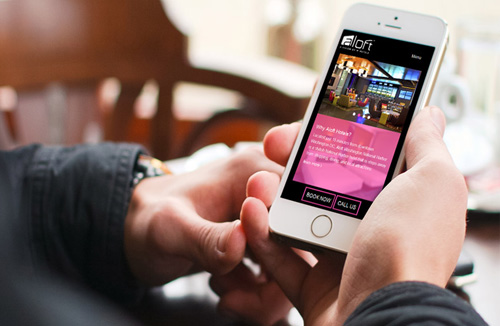
In the last few years, and even more so in the last few months, the travel industry, in the broadest sense, has witnessed major changes: emergence of new businesses, creation of new concepts, mergers and acquisitions… Any innovation, whether recent or long-awaited, does not fail to be questioned, cause debates and, often, raise reservations and arouse rejection.
One of the concepts that faithfully reflects the current situation is the so-called open booking, although it is not an innovation as such, but a different way of booking travel. Travelers have always been able to book their travel services directly with suppliers.
The difference is that technological innovation has led to an increase in new solutions and, consequently, to the evolution of the phenomenon. It is now easier to access not only the traditional offer, but also all kinds of services.
Thanks to technological advances, especially those related to mobility, we have offers closer at hand. It has never been easier, for example, to book a hotel while in a cab. However, this can conflict with company policy. Open booking generates controversy and is a driver of many concerns: security, travel policy or data consolidation are in question, to name just a few.
Each company, according to its size, philosophy, sector of activity or geographical location, establishes its own travel policy. However, the traveler also plays an important role in the travel process. In fact, many of the innovations have come about in response to their needs and to make their lives easier.
However, from the traveler's perspective, things are not as easy as they might seem. In your personal life you can book virtually any type of travel service, at any time, from any device and at a bargain price. On the other hand, if we stick to the professional sphere, it is often limited by the company's travel policy in terms of types of booking or detailed listing of the offer.
Thus, the question arises as to whether it is an opportunity to open up the range of possibilities for employees to process their travel bookings and at the same time meet the company's needs and obligations
.