
Globalization models in the corporate travel account
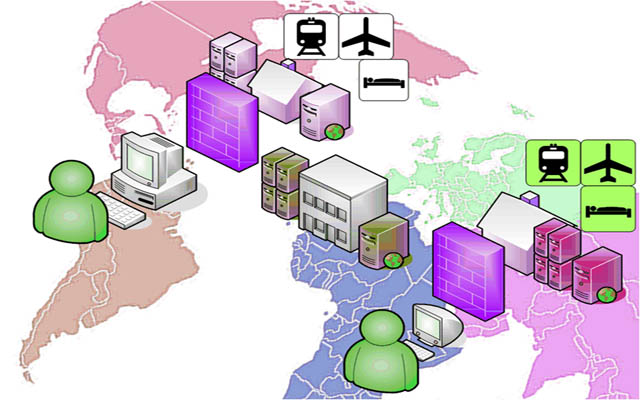
The internationalization process that many Spanish companies are undertaking in recent years requires analyzing the possibilities of globalizing the travel account, studying the benefits and capabilities, and choosing the most appropriate model. The project must evaluate the cost, risk and impact on the organization, as well as weigh other procedures.
The globalization of the travel account aims to increase savings, control costs, standardize the policies of the different delegations, consolidate the information generated during travel and guarantee quality and safety standards for travelers, as well as align and standardize the services contracted.
For this purpose, three basic models must be taken into account:
Distributed
This alternative is used to take advantage of the local market, choose the most appropriate agency and integrate the regions that will participate in the management of the program. On the other hand, there may be problems arising from decentralization, consolidation of information and some disparity in the services and prices of suppliers.
Centralized
It has the advantage of having a single interlocutor. Management and reports are handled from the head office and there is a concentration of suppliers that allows for more advantageous volume agreements. To all this we must add the benefits of using a unique and approved technology, as well as a call center
Among the weaknesses of this system are the loss of negotiating capacity at local level with the specificities of each market. On the other hand, there is less room for maneuver when incorporating specialized suppliers.
Local led
In this model, there is a centralization of leadership, with homogeneous uniforms and attention to the local market. It also allows competition among local travel agencies.
On the contrary, it favors the disparity of suppliers and the evaluation of the quality of service.
It also allows competition among local travel agencies.
It favors the disparity of suppliers and the evaluation of the quality of service.
It also allows competition among local travel agencies.