
Use of generative AI doubles in travel planning
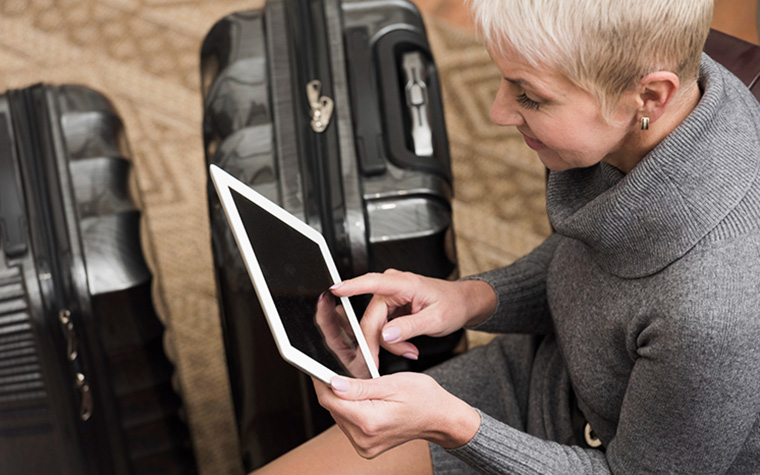
Spanish travelers are adopting generative artificial intelligence (AI) more quickly than their international counterparts. According to an Amadeus study, 87% report significant benefits in both leisure and business travel planning, including time savings and personalized recommendations.
According to a study by Amadeus, 87% report significant benefits in both leisure and business travel planning, including time savings and personalized recommendations.
The Connected Journeys: How Technology Will Transform Travel in the Next Decade study, conducted by Opinium for Amadeus, surveyed 1,000 Spanish adults who travel abroad for leisure or business at least once a year, and is part of a global report covering 9.500 travelers in seven markets.
The results reveal that Spainis one of the most receptive markets to generative AI in travel, with usage growing from 11% in 2024 to 24% in 2025. Among those who have used AI tools to plan their trips, 87%report positive results, such as time savings (36%), highly personalized recommendations (30%) and the discovery of new destinations they would not otherwise have considered.
The study also reveals that Spanish travelers seek easiness using AI when traveling, with 62% of them saying they would be willing to make a one-time payment to use an AI assistant to obtain information and manage their trip. In addition, 17% of those travelers would be willing to pay between 2.6% and 5% of the total cost of the trip to benefit from such services.
About Spanish business travelers, 84% consider it useful to have an AI-based travel assistant, which places Spain among the most receptive markets to this technology.
However, nearly three out of five travelers (58%) have experienced difficulties when using generative AI, such as needing to verify recommendations (28%), problems getting the AI to understand their preferences (19%) and feeling overwhelmed by too many options (18%).
Más beyond AI
The study also reveals that Spanish travelers show a strong interest in emerging technologies in the travel industry;
They are among the most open to technologies such as biometrics, generative AI and home check-in:
-64%would consider checking in their luggage from home.
-63% arewilling to use biomic gates at the airport.
More than half would be interested in immersive virtual reality experiences to test their trips before booking them, as well as hyperloop flights or hyperloop transportation.
These figures put Spain ahead of or on a par with other leading markets such as the United States and the United Kingdom, where interest in similar technologies is growing, but is less diversified.
Despite the rapid growth of emerging technologies, Spanish travelers continue to turn to family and friends (33%) and online travel agencies (33%) as their main sources of inspiration;
They are followed by YouTube videos or social networks (26%) and physical travel agencies (21%) when planning their trips abroad.
«Spanish travelers are showing us that technology must be smart and responsive. They want innovations that simplify their lives, personalize them and help them throughout their journey," says Christian Boutin, general manager of Amadeus for Spain and Portugal.
The Human Touch
Despite the enthusiasm for digital solutions, Spanish travelers still value human interaction. According to the study, nine out of ten (90%) Spanish travelers feel anxious at least at some point during air travel.
The top moments of anxiety are during security checks (27%), the ride to the airport (24%), before departure while packing and during the flight (23%).
Also during travel incidents and interruptions, Spanish travelers expect closer and more human attention:
For 33% of Spanish travelers, talking to a human agent is what gives them the most peace of mind.
Even48%of Spanish travelers would be willing to wait hoursto speak with a professional, even if an AI service agent was immediately available.
The study reveals that what matters most in terms of traveler loyalty to a provider is how trip disruptions are handled, rather than the fact that they sometimes occur. Spanish travelers also value proactive communication and empathy:
-65% state that they can forgive an incident if the supplier demonstrates that they are doing everything they can to help.
-67% wouldbemore willing to rebook with a supplier that offers proactive solutions.
Pay for peace of mind
Spanish travelers are not only open to innovation, they are willing to invest in it. The pressure to plan a vacation could explain why at least three-fifths of Spanish travelers would be willing to pay a one-time fee for certain types of customer support.
-83% would pay extra for money-back guarantee services, with an average of 5% added to the cost of the trip.
-Other highly rated services include assistance in the event of lost baggage or emergencies (81%), «troubleshooting&quoquo; services (77%) and priority handling of changes (74%).