
ISBTM 2026: Ten Keys to Understanding the Transformation of Business Travel and Corporate Events
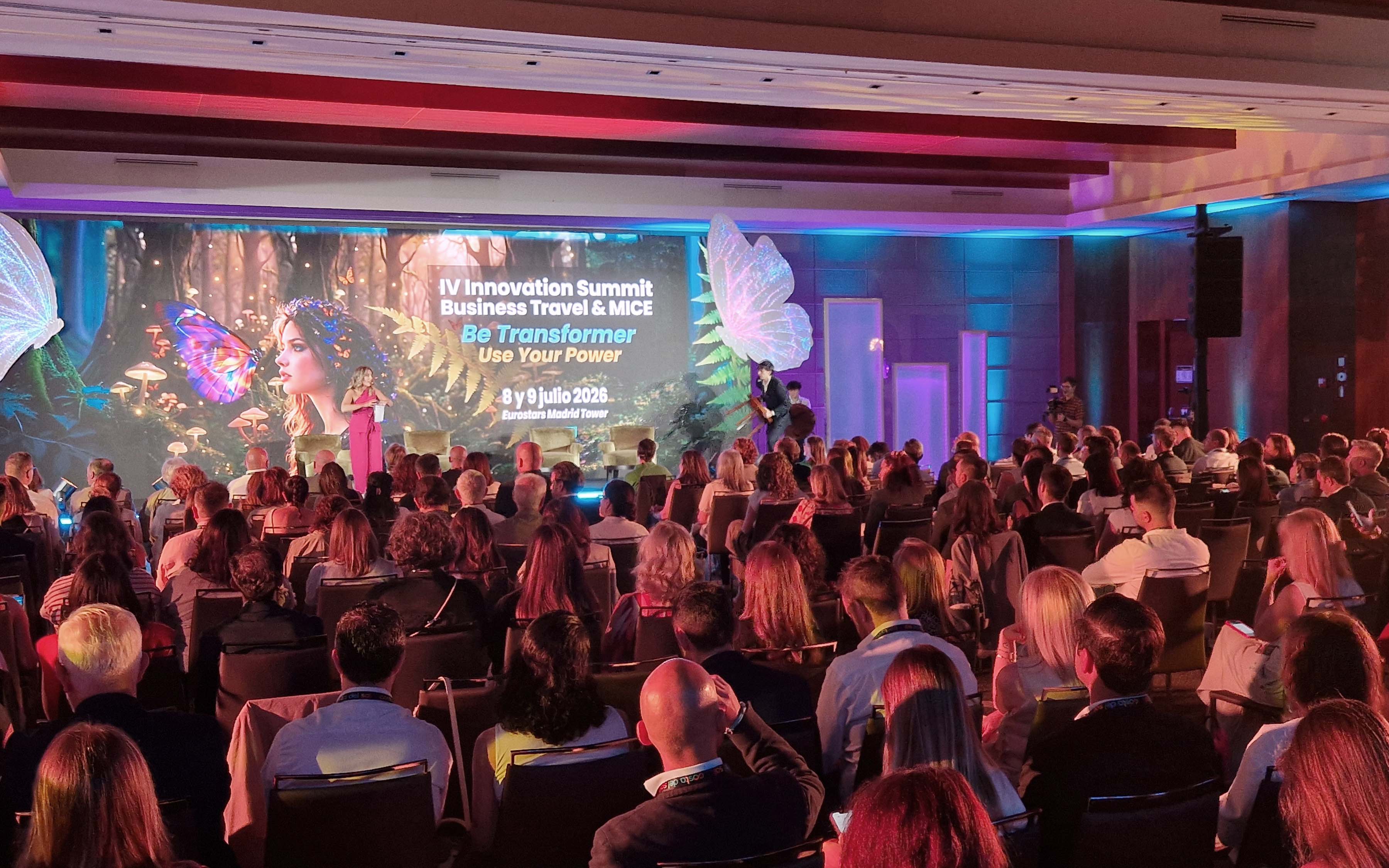
Nearly 500 professionals and more than 50 speakers participated on July 8 and 9 in the 4th Innovation Summit Business Travel & MICE, organized by Forum Business Travel & Events, which identifies the major trends that will shape the future of an industry that is increasingly strategic for the economy.
Travelers are no longer looking solely for the lowest price. Hotels no longer sell rooms?they sell experiences. Travel agencies are shifting from being mere providers to becoming strategic partners. Artificial intelligence is moving from a promise to a management tool, and events begin long before registration opens and continue long after the final presentation.
These are some of the changes that are redefining corporate travel and events and that took center stage at the 4th Innovation Summit Business Travel & MICE (ISBTM2026), organized by Forum Business Travel & Events and held on July 8 and 9 at the Eurostars Tower hotel in Madrid.
The event brought together nearly 500 professionals and more than 50 speakers, including executives from large companies, travel agencies, event organizers, hotel chains, airlines, destinations, technology providers, and leading experts. Over the course of two days, the Summit once again established itself as one of the leading forums for reflection within the sector in Spain, offering a shared perspective on the changes that are already transforming corporate travel and professional events.
The institutional opening ceremony also served to highlight the economic significance of this industry. Madrid closed out 2025 with more than 51,000 meetings and an economic impact exceeding 5.5 billion euros, as noted by Héctor Coronel, Director of Tourism for the City of Madrid; while business travel generated 6.6 billion euros in Spain, with an average expenditure of 1,400 euros per traveler, as highlighted by Inmaculada Benito, director of the Department of Tourism, Culture, and Sports at the CEOE.
Throughout the various panel discussions, participants agreed that the sector is entering a new phase. These are the ten major trends that will shape its evolution over the coming years.
1. The traveler takes center stage in the strategy
New generations are changing the rules of the game. Companies no longer design their travel programs with the sole aim of controlling expenses, but rather to offer a simpler, more flexible, and more personalized experience.
Self-management, well-being, work-life balance, time savings, and sustainability are emerging as key decision-making factors. The concept of bleisure, the integration of all services into a single process, and the need to offer intuitive digital experiences reflect a paradigm shift that places the traveler at the center.
2. Price Gives Way to Value
Another of the most frequently cited conclusions during the Summit was the need to move away from a vision based exclusively on price.
Organizations are increasingly analyzing the total cost of the travel program, employee productivity, time spent, the user experience, and the return on investment for the business. Smart purchasing is no longer about choosing the cheapest option, but rather the one that generates the most value for the company and the traveler.
3. Artificial intelligence is beginning to transform travel management
AI is no longer seen as a technology of the future but is becoming a tool for immediate application.
Experts agreed that its main contributions will lie in predictive analytics, process automation, and the personalization of the traveler?s experience. However, they also argued that technological innovation must always be accompanied by the human touch that characterizes personalized service.
4. The Travel Manager Gains Strategic Importance
Technological evolution is profoundly changing the role of the corporate travel manager.
Automation frees up time to take on higher-value-added functions related to data analysis, corporate mobility, sustainability, and decision-making support. The Travel Manager is evolving from an operational manager into a strategic role within organizations.
5. Hotels are shifting from selling rooms to designing experiences
Major hotel chains agreed that the success of the MICE segment will depend on the ability to offer increasingly personalized offerings.
Customer insight throughdata, sustainability integrated from the event?s design phase, digitalization, and a relationship based on collaboration are gradually replacing the traditional supplier-client model. At the same time, new formats are emerging, such as executive retreats and boutique events, designed to address very specific objectives and maximize return on investment.
6. Journey Design Redefines Corporate Events
Attendees no longer value only what happens during a conference or convention.
Experience design begins before the event and continues after it concludes. Storytelling, engagement, personalization, and community building have become just as important as the logistics themselves. The music festival sector also serves as a source of inspiration for the MICE industry due to its ability to connect emotionally with the audience.
7. Clients and agencies are evolving toward a collaborative model
The traditional client-vendor model is giving way to a much more collaborative relationship.
Agencies are involved from the initial stages of the project, contributing creativity, strategy, and expertise, while companies share their objectives, constraints, and expectations with greater transparency. The event?s purpose is established as the true starting point upon which to build each project.
8. Well-being is firmly on companies? agendas
Active breaks, physical and mental health, and team well-being are no longer viewed as secondary measures but rather as tools that improve productivity, motivation, and the employee experience.
Organizations are beginning to incorporate these initiatives into their corporate culture, convinced that taking care of people also means improving team performance.
9. Adaptability becomes an essential skill
In an increasingly dynamic environment, planning remains essential, but improvisation and the ability to react are taking center stage.
Industry professionals highlighted creativity, flexibility, and speed in resolving unforeseen issues as some of the most valuable skills for those who organize events and manage complex projects.
10. Innovation also means making better decisions
The Summit?s final major discussion centered on decision-making.
The experts emphasized the need to avoid false dichotomies, combat confirmation bias, and maintain emotional balance to improve the quality of decisions. Because innovation depends not only on generating different ideas, but also on making better choices among the various available alternatives.
An increasingly strategic industry
Beyond technological trends, the 4th Innovation Summit Business Travel & MICE led to a conclusion shared by virtually all participants: Business Travel and MICE are expanding their role within organizations.
As noted by Natalia Ros and Óscar García, co-founding partners of Forum Business Travel & Events, the organizer of ISBTM, ?business travel and corporate events are no longer viewed solely as operational or commercial tools. They are tools for attracting talent, reinforcing corporate culture, driving innovation, strengthening relationships with clients and suppliers, and projecting the image of companies and destinations.?