
The data challenges generational stereotypes in marketing and events
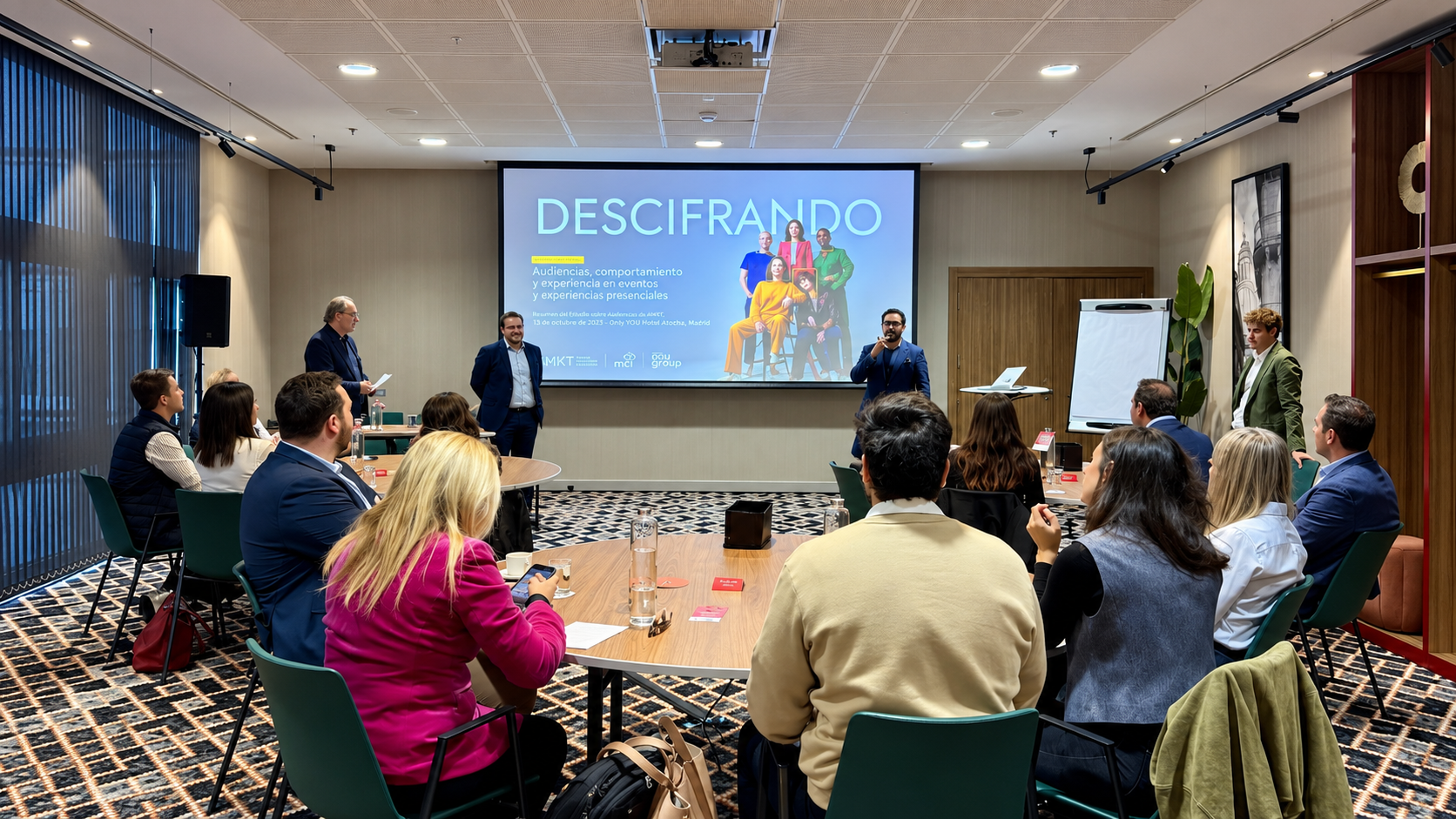
MCI Spain, in collaboration with the Spanish Marketing Association (AMKT), has presented a comprehensive report analyzing the motivations and behaviors of different generations. The study challenges some common stereotypes and highlights the differences between the perceptions of marketing professionals and the research findings, with implications for the design of events and experiences.
The report combines an internal survey of 125 experts in events and engagement from mci group with an online survey conducted by insidery, the group?s research consultancy, in Germany, the United States, Brazil, and Australia.
Among its key findings is that 41% of Gen Z finds it difficult to express their opinion, compared to an average of 31%. It also reveals that 62% of millennials view events as an opportunity to gain visibility, compared to an average of 44%.
When it comes to group decisions, 45% of Generation Z prefers to leave them in the hands of other members, compared to 19% of baby boomers. On the other hand, 52% of millennials prefer ?good enough? over perfection.
The results show that generational identity provides context, but is not sufficient to explain how a person engages. For marketing and communications professionals, the study underscores the importance of designing messages and experiences based on the actual motivations of audiences, rather than relying solely on their age.
Intuition versus Data
During the event, attendees participated in an exercise in which they had to associate five behaviors with different generations before learning the study?s results. Their answers matched the report on three of the five questions, although some differences highlighted the influence of generational stereotypes.
In addition to mistakenly attributing the greatest difficulty in expressing their opinions to baby boomers, 57% of participants pointedGeneration X as the group most inclined to settle for ?good enough? rather than perfection, whereas the study ranked millennials first (52%).
Even in the question about seeking visibility at events, in which attendees correctly identified millennials, only 36% chose this answer.
Although the exercise is not representative of all marketing professionals in Spain, it helped illustrate the gap that can exist between perceptions and data.
The subsequent discussion applied these conclusions to the design of events and experiences. Participants noted that recognizing the coexistence of different generations within the same company or event is only the starting point.
In this regard, recurring formats such as annual conventions or kicksales kick-offs can be reimagined to combine a shared experience with dynamics and moments tailored to different motivations and ways of participating.
Understanding Audiences to Improve Participation
For Juan Cantón, CEO of the Spanish Marketing Association (AMKT), challenging preconceived notions about audiences is essential for the sector.
?At the association, we seek formats that force people to think, not just to listen. Seeing marketing directors test their intuition against data?live and among colleagues?is exactly the kind of conversation our profession needs. Audiences change faster than our labels, and it?s important to revisit them with evidence.?
This need to better understand people is also at the heart of the research. Sandrine Castres, managing director of mci group for Southern Europe, explains:
?Every year we design thousands of experiences in which four generations come together in the same room. This report stems from that practice: it?s not about denying the concept of generations, but rather about not using it as a complete explanation. Presenting it in Spanish, and doing so with the room as the focal point, is our way of translating the research into concrete decisions».
For his part, Albert Cerezales García, Sales Strategy & Enablement Manager at mci group, highlights the importance of offering experiences that meet participants? expectations, beyond their generational affiliation.
?As part of a younger generation, I recognize myself in some of the data and not in others, and that?s exactly what makes it interesting. People often think we?re looking for the spotlight, but what we really want is for participation to be meaningful and leave something tangible. When an experience achieves that, we get involved; when it doesn?t, we quietly tune out. </p <p The report thus highlights the need to test assumptions about audiences against real data and behaviors. For marketing and event professionals, the challenge lies in applying that knowledge to the design of more relevant experiences capable of connecting with different motivations and forms of participation.