
"The future of corporate events will be more tech-driven, but also more human."
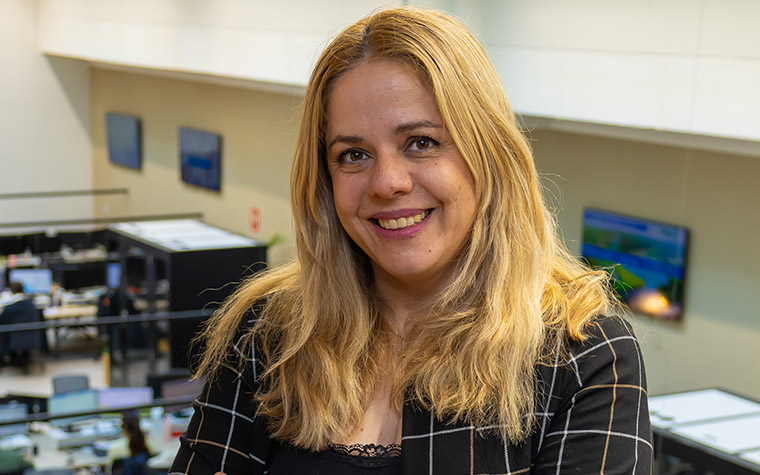
Artificial intelligence, personalization, sustainability, and attendees? new expectations are transforming the MICE industry. Belén Salgueiro, director of Simmer Events by VB Group, analyzes the challenges facing companies and event agencies as we look toward 2027 and explains why creativity, trust, and human connections will continue to make the difference.
The MICE sector has undergone a profound transformation in recent years. Looking ahead to 2027, how do you think corporate events will evolve?
We?re entering a particularly interesting phase. Companies continue to prioritize in-person gatherings, but their expectations are constantly rising. It?s no longer enough to simply gather a group of people in an attractive venue and offer them a good program.
The big change lies in how we understand the attendee experience. People want to participate, connect, learn, and feel that the time they spent at the event was well worth it.
That?s why we?ll see more personalized offerings, with flexible formats, relevant content, and experiences designed for specific audiences. These won?t necessarily be bigger or more spectacular events, but they will be better thought out.
The future hinges on something very simple: that people are the true protagonists of the event.
There is increasing talk of experiential, participatory, and personalized events. What formats do you think will take center stage?
We?ll evolve toward formats that allow for more active participation. Large conventions and conferences will continue to have their place, but they?ll coexist with smaller sessions, conversations among professionals, destination-based experiences, and activities centered around shared interests.
The evolution of internal events is also particularly interesting. Companies need to connect teams working from different cities, departments, and even countries. A well-designed gathering can be an extraordinary tool for strengthening those bonds.
And there?s one fundamental point: don?t confuse experience with spectacle. An impressive production may amaze for a few minutes, but a conversation that sparks an idea, a collaboration, or a professional connection can have a much more lasting impact.
True creativity lies in designing something that makes sense to the people who will experience it.
Artificial intelligence is transforming virtually every sector. What opportunities does it open up for corporate events, and what limits should it have?
Artificial intelligence is going to significantly change the way we work, especially in planning, personalization, and data analysis.
It can help us optimize processes, tailor content to different profiles, improve communications with attendees, and even anticipate certain logistical needs. This allows us to devote more time to what truly adds value: listening to the client, thinking creatively, and ensuring a great experience.
But we must be cautious. Technology is an extraordinary tool, not a substitute for professional judgment. There are decisions that require sensitivity, intuition, knowledge of the client, and on-the-ground experience. Furthermore, when using attendee data, it is essential to do so responsibly and transparently.
Paradoxically, the more digital our lives become, the greater the value of authentic encounters will be. Artificial intelligence can help us organize better events, but it cannot replace what happens when people truly connect.
Rising costs and international uncertainty pose new challenges. How can companies continue to organize impactful events without losing control of their budget?
This is one of the main challenges we face. Companies want better experiences, but they also need to control their investment and justify the results.
The answer cannot be limited to simply cutting costs. It is necessary to work strategically from the very beginning: defining priorities, selecting suppliers wisely, anticipating risks, and deciding where it is worth investing.
In our industry, moreover, the ability to react quickly is essential. A change in flight schedules, an issue with a supplier, or a last-minute change can affect the entire experience. That?s why planning and contingency plans are essential.
We must also make progress in measuring results. It?s not enough to know the number of attendees or their level of satisfaction. We need to understand what was achieved: whether customer relationships improved, team motivation was boosted, or new business opportunities were generated.
A good event isn?t necessarily the most expensive one, but rather the one that achieves the best results with the available resources.
Sustainability, accessibility, and inclusion are becoming increasingly important. Do you think these will be key factors in future events?
Without a doubt. We?re moving toward a model in which these aspects will no longer be considered add-ons but will instead be part of the event?s design from the very beginning.
Sustainability must translate into concrete decisions: choosing local suppliers whenever possible, optimizing travel, reducing single-use materials, and considering what happens to resources once the event is over.
We also need to talk much more about accessibility and inclusion. An event can be magnificently produced and yet exclude some of its attendees if their needs haven?t been taken into account. Physical accessibility, communication, content, accommodations for different abilities, and dietary needs must be considered from the very first briefing.
At Simmer Events, we understand that an event must take care of all these details. Furthermore, being part of VB Group gives us access to specialized knowledge in various fields, including accessibility and inclusion, through VB Integra.