
Summary of the session "Quality and the Supplier Selection Process" (Madrid)
The numerous closures of travel agencies in recent years have pushed companies to monitor the economic solvency of their suppliers when contracting business travel. Factors such as this come to carry as much weight as their service offering, according to the conclusions of the session "Quality and the Supplier Selection Process".
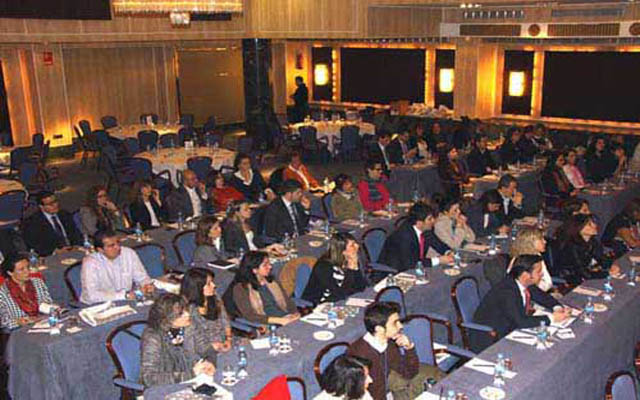
About a hundred business travel managers gathered by Forum Business Travel (FBT) at the Meliá Castilla hotel in Madrid have certified the growing importance that their companies are giving to the financial strength of their business travel suppliers, especially travel agencies, immersed in a tough process of restructuring that has taken many of them ahead.
“When an airline, hotel or any other travel supplier disappears, alternatives can be found, despite the upheaval, but the damage done by the bankruptcy of a travel agency can be devastating;o that makes the bankruptcy of an agency to its client companies is much greater, because it is the one that centralizes its travel policy”, explainedó Agustín Casado, travel manager of Eptisa and keynote speaker of the day.
The FBT seminar analyzed the factors that companies must take into account when drawing up the specifications that they deliver to their potential travel suppliers, a process in which continuous evaluation is also crucial once the award has been decided, "given the circumstances of a particularly changing market", according to Casado.
SUPPLIER SELECTION PROCESS
According to the speaker's presentation, the selection process begins with an internal needs analysis, but not all of them are necessarily incorporated into the specifications. The internal consulting phase involves the three departments critical to the travel account: Human Resources, Accounts Payable and Legal Counsel.
At pre-award, a probationary period begins where suppliers have to demonstrate their ability to manage the travel account. If the pilot has met expectations, it moves on to progressive implementation. During the first six months there is a special vigilance on any incident.
Quality assessment is mainly carried out with three tools: dashboards, quality surveys and consultation with a panel of frequent travelers within the company.
The RFQ document should include definitions, volume of expenditure, service configuration, value-added extras and service level agreement (SLA) indicators, as well as a brief reference to the travel policy, especially those aspects that may hinder a supplier's operations.
It is also necessary to include the required management reports, means of payment, remuneration models and the duration of the contract, all of which must be supervised by legal counsel before being sent to suppliers.
PR&AACTICAL CASES
In the working groups formed by the travel managers present, a long list of needs that companies demand came out, and that goes beyond the price of the transactions. As far as the travel agencies are concerned, they emphasize, among others, the speed of response, their international presence, their ability to implement self-booking tools or bureaucratic facilities, as well as their consultancy work.
According to Óscar García, founding partner of Forum Business Travel, “nowadays it is very difficult for an agency to differentiate itself by its prices, because competition has made them all very much on a par. In addition, the real cost of intermediation almost never exceeds 5% of the total travel spend.
For Charles de Bonnecorse, head of sales for Spain at American Express Barceló Viajes, “the preparation of the tender is a good time for companies to thoroughly analyze the new practices and trends in the industry, and to take a closer look at the new trends;The company will also be able to see which agency can provide the most additional value and select its best partner to manage its travel in the most efficient way.
When it comes to hotels, in addition to location and rates, companies are increasingly valuing other points when developing specifications, such as maintaining the negotiated price on busy dates, the flexibility of their cancellation and modification policies, and the flexibility of the hotel's pricing policy;The flexibility of its cancellation and booking modification policy, added services (wi-fi, parking, minibar, meeting rooms, etc.), free transfers or the possibility of occupying and leaving the room earlier and later, according to the conclusions of the Forum Business Travel working groups.
GUEST DESTINATION: CATAR BY QATAR AIRWAYS
The Forum Business Travel day ended with an attractive presentation of Qatar, especially focused on its infrastructure for MICE tourism. Its capital, Doha, is growing rapidly as a meeting and incentive venue, as well as a point of connection from Europe to major cities in Asia, the Middle East, Australia and Africa.
Sonia Oliveras, director of Corporate Sales for Spain at Qatar Airways, underlined that the airline has won the Skytrax award for the second consecutive year as the best airline in the world, awarded by passengers.
It also announced that in 2013 it will reach 123 destinations and will complete its full integration into the Oneworld alliance, in which it will share a network with the world's largest airlines to offer a global service.Another major development is the imminent opening of Doha's new international airport, an architectural marvel that will have a soft opening in April and be fully operational by October. With an exclusively premium terminal, a silent train that facilitates access to boarding gates and optimized connection times, "the new infrastructure is going to become a benchmark," according to Oliveras.
Qatar Airways offers companies tailored corporate agreements with a minimum throughput, dynamic discounts on published fares and specific agreements for MICE. The airline currently operates a daily flight between Madrid and Doha and ten weekly frequencies from Barcelona.
VIEW PHOTOGRAPHIC REPORT OF THE SESSION
.