
September Brings Events Back to the Forefront of Business Strategy
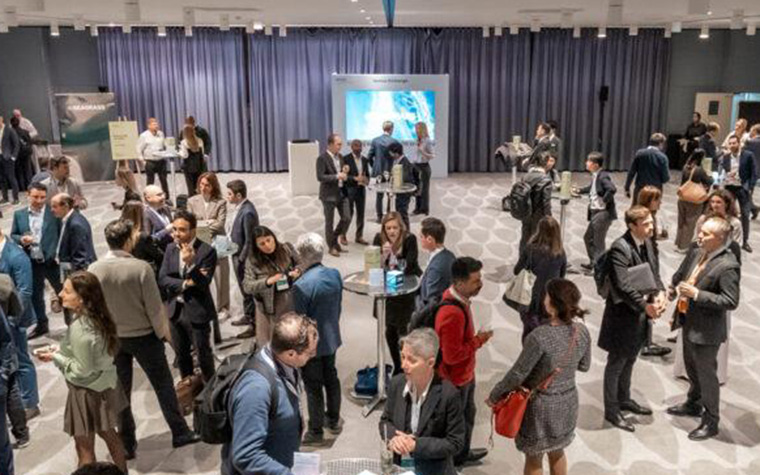
The events sector is approaching the September rebound with events playing an increasingly important role in business strategies. According to AEVEAPulse, 92.1% of companies consider events to be a strategic or relevant channel. Creativity and new formats are at the forefront of brands? demands, in a context marked by advances in artificial intelligence and the need for specialized talent.
September brings companies and brands back to a schedule filled with conventions, conferences, presentations, trade shows, and major events. The new business year also begins amid the rapid advancement of artificial intelligence, which is transforming the way organizations work and communicate. In this context, in-person experiences remain a key tool for connecting with people.
This is reflected in the latest AEVEAPulse, prepared by AEVEA (Association of Spanish Event Agencies). According to the study, 92.1% of Spanish companies consider events to be a strategic or relevant channel within their marketing and communication strategy.
Specifically, 44.7% already place events at the core of their strategy, while another 47.4% consider them a relevant channel.
The data also reveal brands? priorities regarding innovation. When asked in which areas they expect agencies to contribute the most, 50% cite creativity and new narrative formats, compared to 10.5% who prioritize personalization through artificial intelligence.
?AI is accelerating processes and transforming the way we work, but brands still need to connect with people. Technology helps us create better events; people are what give them meaning,? says Mariano Rodríguez, president of AEVEA.
Experience and Impact
The way we measure the return on events is also evolving. The attendee experience (71.1%) ranks as the primary indicator of success, followed very closely by the impact on the business (68.4%).
The results thus point to a conception of events that goes beyond visibility and also takes into account their ability to generate business, strengthen customer relationships, mobilize teams, and contribute to building culture and brand identity.
Trust also plays an increasingly important role in the relationship between companies and agencies. 57.9% of companies regularly work with a trusted partner, and when selecting an agency, trust in the team and the relationship built?at 36.8%?are the primary decision-making criteria.
Growth and Talent
The industry is heading into the final stretch of 2026 with prospects for growth. Seven out of ten agencies improved their results in 2025, and nearly 70% expect to increase their revenue in 2026.
In addition, six out of ten agencies expect to expand their teams. This growth highlights one of the sector?s main challenges: more than 84% report difficulties in finding specialized talent, particularly in production, project management, creativity, strategy, and business development.
At the same time, artificial intelligence is establishing itself as one of the main drivers of transformation in the sector: 65.9% of agencies identify it as the most significant change experienced over the past year.
?We are entering a phase in which technology, creativity, and experience will coexist more than ever before. AI will allow us to be more efficient, but the real differentiator will continue to lie in ideas and in the people capable of turning them into memorable experiences,? concludes Mariano Rodríguez.
The results of AEVEAPulse 2025 thus reflect a growing coexistence between technology and in-person interactions in marketing and communication strategies. While artificial intelligence is gaining ground in work processes, brands remain focused on creativity, trust, and the ability of events to generate experiences and connections.