
High-speed travelers grow 15% driven by competition and service expansion
Spanish rail transport continues to set new records. During the second quarter of 2025, 11.8 million passengers chose high-speed trains (AVE), 15.2% more than in the same period of the previous year, according to data from the National Commission for Markets and Competition (CNMC). This increase reflects the strength of tourism and business demand on the country's main routes.
The Madrid-Alicante corridor leads the growth with a 22% increase in passengers, while Madrid-Sevilla experienced a 21% increase after the incorporation of Ouigo as the third operator, which has intensified competition and attracted new users. The Madrid-Málaga/Granada route also recorded a notable increase of 14%, consolidating the trend of recovery and expansion in the south of the country.
In contrast, the Madrid-Barcelona route, already consolidated as the main high-speed axis, based its historical record of 3.9 million passengers, although its growth was more moderate, at 2%, in a context of a 15% increase in ticket prices. For its part, Madrid-Valencia recorded a growth of 7%, positioning itself as a stable corridor but with development potential in the face of emerging competition.
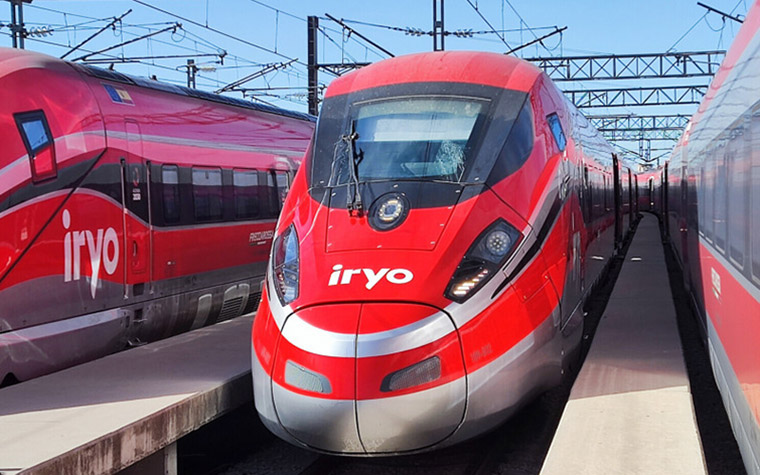
The advance of Ouigo in the southern corridors has not detracted passengers from Renfe or Iryo. According to the CNMC, the growth reflects additional demand generated by increased supply and more competitive fares. In this scenario, Renfe Viajeros remains the leader, with shares above 60% in most corridors, except in Madrid-Valencia, where its share drops to 50%, and Iryo reaches 27%.
The entry of new operators has also had a direct effect on prices. Fares from Madrid-Sevilla fell by 9%, and those from Madrid-Málaga/Granada by 1%, while routes to Alicante and Valencia became 8% to 9% cheaper. The exception was Madrid-Barcelona, where prices increased by 15%, standing at an average of 3%;63 euros, compared to 49 euros in Madrid-Seville, 47 euros in Madrid-Málaga, 36 euros in Madrid-Alicante and 29 euros in Madrid-Valencia.
In other rail segments, Cercanías passengers grew by 5%, while Media Distancia Convencional fell by 13%, despite being fully subsidized since 2022. The Media Distancia Alta Velocidad, with 50% subsidy, advanced slightly by 0.7%, and Larga Distancia Convencional routes recorded a 4% decrease.
These data reflect a dynamic market, in which competition and the diversification of operators stimulate demand, generate new travel habits and condition the evolution of prices, consolidating the AVE as an efficient and competitive alternative to air and road transport in Spain.