
Experience is becoming increasingly important in the new economy of major sporting events
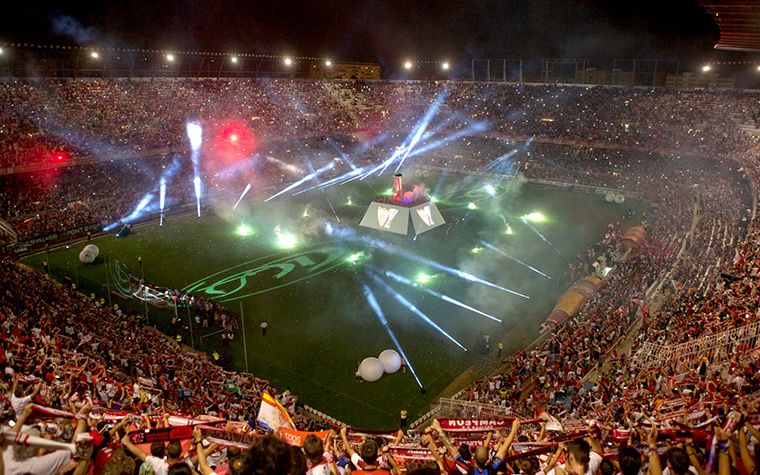
Formula 1, the NFL, and the 2030 World Cup reflect the transformation of major sports competitions into platforms capable of generating tourism, business, hospitality, and international visibility. The experience surrounding these events is gaining prominence and opening up new opportunities for destinations, brands, and companies linked to travel, events, and entertainment.
Competition is no longer the only element around which a major sporting event revolves. Gastronomy, tourism, VIP experiences, networking, corporate hospitality, and brand activations have taken center stage, shaping an offering that enhances both the economic impact and the appeal of these events.
This evolution is also changing the way major international competitions are conceived and experienced. Attending a sporting event is increasingly becoming part of a broader experience, where entertainment, tourism, business relationships, and activities linked to brands and sponsors converge.
?The reality is that major sporting events have become true ecosystems of experiences where entertainment, gastronomy, networking, brand activations, tourism, and business coexist,? explains C&ésar González, a member of the Board of Directors of the Association of Spanish Event Agencies (AEVEA).
This transformation can be seen in various types of competitions. In Formula 1, hospitality and exclusive experiences have taken on increasing importance around the races; in the NFL, the spectacle extends beyond the field; and in tournaments such as the Mutua Madrid Open, the offering for the public incorporates numerous elements that complement the competition itself.
The Experience: The New Driving Force Behind Major Sporting Events
Major sporting events increasingly function as platforms for business meetings, incentive programs, sponsorship initiatives, VIP experiences, networking, tourism, and entertainment. The competition thus acts as a catalyst for economic and social activity that extends far beyond the stadium, the circuit, or the court.
?What used to be a sporting event is now a complete experience. Cities, brands, and organizers are no longer competing solely to attract fans, but to create memorable experiences,? notes González.
This evolution is also taking place within an industry that plays a significant role in the Spanish economy. According to AEVEA, the events sector accounts for about 1.2% of the national GDP and generates economic activity linked to tourism, hospitality, transportation, technology, audiovisual production, communications, and other services related to leisure and experiences.
2030 World Cup: An Opportunity to Raise Spain?s International Profile
The 2030 FIFA World Cup will providea new opportunity to strengthen Spain?s international standing and highlight its infrastructure, organizational capacity, and tourism offerings.
Spain, Portugal, and Morocco will be the main host countries for the tournament, while Argentina, Paraguay, and Uruguay will each host one match as part of the competition?s centennial celebration.
?When a country attracts a Formula 1 race, a major international tournament, or a World Cup, it isn?t just filling a stadium or a racetrack. It?s boosting tourism, employment, investment, business activity, and international standing. That is the true scope of major events today,? says Mariano Rodríguez, president of AEVEA.
For the business travel and corporate events industry, these types of events also open up opportunities related to business travel, incentive programs, hospitality, business meetings, and initiatives carried out by sponsors and brands.
Much more than just sports
Beyond their direct economic impact, major sporting events help promote the image of destinations and serve as a showcase for aspects such as innovation, sustainability, safety, infrastructure quality, and organizational capacity.
?The experience has become the true added value. We?re talking less and less about attending an event and more and more about having an experience. This evolution is transforming the way brands, destinations, and organizers design major sporting events,? concludes Rodríguez.
The hosting of major international competitions and the interest of global sports organizations in Spain reinforce the country?s role as a venue for these types of events. Infrastructure, connectivity, organizational expertise, cultural and tourism offerings, and specialized talent combine to create a proposition that transcends the sporting competition and broadens its impact on tourism and business activity.