
Do you know the four types of corporate travelers?
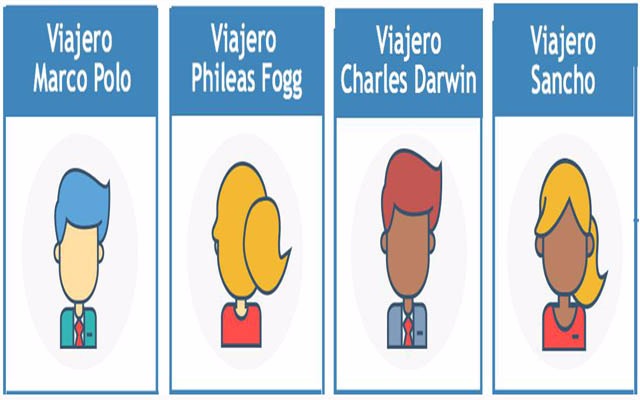
Marco Polo, Phileas Fogg, Darwin and Sancho. These are the four types of business travelers identified in an innovative study by Amadeus Spain, Descyfra and Viajes El Corte Inglés. Based on neurosegmentation techniques, the study classifies travelers by analyzing different dimensions of behavior.
The study was carried out using an innovative methodology, which makes it possible to classify travelers by analyzing different unconscious dimensions of behavior. According to Descyfra researchers, “the unconscious part accounts for 80 to 90% of our behaviors, including many decisions related to business travel”.
Among these dimensions are the need to explore or seek novelty, the need for security or to have all aspects of their trip under control, relationships with others and perseverance to solve unforeseen events throughout the travel cycle.
According to this work, these variables, once analyzed, will enable travel managers and companies dedicated to the provision of travel services within the framework of the travel market to develop a more efficient and effective travel management system;The report also helps companies dedicated to providing services within the framework of corporate travel to customize their proposals for each type of traveler, optimize the use of technology and improve the degree of compliance with travel policies. In fact, the report includes some twenty specific recommendations to guide travel managers and agencies specializing in corporate travel.
THE FOUR TYPOLOGIES
Based on knowledge of their behavior during all stages of the trip, their relationship with the main stakeholders involved (agencies, organizers, approvers, other travelers...) and the use of technology, four categories of business traveler have been established, whose name recalls some of the most famous travelers in history:
Marco Polo traveler
Like the Venetian, travelers who are part of this profile are authentic explorers, always in search of new experiences and emotions. They are passionate and curious, and easily tire of routine and repetition. In general terms, they are optimistic, extroverted, innovative and confident people. They can sometimes incur a certain point of carelessness.
Traveler Phileas Fogg
Fogg is the best example of the planned adventurer: a type of traveler who loves novelties, but tries not to leave too many things to chance. They are curious and in search of new environments, but they need to feel they are in a controlled environment. They are usually the second (after the Marco Polo) to adopt new technologies and trends, once they have been tested and safety standards have been established. They are sociable, with a touch of distrust, and although they are careful, they can be impulsive.
Darwin traveler
They do not embark on the Beagle, but are as methodical, hard-working and planned as the naturalistic dog. They are orderly and thoughtful professionals, who, in the work environment, tend to be meticulous and perfectionist. They set long-term goals and objectives and are persistent in their efforts to achieve them. They are extroverted when they gain confidence and need to feel important in the organization.
Sancho the traveler
Drawn to the road by Don Quixote, Sancho Panza summarizes some of the characteristics of the traveler who does not love novelties and seeks stability and familiarity. They are systematic people, who feel insecure in new or disorderly environments and need to have everything under control before making decisions. In their job they feel good with repetitive tasks; they tend to have clear objectives and are perfectionists, although they have a certain tendency to pessimism.
The new report promoted by Amadeus has been carried out by Descyfra, a firm specializing in the tourism and entertainment sector that has worked for companies such as Amadeus IT Group, Amadeus IT Services and Amadeus IT Services;The company has worked for companies such as Amadeus IT Group, the General Society of Authors and Publishers, Disney and Diners Club, developing initiatives that include new predictive models based on the latest research techniques, such as neuromarketing and neurosegmentation.
For Ludo Verheggen, Marketing Director of Amadeus Spain, the study is a pioneer in the field; it will help companies to improve the adoption of technology among their employees. It reveals very interesting clues that will mark a before and after in the research of the corporate traveler.