
Companies Are Tightening Controls on Expense Reports Generated by AI
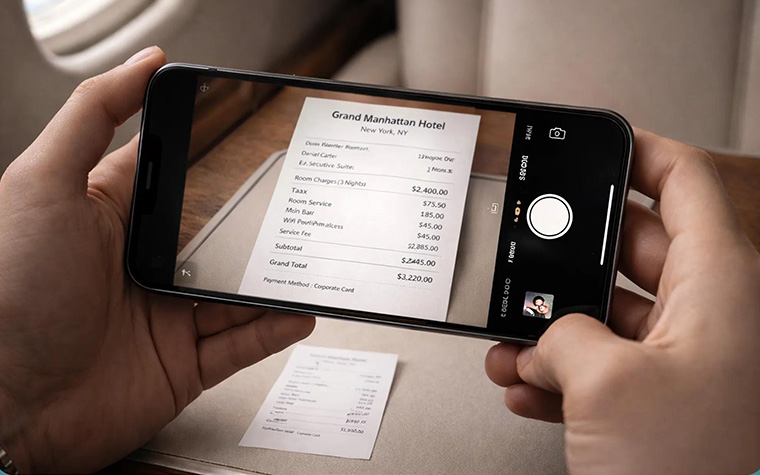
The digitization of corporate expense management has simplified administrative processes for companies and employees, but it has also given rise to new challenges. An international study conducted by Perk reveals that a significant proportion of business travelers admit to having falsified expenses at some point and that artificial intelligence is beginning to play a significant role in these practices.
Digital transformation is changing the way companies manage business travel and expense reports. However, new technological tools are not only streamlining control and automation processes, but are also being used by some employees to try to circumvent their companies? internal policies/p>
This is highlighted in a study conducted by Perk among 8,000 professionals in five countries, including Spain, where 1,000 employees who regularly travel for work and submit corporate expense reports were surveyed. According to the results, 21% of Spanish business travelers admit to regularly falsifying expenses, while 57% admit to having done so at least once during their professional careers.
Beyond these figures, the most striking finding is the growing role of artificial intelligence in this area. The report notes that 43% of respondents in Spain say they have at some point used AI-generated receipts to justify expenses, while 8% say they do so regularly.
The emergence of tools capable of creating seemingly authentic documents in a matter of seconds is causing concern among companies, especially at a time when the automation of financial and control processes is becoming increasingly prominent.
Meals, entertainment, and transportation
Expenses related to dining continue to be the area where the most incidents are concentrated. The study identifies lunches and dinners as the category in which irregularities occur most frequently, followed by entertainment expenses with clients and taxi fares or mileage.
The research also shows that these practices are widely known within organizations. Nearly eight out of ten Spanish professionals say they have observed coworkers submitting expense claims that did not reflect reality.
Although the average amount attributed to these irregularities stands at around 250 euros per year per employee in Spain, the phenomenon is of particular concern due to its potential to grow in a context marked by the expansion of generative artificial intelligence tools.
New Challenges for Companies
Corporate expense management is thus facing a new landscape. Traditionally, companies have focused their efforts on establishing clear travel policies, defining budget limits, and strengthening approval processes. However, AI?s ability to generate increasingly sophisticated expense reports, invoices, or receipts is forcing companies to rethink their control mechanisms.
At the same time, many organizations are implementing automated detection systems capable of analyzing spending patterns, identifying anomalies, and verifying the authenticity of documentation submitted by employees.
Technological advancements are turning corporate expense management into a constant race between new forms of fraud and the tools designed to prevent it. A challenge that, as the study points out, is already part of the daily reality of corporate travel.