
Airports are the safest transportation points for Spanish travelers
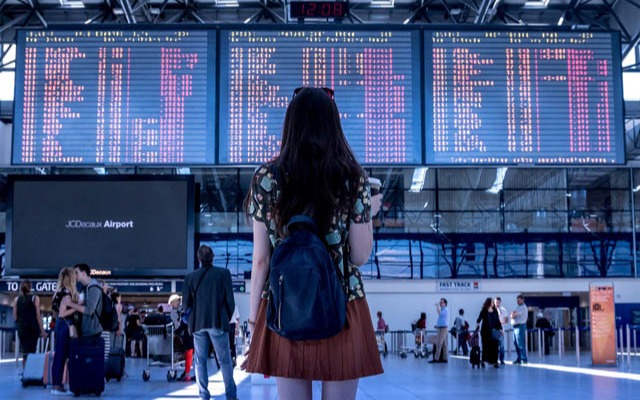
Spanish business travelers feel more vulnerable in subway and train stations than at airports, according to a study commissioned by CWT. The report also indicates that insecurity is higher in collaborative economy options, such as Uber, than in buses, shuttles and cabs.
The survey reflects a greater insecurity of travelers in our country in the stations of metro y train (52 %), than in the airports (33 %). These percentages are in line with the averages for Europe (51 % and 35 %), the Americas (52 % and 36 %) and Asia Pacific (45 % and 31 %).
The study also shows that they also feel unsafe when using road vehicles, whether they are private transportation services of collaborative economy, such as Uber, Uber, Uber, Uber, Uber, Uber, Uber, Uber, Uber, Uber, Uber, Uber, Uber, Uber, Uber, Uber, Uber, Uber, Uber, Uber, Uber, Uber, Uber, Uber;a colaborativa a, as Uber, (43 %), buses or shuttles (40 %), or cabs (35 %), and when they go out for a walk (39 %) or to have a drink in restaurants or caf as (34 %). As for staying in hotels, 21% of Spanish business travelers feel vulnerable in them.
“travel managers should focus their security programs on the areas of greatest concern to travelers,” said Christophe Renard, vice president of CWT Solutions Group. Among them, he cites issues such as having clear instructions on how to leave airports, lists of trusted suppliers and advice on how to react in dangerous situations.
WOMEN TRAVELERS
Female business travelers in Europe and Asia Pacific are more likely to feel concerned about their personal safety than men in private collaborative transport services and cabs.
38% of European female travelers say they feel unsafe or very unsafe in private collaborative vehicles compared to 31% of men. In cabs, the percentages were 36% for women and 22% for men. In Asia Pacific, this difference is even clearer.
Despite the fact that the use of collaborative economy transport services is associated with the younger generations, the data show that it is precisely these travelers who are most concerned about their personal safety in them. They are followed in the ranking by Generation X travelers and baby boomers.
According to the study, the gender differences seem to correspond to generational differences. Perhaps this is because among men, business travel becomes more common as they get older. For women, however, the reverse is true: the younger they get, the more likely they are to have to engage in corporate travel.