
"The future of hospitality lies in artificial intelligence and hyper-personalization."
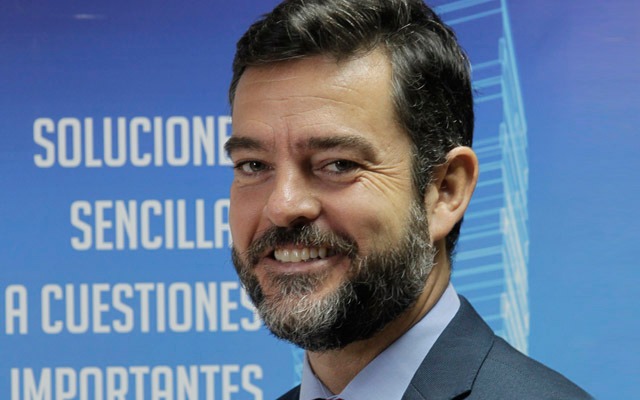
Hotels have incorporated innovative solutions that allow them to be more efficient in their processes and more aligned with the preferences of their customers. The closest are those related to the 'connected everything' and the Internet of Things (IoT), which allow for a 'hyperpersonalization' based on data, according to Álvaro Carrillo, general director of the Instituto Tecnológico Hotelero (ITH).
?What are the innovations that have most transformed the hotel industry in recent years?
Looking back, the advent of the internet in the late 90s, the ability to shop on the web in the 00s and the concept of 2.0 concept starting in 2007, along with smartphones in the last decade, have been the big technological changes that have altered the way we search, book, enjoy and share travel, creating giants such as Google, Boking.com, Expedia, Airbnb or Tripadvisor, which make the tourism sector today a much more digital and connected world.
Hotels have incorporated innovative solutions that allow them to be more efficient in their processes and more aligned with the preferences of their customers. The closest solutions are those that have to do with the “connected everything” or Internet of Things (Iot), in which the role played by home automation is very important, with solutions that are easy to understand and use by the huésped.
Solutions in the biometrics environment are another area in which progress is being made. On the one hand, in the biometric signature that will speed up procedures such as registration or in the field of security. And, on the other hand, in the recognition of emotions that will allow empathizing and personalizing the service according to the traveler's preferences.
There is a lot of talk about artificial intelligence in any field, and it is in the hotel industry where many improvements have been implemented, such as predicting demand or adjusting the best price to the service. Automation, digitization or robotization of certain processes is another trend that will help hotels to be more efficient and dedicate more time to personalized customer service.
Artificial intelligence is a reality that is present in what is now called the "hyperpersonalization", which allows to adapt the offer and services to the customer, anticipating their demand thanks to the data that we leave as users in our day to day.
What level of technology do Spanish chains have compared to large multinational groups?
The large Spanish chains have an international presence and have expanded very successfully, positioning themselves as a benchmark, especially in terms of customer relations, quality of service and brand positioning.
?Where is the middle ground between the ‘coldía’ technologyía and the personalized and human experience increasingly demanded by the customer?
Precisely, the maturity of the hotelier has reached a point where he uses technology as a support so that his automatic processes can be done by machines and people can devote the time they used to spend on those tasks that did not add value to the personal treatment, to encourage creativity and enhance talent. Technology, on the other hand, provides a lot of data that is used to make better decisions.
"There is a risk of technological saturation for the user?
There are visible solutions and invisible solutions for the customer. Every day, more and more solutions are being implemented that are affordable for customers to use and invisible to them. An example of this is climate control or home automation that, integrated with customer preferences, make the customer's stay more comfortable without overly complicating their use.
Until very recently, we have all experienced more visual than practical innovations in some hotels, such as impractical shower faucets, lighting that is difficult to use or air conditioning that is almost impossible to adapt to each person's preferences. The trend is precisely to make everything simpler, trying to make these solutions very intuitive for the user.
Who benefits more from developments related to yield management, the hotel or the customer?
It benefits both. It benefits the hotel to the extent that it benefits the customer. A full hotel does not mean that it is a profitable hotel. At the end of the day it is not a question of who benefits the most from a specific event, it is a balance between different variables. By modifying prices according to different variables, we make "affordable" our product to a greater number of potential customers.
? How is technology contributing to the fight against climate change?
A recurring theme in talks with hoteliers is the commitment to sustainability. Hoteliers are aware that they are part of a destination that they have to take care of to make it attractive. They do their part to take care of their surroundings, taking simple and, in some cases, creative measures, such as sharing the benefits provided by a more sustainable use of the establishments with their clients, offering additional advantages and offers. On the other hand, the implementation of sustainable measures that have to do with energy efficiency, result in a benefit not only global but also particular in terms of cost savings.
The room of a hotel should always be a little better than the one the customer wants. From the Instituto Tecnológico Hotelero we think that it will be a comfortable and easy to customize room for any type of client, in which the domótica allows to personalize environments and moments of the day in relation to the preference of who occupies it. They will be intelligent rooms in which everything is connected and instructions can be given by voice or through simple means for any user.