
"In the recovery of travel, priority will be given to visits to clients."
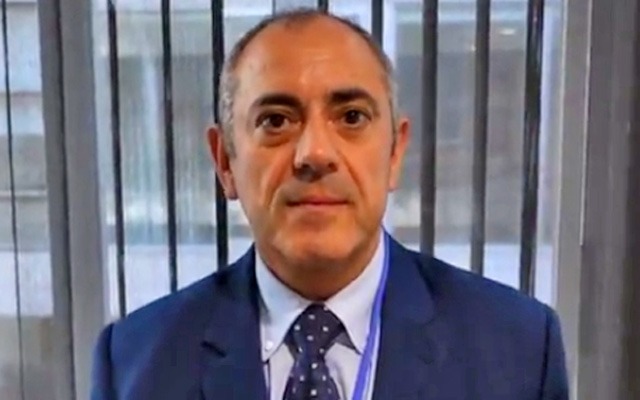
AcelorMittal is a Luxembourg-based steel multinational with several production centers in Spain and relationships with many sectors, from the automotive to the food industry.José Ángel Aguirre, its Human Resources operating director, discusses the challenges ahead in terms of teleworking and the recovery of business travel.
José Ángel Aguirre, its Human Resources operating director, discusses the challenges ahead in terms of teleworking and the recovery of business travel.
"How did you deal with the coronavirus crisis during this time?
At the beginning, the situation caught us all at once, like everyone else, but the company immediately organized the health issue in canteens, plants, locker rooms, etc. There were occasional outbreaks, but we have our own medical teams and we were able to control them. The plants have continued to produce all this time, although the demand has dropped a lot. The vast majority of the workforce has been teleworking, those who had the possibility to do so due to their function. But, since June 15, people are rejoining.
"How do you value the teleworking experience in all this time?
People need contact. On the one hand, teleworking is good, it offers good opportunities for meetings, but the model is a bit burnt out now. In the future we will continue to use videoconferencing, although not as intensively and continuously as we have done so far. For customer relations, face-to-face meetings are very important.
To what extent are virtual internal meetings effective?
Many internal meetings can remain virtual, but others cannot. The audiovisual tools we have are better and we are used to them. IT managers comment that there is already an inertia generated with this issue. However, there are meetings on new issues or on more sensitive topics where it is not easy to make decisions if it is not in a face-to-face format. What has happened during the time of confinement and with the restrictions on mobility is that these types of meetings have been delayed, but they have to be resumed.
? In what way have the criteria for authorizing travel changed?
Up to now, very little travel has taken place. Strictly the essential. The criteria being considered is to prioritize visits with clients. We are all aware of the costs, but I don't think the situation is going to change much either, because salespeople are already very used to making the most of their trips. You have to optimize resources, but in harmony with each person's life.
You think that the urgency of dealing with the crisis has left sustainability projects in companies on the back burner?
The opposite is probably going to be the case. The European Union's Next Generation funds are very focused on sustainability. They aim to promote a change in the production model. Many companies will have to revise their projects to adapt them to the new criteria if they want to access the aid.