
"An event can be perfectly organized and yet completely forgettable."
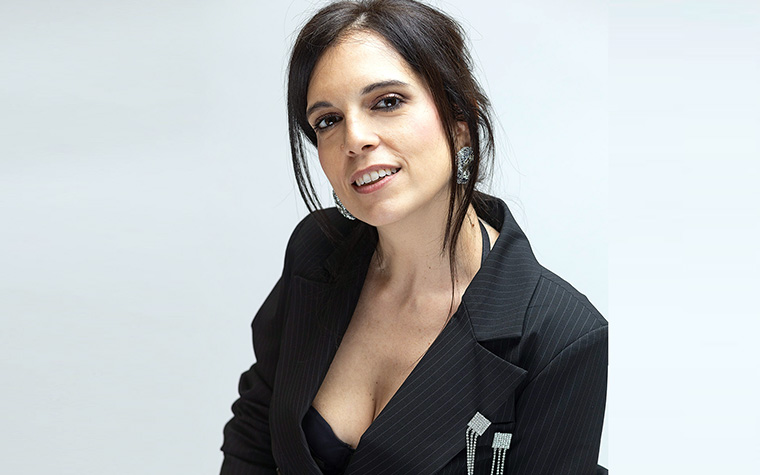
Experience Designer and founder of Sensoriath and Àncora d?Amore, Dalila Azzurra Giordano approaches event design from a human-centered perspective, in which strategy, emotion, and sensory stimuli are all part of a single narrative. In this interview, she analyzes how experiences can help transform the perception of a brand and reflects on the role of technology, participation, and human connection in the future of corporate events.
What does it mean to design experiences for corporate events, and how can this approach transform the perception of a brand?
Designing experiences at corporate events means moving beyond thinking solely about what happens during an event and starting to consider how you want to connect with people. An event can be perfectly organized and yet still be completely forgettable.
Experience design focuses precisely on that difference. It?s not just about choosing a good location, an attractive setting, or a unique activity, but about building a cohesive experience in which every element serves a purpose and helps create a specific perception.
¿How does Sensoriath integrate brand strategy, emotion, and sensory design into the creation of corporate events?
Sensoriath is a human-centered methodology: the starting point is always the person. In the case of a company, this means starting with the personal story of its founder, because behind every business project there is a story, values, and a vision.
It is precisely through that story that we can reach the core, the heart of the business. That is where the essence lies, from which we can build the concept of the experience.
From that point on, the design process begins. Strategy, emotion, and sensory design are developed as parts of a single journey. Qualitative tools are used to delve deeper into the identity and the perception we want to generate, and, based on that knowledge, to develop the experiential strategy and multisensory design.
Thus, every element of the event?from the space to the materials, lighting, sound, scents, flavors, and rituals?stems from a story and serves a specific purpose.
What role do the senses, space, and narrative play in the design of brand experiences?
The five senses are our first point of contact with the outside world, and we use them constantly?often unconsciously. The brain picks up an external stimulus, interprets it, and generates a thought. Then, that thought transforms into an emotion, the emotion into an intention, and the intention into an action.
That is why, when designing a multisensory experience, stimuli are neither decorative nor chosen at random: they are intentional. For example, for an energy drink brand, using silk simply because it?s elegant could be inconsistent. The materials, lighting, sound, scents, flavors, and space must reinforce what the brand wants consumers to feel.
The narrative must integrate all these elements to weave a single story. Whenever the context allows, the goal is also for the person to be a protagonist rather than simply a spectator. When people participate?when they take action and are directly involved?the experience takes on a more personal meaning and is more likely to be remembered. Furthermore, that participation can become a real point of differentiation for a brand.
How can a corporate experience be personalized to connect with diverse audiences without losing the company?s identity?
To answer this question, we must first change the way we view the audience of an experience. It?s often forgotten that, before being representatives of a brand?whether employees, customers, or professionals?they are people. And that is precisely the purpose of an experience: to connect people.
The company?s identity is the starting point for building the concept and the universe of the experience, but emotion isn?t generated toward a company understood as an abstract entity?it?s generated toward a person. And companies, after all, are made up of people.
At Sensoriath, through our human-centered methodology, we seek to create experiences capable of fostering a genuine connection between people and the brand. When someone feels moved, understood, or establishes a connection, that emotion becomes associated with the person who sparked it.
Therein lies the true value of a corporate experience: not simply getting someone to remember an event, but to remember how they felt while experiencing it and who made them feel that way. That connection can later evolve into a bond with the brand and, in turn, into a customer relationship.
How can companies measure the impact and return on investment of experience design at their events?
The impact of an experience can be measured at different levels, and not all of them are necessarily financial or immediate. There are specific metrics such as attendance, lead generation, engagement, conversion, or purchase intent.
But when it comes to experience design, there?s another fundamental dimension: how a person?s perception has changed after living through the experience. That?s why, in addition to quantitative metrics, it?s important to incorporate qualitative tools that help us understand how the person felt, what they remember, what association they?ve formed with the brand, and whether the experience has created a genuine connection.
The true return lies in the combination of both dimensions: what can be measured immediately and what the experience manages to generate in the medium and long term. An experience may end in a few hours, but if it manages to change a perception, create a bond, or cause someone to remember a brand differently, its impact extends far beyond the day of the event.
What trends will shape the future of experience design, corporate events, and brand activations?
One trend we?re already seeing is the shift from events where people simply participate to experiences where they take center stage. However, there are still concepts being incorporated into events simply because they?re trendy, without being truly connected to the brand. The experience must always have a purpose and be relevant to what the brand wants to convey.
Another clear trend is the incorporation of artificial intelligence and new technologies, which can add value when they enhance the experience.
At the same time, the more virtual life becomes, the greater the desire to reconnect with human, physical, and authentic experiences. Both trends will coexist, and the challenge will lie in knowing when to use technology and when to reconnect in person.
Technology can enhance an experience, but it should not replace what allows us to feel and connect as people. Between these two possibilities, Giordano opts for the experience.