
"An event is not designed to be perfect, but to leave a lasting impression."
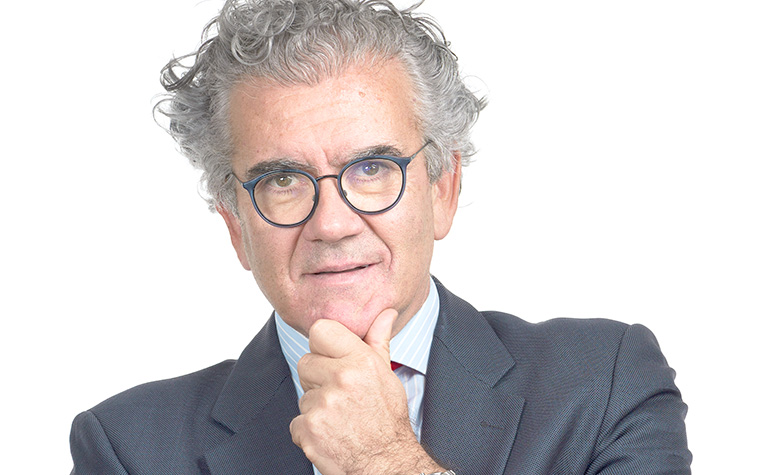
Founder and CEO of MdS Global Marketing and Senior Advisor on Customer Experience and the Silver Economy at Atrevia, Juan Carlos Alcaide argues that the corporate event experience is not a matter of aesthetics or technological display, but rather a strategic discipline that combines rigorous measurement and human sensitivity.
In this interview, he analyzes how to create a memorable experience, what indicators can be used to evaluate it, and why true success begins before the event and ends long after.
When we talk about a "memorable experience" at a corporate event, what are we really talking about?
Something seemingly simple and extraordinarily complex: that the attendee leaves with the feeling of having been understood, cared for, and enriched. What is memorable is not that everything goes perfectly. Technical perfection alone does not create memories. What leaves a mark is when quality and warmth together achieve excellence. An event produces a double result. On the one hand, figures, objectives, and metrics. On the other, relationships, emotions, and memories. Operations and emotions are not independent dimensions: they need each other. The heart decides and the brain justifies it afterwards. What the attendee will talk about the next day will not be the Excel spreadsheet, but how they felt.
In business, everything must be measured. What KPIs allow us to evaluate something as intangible as memorability?
Measuring is essential, but without falling into cosmetic KPIs. Not everything that matters fits into a spreadsheet, although it can be approximated with appropriate indicators.
The first dimension is the promise fulfilled. If the expectation generated does not match the actual experience, dissatisfaction is inevitable. It is advisable to measure whether the event exceeded expectations, the volume of complaints due to non-compliance with what was announced, and the actual degree of compliance with the agenda.
The second is friction. Attendees should not have to "fight" with the event. Accreditation times, peak queues, incidents per hundred attendees, and perceived effort reveal whether the experience flows or gets stuck. Every unnecessary wait erodes the excitement. The third is the human factor. It is not just about speed, but also about treatment. Resolution at first contact, responsiveness to incidents, and satisfaction with the service received determine the final memory. Measuring only with a stopwatch and without empathy impoverishes the experience.
The fourth dimension is content. It is not enough for people to like it; it must be applicable. The evaluation of the sessions, the perception of medium-term usefulness, or the length of time spent in the room indicate whether the event provides real value.
The fifth dimension is emotion and memory. Asking, 24 or 48 hours later, what moment remains in the memory provides qualitative information of enormous value. So does the intention to return or spontaneous recommendation. And finally, trust, including digital trust. The actual use of technology, the ease of processes, and the perception of human support when needed make all the difference. Technology should amplify empathy, not replace it. What role does the likelihood of recommendation, or NPS, play in this context? It is useful, but insufficient if used in isolation. NPS indicates whether there is a problem, but it does not always reveal the cause. At an event, a seemingly minor incident?poor signage, a sound problem, excessive queuing?can spoil the overall memory. That is why it should be complemented with metrics of effort, emotion, and subsequent behavior.
The customer journey of an event begins before the event itself. What things need to be taken into account?
That's right. It starts when someone wonders if it's worth attending, looks for information, compares, and decides. The event doesn't start with the stage, but with the first communication. And it doesn't end with the official closing, but when the attendee decides whether to return, recommend it, or disassociate themselves. Designing that journey well changes everything, because every point of contact adds or subtracts. Before the event, the key is to reduce anxiety and offer clarity. During the event, everything is choreography: rhythm, consistency, and details. Afterwards, loyalty comes into play. Without a post-event strategy, the impact is diluted and the experience evaporates. Where do failures tend to be most concentrated: before, during, or after? Afterwards. The operational urgency of the moment overshadows the strategic. Without a "chapter two," the event becomes an isolated episode. On the other hand, when there is continuity?follow-up content, community, follow-up?it transforms into a relationship and a habit.
Everyone talks about personalization. What does it really mean?
It is not about using the attendee's name in a communication. Personalization is making them feel that something was designed for them. It requires real segmentation: by purpose, role, expectations, or needs.
It can be seen in programs differentiated according to profile, in intelligent networking based on real interests, in communications tailored to each group, and in formats adjusted to different learning and relationship rhythms. Artificial intelligence facilitates this design, provided it is used judiciously.
How can we measure whether this personalization works?
By analyzing conversion and engagement by segment, not by global averages that dilute the information. Also by means of perceived relevance: whether the assistant considers the content to be relevant to them. The quality of the contacts generated and the absence of complaints about intrusiveness are clear indicators. Personalization without trust is tantamount to invasion.
What are the mistakes that most damage the attendee's experience?
The overall strategy rarely fails. What usually fails are the repeated details that the attendee interprets as carelessness. Poorly sized queues, broken promises, cumbersome technology, staff lacking emotional intelligence, and an obsession with measuring only costs and times are common mistakes.
A queue is not just a logistical problem; it is an emotion of frustration. Poorly managed expectations create dissatisfaction. Automation without a human touch generates rejection. If only efficiency is optimized, the result is coldness. And coldness does not build loyalty.
What trends are most disruptive in the corporate events experience?
It is not the device that is disruptive, but the balanced combination of useful technology, visible humanity, and trust. Artificial intelligence can recommend agendas, provide guidance, and answer questions, always referring to a person when necessary. Digital empathy must be designed and measured. Privacy and transparency become competitive advantages. And it makes less and less sense to rely exclusively on NPS as the sole indicator.
In addition, the sensory and scenic design of the experience is gaining momentum: rhythm, pauses, atmosphere, and consistency with the brand. Very different results can be achieved with the same resources. The difference lies in the care taken.
If you had to give one final piece of advice to an event director, what would it be?
Stop designing an event and start designing the memory you want to leave behind. The numbers will come later. Attendees may forgive a one-time mistake, but they will not forgive being ignored.