
This year, airlines will pay an additional cost of 234 million euros for the use of PAS in Spain.
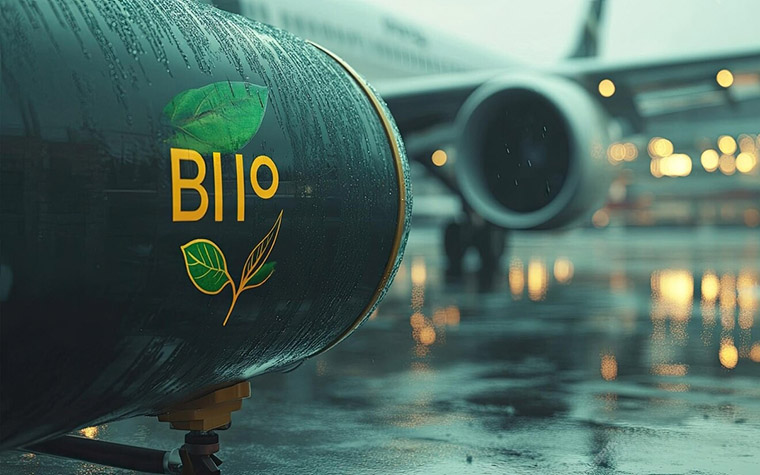
Airline companies will pay a cost overrun of 234.2 million euros by 2025 for the use of 2% sustainable aviation fuel SAF in Spain;The ALA (Asociación de Líneas Aérea (ALA), which calls for incentives to production to scale up its development and reduce its price differential with respect to conventional kerosene.
“We bet on the SAF to be the most effective solution in the short term to advance sustainability in the aviation sector, but today is a product little developed and its price is high, between 3 and 6 times more expensive than conventional fuel, so its use will increase the costs of airlines considerably. To cushion this rise, incentives must be set as soon as possible for its production," says ALA president Javier Gándara.
In 2025, the mandate coming from Brussels known as ReFuelEU Aviation begins to be implemented, which establishes quotas for the use of UAS ranging from 2% in 2025 to 70% in 2050. Only this year 2025, the total bill in Spain will be just over 332 million euros, an item that will increase as the share of this sustainable fuel is progressively increased, especially once the use of synthetic or eSAF, generated from renewable energy, is introduced.
HOPE 2030
Specifically, the cost overrun that airlines in the EU will have to bear in 2030 when the PAS quota rises to 6% and 1.2% synthetic PBS is introduced will rise to around 9.?9.5 billion.
This cost overrun will have to be added to payments for trading ETS allowances, which will become sharply more expensive from 2026, when free emission allowances disappear;This will be compounded by the fact that the supply of allowances will be progressively reduced, with the result that demand will exert pressure on their price.It is necessary for the Administration to accompany air transport in its ecological transition, given that it is a sector that is difficult to decarbonize. For this reason, solutions that make this transition possible should be favored, including the PAS. Furthermore, the development of FFS is an opportunity for the country that goes beyond the air sector, since it favors the reindustrialization and energy independence of Spain and, if it is done well, it can become a world exporter. This involves supporting its production and doing so as soon as possible," Gándara stresses.