
The new European regulations against greenwashing and positive tourism will set the agenda for TIS2026
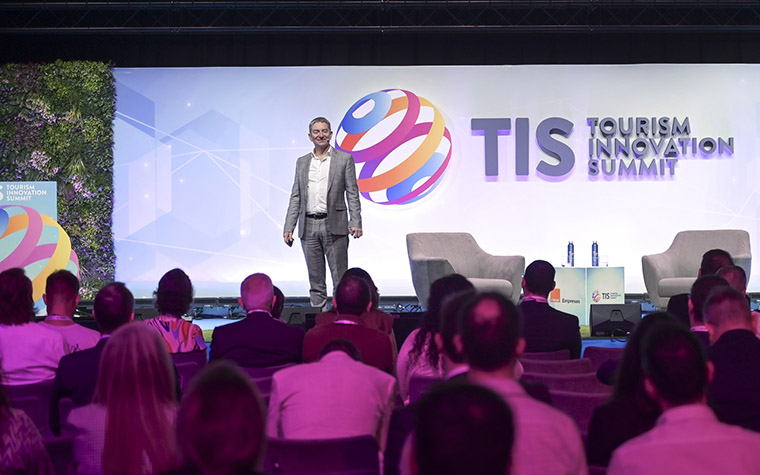
The seventh edition of TIS ? Tourism Innovation Summit ? will bring together more than 400 international experts to analyze the main ESG challenges facing the tourism sector, ranging from new European regulations on environmental claims to measuring hotels? environmental footprints, regenerative tourism, and the sustainable development of rural destinations.
The Spain 2030 Sustainable Tourism Strategy proposes transforming the tourism model based on three dimensions: socioeconomic, environmental, and territorial. The goal is to strengthen the sector?s competitiveness and profitability, preserve the natural and cultural values of destinations, and move toward a more balanced distribution of the benefits and burdens resulting from tourism activity.
In line with these challenges, sustainability will be one of the main themes of the seventh edition of TIS ? Tourism Innovation Summit, which will be held from October 6?8, 2026 at FIBES Seville and will bring togethermore than 400 international experts to address issues such as the new European regulation on environmental claims, the adaptation of tourism activities to the ecological conditions of each destination, measuring the environmental footprint of accommodations, promoting regenerative models, and the role of rural tourism as a driver of sustainable development.
A New Era for Sustainability Communication
Tourism companies and destinations will face a new landscape starting on September 27, 2026, the date on which the provisions of the European Directive to Empower Consumers in the Green Transition will take effect. The regulation strengthens protection against misleading commercial practices and requires that environmental claims directed at consumers be clear, specific, and sufficiently substantiated.
This new reality will increase the need to review how environmental commitments and results are communicated, given the risk of both engaging in greenwashing and opting for so-called greenhushing, which leads some organizations to scale back or even silence their environmental communications for fear of legal or reputational challenges.
In this context, Xavier Font, professor of Sustainability Marketing at the University of Surrey (United Kingdom), will analyze the opportunities and risks arising from this new regulation and will offer guidance for tourism organizations to communicate their progress in a way that is compliant with regulations, credible, and relevant to consumers. He will also address how to back up environmental claims with evidence, protect brand reputation, and strengthen travelers? trust.
From Sustainable Tourism to Positive Tourism
The conference will also delve into the concept of nature-positive tourism, an approach that proposes adapting tourism activities to the ecological conditions of each region and transforming the sector into an active agent in the conservation and restoration of ecosystems.
Daniel Turner, head of the Romanian Ecotourism Association; Bart Schutz, Tourism Manager at Rewilding Europe; Andrei Blumer, co-founder and director of Animondial; Jóhan Pauli Helgason, Development Manager at Visit Faroe Islands; and Manuel Filipe, Director of the Institute of Forests and Nature Conservation of the Autonomous Regionof Madeira, will share regulations, tools, and strategies aimed at integrating the protection of biodiversity into the operations of tourism companies and destinations. Among other topics, they will analyze how to identify the impacts of tourism on nature, respond to changing ecological conditions, and develop projects that actively contribute to the restoration of natural areas.
Joining them will be Xavier Font, Deputy Director General of Territorial Tourism Development at Turisme de Catalunya; Antonio David Ballesteros, Director General of ProArte; Pablo Rodríguez, Consulting Partner at GEOCyL; Jorge Vallina, CEO of Global Consultoría Turística; and Arturo Crosby, CEO of Forum Natura, will share real-world examples of how to promote tourism models that are more sustainable, inclusive, and regenerative. The goal will be to demonstrate that it is possible to generate prosperity, preserve heritage, and improve the quality of life for local communities through collaboration among businesses, government agencies, destinations, and citizens.
Likewise, destinations such as Prague, Copenhagen, Dubrovnik, and Amsterdam will address sustainability from the perspective of coexistence with the local population. They will share strategies, new tourism models, and case studies for managing visitor flows, promoting a balance between tourism activity, the well-being of residents, and a positive impact on the local economy.
The Future of Rural Tourism
The conference will also feature the presentation of the 2026 Rural Tourism Observatory, where destinations, experts, and industry representatives will analyze the trends shaping the future of this sector and its contribution to the regional diversification of tourism.
The report will use using data, the trends among new rural travelers, which destinations are successfully setting themselves apart, and what strategies can turn tourism into a source of economic and social development for local communities. It will also analyze tourism?s capacity to preserve regional identity, create job opportunities, combat depopulation, and redistribute tourist flows beyond traditional destinations.
Measuring the environmental footprint of hotels
Measuring the environmental impact will be another key focus of the Tourism Innovation Global Summit, featuring an analysis of the implications for the hotel sector of the draft of the new European guidelines on the Environmental Footprint of Products and Services (PEFCR).
Representatives from the European Commission and research specialists will analyzehow these rules aim to provide the sector with a harmonized method for measuring and reporting the environmental footprint of lodging services, facilitating their implementation in hotels.
Additionally, as part of TIS2026, the Tourism4Nature Awards will be held, with the goal of identifying and raising awareness of tourism models and initiatives that generate benefits for nature, the landscape, biodiversity, and local communities.