
Summary of the corporate travel insurance training sessions
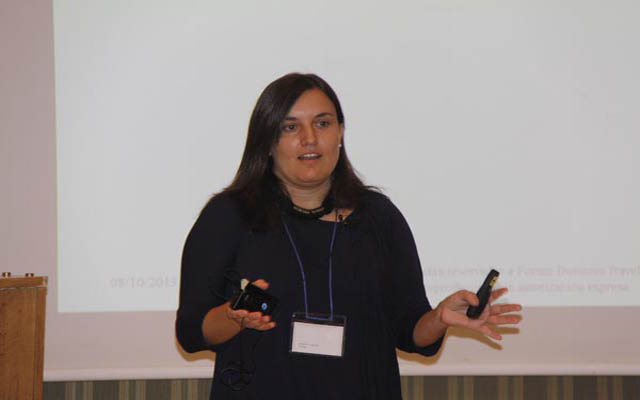
The safety of the travel program is very important, because human lives are at stake. Companies should be more aware of this reality. The role of the travel manager in this process is essential. Summary of the presentation "Everything you need to know about corporate travel insurance", given by Raquel Vaquero, business travel manager at Gestamp, at the October training sessions of Forum Business Travel.
According to the current diagnosis of the corporate travel program, what companies demand is the achievement of savings. As a general rule, traveler safety and satisfaction are not managed with the same priority. But little can be done to improve communication and involve the traveling public in providing necessary information.
The traveler is a blank sheet when it comes to insurance. He moves around countries with heterogeneous legislation. Companies embark on long projects abroad and security becomes more complicated. That is why they need to pay more attention to the conditions under which travel takes place, not only for image reasons, but also as a way of keeping employees motivated.
What does the middle payment method contribute to the configuration of travel insurance? A direct and quantifiable cost saving, mainly due to the fact that the company does not need to directly contract an assistance policy.
ASSISTANCE COVERAGE
Persons.- Accident transfers, medical assistance, medicines, repatriations, etc.
Luggage.-
Luggage.-
Persons. Loss, delay, lost or stolen documents, etc.
Delay.- Apart from the coverage of the carrier, supplement for delays, cancellations, missed connections, delay in arrival at the transport on the way. Etc
Anulación.- Illness, accident, death, etc
TYPES OF INSURANCE
1st Degree
Accident insurance.- In the cycle of the trip from the departure from home to the arrival of the means of transport.
24H insurance.- Accident at destination.
Accident at destination.
Accident at destination.
Accident at destination. Accident at destination.
2º degree
Medical expenses.
Contingencies and others.
NEGOTIATION PROCESS
The first thing is to analyze the needs and priorities of the areas. The negotiation is usually led by the travel manager or the procurement area, but it is necessary to involve the rest of the departments, mainly Human Resources, Legal, IT and Finance.
RFP PROCESS
In the report, no details should be omitted. They are all important. The presentation of the company, its profile, its geographical location, the type of travel it undertakes, the volume of travel, the number of operations, the number of accounts in the event that different companies need to be covered.
In addition: requirements and conditions, deadlines, procedures, protocol with employees, confidentiality, etc.
INTERNAL AND EXTERNAL COMMUNICATION
This is the most important part, an aspect that needs to be reinforced, both to the traveler and to the other departments involved. Externally, with the means of payment and with the travel agency. It is necessary to reflect in travel policy the coverage and instructions, especially with the means of payment used, which are largely those that are linked to insurance.
Communication channels:
1. It is an inexpensive and very effective tool. It allows bidirectional communication. Surveys, suggestions, documentation, examples, practical information, etc.
2.-Intranet: It complements the previous one.
3.-Mailing: The least advisable, since the chain can be broken. In any case, it is a widely used channel.
CONCLUSIONS
Sensitize.- The importance of safe travel.
Convince.- Not only know, but also transmit.
Involve.- The departments involved.
Communicate.- It is what closes the whole circle of the process.
Involve.- The departments involved.
Communicate.- It is what closes the whole circle of the process. Convince Convince.