
Madrid is the second most expensive capital in southern Europe, but maintains its attractiveness for quality of life
Although the cost of living has soared in much of the continent, Madrid has positioned itself in 2025 as the second most expensive capital city in southern Europe, behind only Lisbon,
according to the Working Abroad Index 2025 from banking services company Bunq. Despite this, it retains its appeal among digital nómadas.
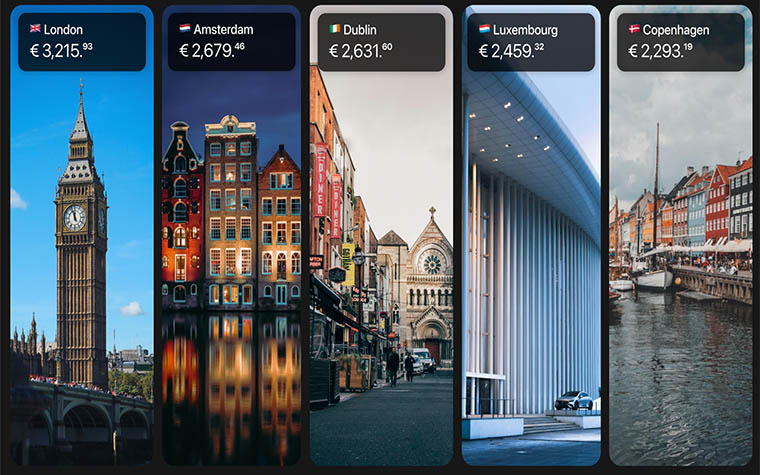
The Bunq study puts Madrid's total monthly cost at 1,680 euros, above Rome, Valletta, Athens and Nicosia. However, this regional positioning coexists with an increasingly marked contrast: even being one of the Mediterranean cities with higher prices, Madrid continues to be much more affordable than the major capitals of northern Europe, where monthly costs exceed 2.600 euros in the case of Ámsterdam or Dublín.
The study confirms that southern Europe has also experienced increases in the cost of living, although more moderate than in other regions. Lisbon recorded a increase of 3.3%, just below the European average, while Rome reached 10% and Sofia 12.4%.
This uneven behavior evidences the price gap between the north and south of the continent: even as the second most expensive capital in the Mediterranean, Madrid maintains differences of up to 60% compared to cities in the north.
This dynamic is one of the reasons why Madrid continues to be perceived as a competitive destination by international professionals. Its prices, still higher than some southern capitals, continue to offer a more balanced alternative for those seeking quality of life at a sustainable cost.
After a steep 25% increase in the cost of living in 2024, Madrid has now reversed the trend. In 2025, total costs have stabilized, even showing a slight drop of 0.5 % compared to the previous year. The study puts the average total monthly cost in Madrid below 1,700 euros, making it one of the most attractive capitals in Western Europe for those working remotely and looking for value for money.
In terms of specific price categories, the average rent for a one-bedroom apartment fell by 4.5%, while prices for coworking spaces fell by 12.1%, from 173 € to 152 € per month.
Madrid was one of the few capitals to register a slight drop (−0.5%), and Lisbon, with a moderate increase of 3.3%, was just below the European average. This trend reinforces the strong position of the Iberian Peninsula as one of the most attractive regions in Europe for digital nomads. Our research shows where your money goes, so those living abroad can make choices that fit their lifestyle: spend better, enjoy more and focus on what really matters, wherever you are," says Joe Wilson, Chief Evangelist at Bunq.
Besides prices, Spain's appeal is also reflected in quality of life and the growing arrival of international talent. In July 2025, the country will reach 7.05 million foreign residents, representing 14.3% of the total population.
This growth shows that Spain attracts not only tourists, but also an increasing number of young professionals who choose the country as a base for living and working.
For its part, the Expat Insider 2025 report ranks Spain first in the world in quality of life for the fourth consecutive year, reinforcing its attractiveness as a stable and balanced destination.
As the cost of living in Europe's major capitals becomes more expensive, Spain is establishing itself as an open and competitive destination for global talent, a modern, accessible and culturally vibrant alternative. With a balance between productivity, wellbeing and affordability, the country is positioning itself as one of the strategic hubs of the new era of remote work.