
International business travel grows more than 6% between January and September
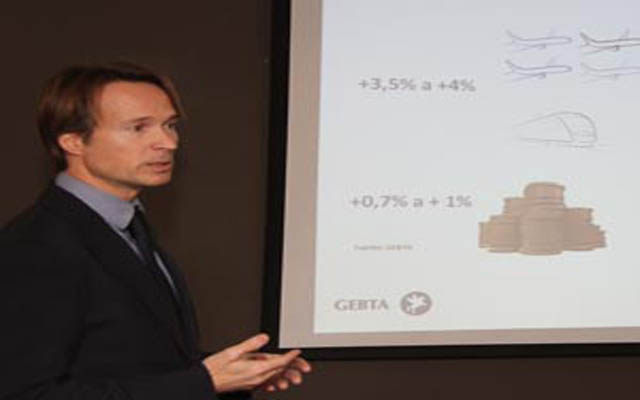
The number of business trips by Spanish companies is growing in all areas, according to third-quarter data from the Observatory of Gebta España, the association of agencies specializing in business travel. Long-haul destinations continue to show the biggest increases.
With consolidated growth of two days to Asia (21.9%) and the Americas (10.2%), business travel by Spanish companies or companies with delegations in our country continues to opt for long-haul.
Gebta España again found in the period January-September that persists in a “milimétrica” correlation between international business travel and exports españolas; showing growth of over 6% in both.
TENDS
-Monitoring in transversal management: The association observes a certain braking behavior (”empty deposit”) and seasonality starting from the úlast months of the yearño;, so it is recommended to keep the guard on good transversal management in companies given the inelasticity of the budget.
For Gebta, the challenge in the next stage of internationalization maturity may also consist of consolidating mobility as a strategic competitive advantage, given that the dynamics of the market lead travelers to move more and more frequently and farther away.
Comparative opportunity: Spain's main competitors will continue to disinvest in business travel, despite the fact that their exports have been weighed down. Spanish companies are aware that they must travel more frequently to more remote destinations. Their average costs are favorable and they have a new opportunity to continue improving their export quota.
-Opportunity to improve business productivity: It is observed that now the conditions of travel should also seek to introduce policies and tools that favor the productivity of the traveler, and reduce the possible stress generated by travel. There is a way to optimize the return on business travel, not only through savings, but also by facilitating work and rest environments for travelers that contribute to improving business productivity.
-Focus on productivity: According to the study, focusing on productivity consists of eliminating hidden costs without abandoning the “savings”. Not being able to work and “wasting” time turns that leg of the journey into a hidden cost. Regarding the application of the “usual" travel policy", this means that the company can estimate that the traveler's “avoidable” lost time makes a higher ticket cost profitable.
TRAVEL EFFICIENCY ELEMENTS
Gebta has evaluated in its study the margin available to companies to review travel productivity. Among its conclusions it has detected:
1.- Instead of booking the cheapest fare, in a 22% of the occasions it is more cost-effective to assume a higher ticketing cost because the savings generated is lower than the hidden cost of not working.
2.- For the company it can reach up to 78% of occasions when it is convenient to eliminate the hidden cost of lost time depending on routes and profiles.
3.- The opportunity to be able to assume a higher cost is given in all types of routes (long, medium and short radius), and in all profiles of frequent travelers segmented by pay level (high-high, high, medium-high, medium).
3.