
Coexistence of analog and digital travelers, a challenge for companies
With the arrival of the millennial generation to positions of responsibility, companies face the challenge of adjusting their travel policies to different employee profiles with a very different culture, from those who do not dare to leave without their paper documentation, to those who solve everything through the mobile. Forum Business Travel has analyzed the evolution of business travel.
With the attendance of more than a hundred travel managers, this morning ended at the NH Pódium hotel in Barcelona the professional meeting that, along with the one that took place last Tuesday in Madrid, has discussed the keys to business tourism in our country under the slogan "The other face of business travel".
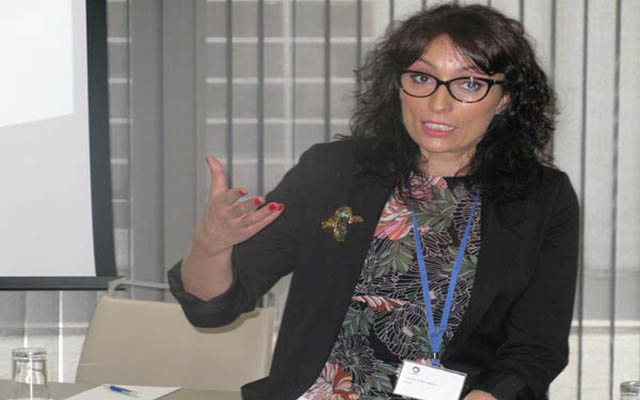
One of the most pressing challenges facing companies is to respond to the different needs of employees who have to travel for work.Making life easier for travelers is essential for their performance and productivity," explains Veronica Oca, an expert in travel management and one of the speakers at the conference.
The coexistence is not easy between analógicos travelers, accustomed to manage their trips in the old way; the híbridos, who begin to embrace new technologies; and digital, which only book and communicate with its central through mobile devices.
According to Ocaña, “the travel manager is in the position of providing customized tools to meet the needs of each, although the management of travel advances unstoppably towards the digital world”. As underlined Óscar García, co-founder of Forum Business Travel, “it is no longer worth the cut-and-paste, nor the café for all”.
“Throughout 2015 we have already seen how the travel policies of many companies have evolved putting the traveler as the central pillar of the policy, focusing on safety and improving the travel experience, which does not imply that the focus on cost optimization ceases to be, far from it, this is already a classic. In 2016, this trend in travel policy is set to continue and will spread within a greater number of companies,”, as noted by Charles de Bonnecorse, director of sales at American Express Global Business Travel España.
In addition to adapting to the travel culture of employees, Spanish companies are making real trade-offs to ensure that travel is carried out in the greatest comfort without blowing their budgets, even encouraging savings, because the crisis has left an undeniable lesson for a long time: you have to remain efficient with costs before, during and after the trip.
NEW PLAYERS
Forum Business Travel has also detected the growing importance of new players in the market. A very clear case is that of the train. Since 2010, European companies are spending 30% more per year on this means of transport, according to figures provided by Aurélie Lucas, of Voyages-SNCF España. The reason? There is a need to save time, to avoid stress, to avoid having to remove shoes at a checkpoint? The train is in fashion," he says. And there are more and more services tailored to business travelers.
Other providers with growing weight in business travel are hotel consolidators. HRS is a good example. With 300,000 establishments in 190 countries, it brings together a rich offer of independent options where the chain of the moment does not reach.For a company, having this entire portfolio in a single online platform, with prices negotiated on a large scale, linked to its own agreements, and integrated with the main booking channels is a huge advantage, says Isabel Torra, its general manager in Spain.
A similar movement is brewing in aviation distribution through the New Distribution Capability (NDC) project, promoted by the International Air Transport Association (IATA). It is a protocol in XML language so that airlines can offer their services through all channels in a more transparent and universal way. The travel managers gathered by Forum Business Travel think that it is still at a very embryonic stage and that for the moment it raises more questions than answers, but they approve of its implementation if this technological standard facilitates their daily task.