
Airlines cannot allege "technical failures" to avoid indemnities
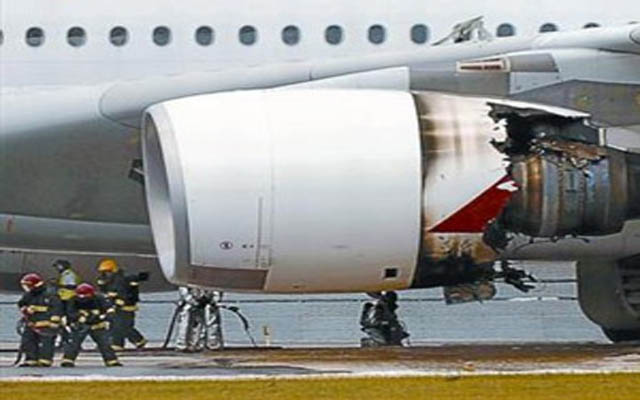
According to a ruling of the Court of Justice of the European Union, technical failures do not exempt airlines from compensating their passengers in case of long delays or cancellations of their flights, with the exception of acts of sabotage or terrorism, since they cannot be considered "extraordinary circumstances".
The EUC thus responds to a reference for a preliminary ruling from the Court of Ámsterdam for the case of a passenger of the airline KLM who suffered a delay of 29 hours on a flight between the Dutch city and Quito, as reported by Europa Press. The airline argued that the “exceptional circumstances” due to the conjunction of two “technical failures” and the delay in receiving parts for repair.
European regulations establish the obligation for the air carrier to provide assistance and pay compensation of between 250 and 600 euros to passengers whose flight is cancelled. However, it is not obliged to pay such compensation if it proves that the cancellation of the trip was due to extraordinary circumstances "extraordinary circumstances" that it could not have avoided even by taking all reasonable measures &ldquot;.
In its judgment, the court warns that the circumstances of the problem can only be qualified as "extraordinary" when they "relate to an event that is not inherent to the normal exercise of the carrier's activity" and "beyond its effective control";escapes its effective control" due to its nature or origin; for example, if a "hidden vice of manufacture that jeopardizes the safety of the flight is detected or if a sabotage or act of terrorism occurs.
Thus, technical problems that are an inevitable consequence of aircraft operation, detected during aircraft maintenance or caused by lack of maintenance, "cannot constitute extraordinary circumstances". Moreover, although a failure due to the premature failure of a part is an unforeseen event, the court notes that "it remains intrinsically linked to the very complex system of operation of the aircraft," where "no part is unalterable.
The prevention of such a breakdown or the repair that it requires, including the replacement of a prematurely defective part, is not beyond the effective control of the carrier concerned, as it is not within the carrier's control;The ruling added that it is up to the air carrier concerned to ensure the maintenance and proper operation of the aircraft it operates for its economic activities.