
90% of business travelers are only able to truly unwind in their hotel room
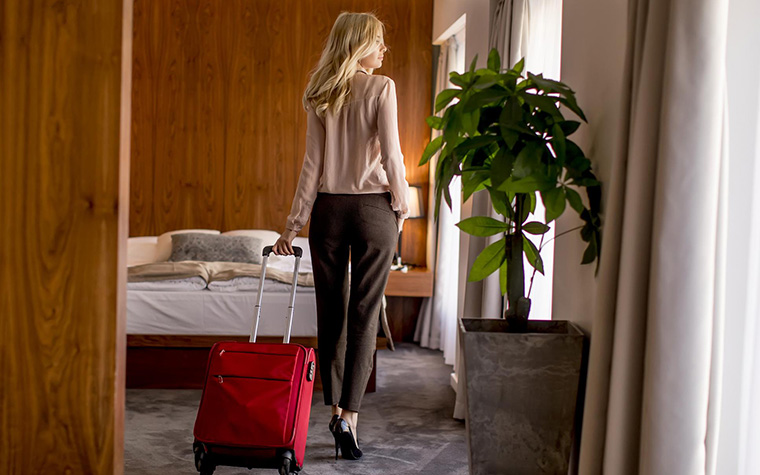
The hotel room has become the business traveler?s primary refuge amid days filled with meetings, travel, and nearly constant connectivity. A Hyatt study of 2,000 corporate travelers reveals that nine out of ten consider it the only space where they can truly disconnect during their business trips.
Business travel may have evolved toward greater flexibility and more personalized experiences, but unplugging from work remains a challenge for many corporate travelers. This is reflected in a study commissioned by Hyatt and conducted by Talker Research, which analyzes the habits and priorities of 2,000 U.S. professionals who travel for work.
According to the study, 90% of respondents identify their hotel room as the primary place where they are able to relax and disconnect during a business trip. This finding highlights the extent to which accommodations have evolved from being merely a place to sleep to becoming a significant part of the overall travel experience.
The study distinguishes between 1,000 business travelers on extended stays and another 1,000 on shorter business trips. The fieldwork was conducted between May 29 and June 11, 2026, in the United States; therefore, the results are limited to the U.S. market.
Much more than just a place to sleep
The need for a space of one?s own takes on special importance after days filled with meetings, business lunches, travel, and professional communications. Compared to hotel common areas or workplaces themselves, the hotel room emerges as the setting where travelers can regain some control over their time.
This quest for privacy is also changing expectations regarding accommodations. For the business traveler, it is no longer enough to have a bed and a desk: factors such as comfort, quiet, the ability to rest, and having separate spaces for work and relaxation are becoming increasingly important.
This phenomenon is particularly significant during extended stays, where the boundaries between lodging, the office, and personal life tend to blur. In these cases, the hotel functions for several days?or even weeks?as a hybrid space where professional and personal needs coexist.
Well-being is gaining ground
The study?s findings are part of a broader trend in business travel: the growing importance of traveler well-being in corporate travel policies and programs.
The travel experience is no longer measured solely in terms of price, location, or operational efficiency. The ability to rest, maintain certain routines, and reduce the stress associated with travel is also beginning to factor into the equation.
This shift directly impacts accommodation decisions. Elements traditionally considered secondary can become relevant factors when choosing a hotel, especially among frequent travelers or those who stay several days at their destination.
Longer stays
The Hyatt study pays special attention to the extended-stay segment, a growing market that presents different needs than those of a one- or two-night business trip.
As the length of stay increases, travelers place greater value on having more space, separate areas, amenities that make daily life easier , and services that allow them to maintain some of their usual home routines.
For companies and travel managers, this transformation introduces new criteria when evaluating hotel offerings. The cost of the room remains a determining factor, but the quality of rest and the employee?s experience during the trip can also have an impact on their well-being, productivity, and satisfaction.
The data thus points to a shift in the role that accommodations play in corporate travel. Beyond providing a place to spend the night, the hotel room is establishing itself as one of the few private spaces in an increasingly connected workday.