
Sustainable tourism plays a crucial role for EU economic growth
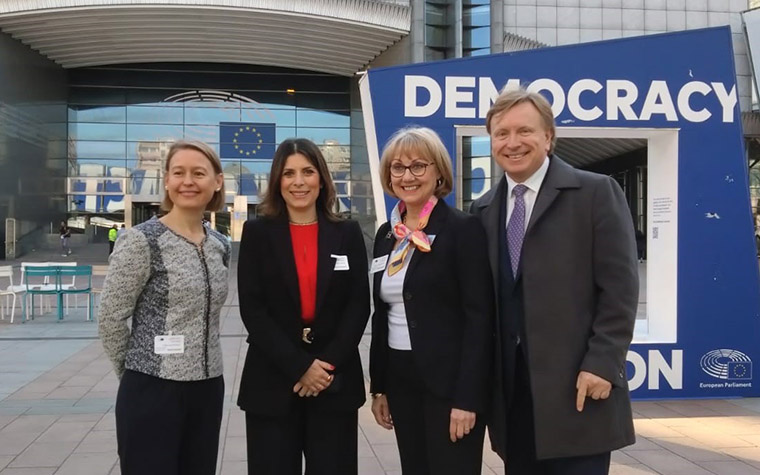
In the EU, the sector's carbon emissions represent 12%, however, it has been identified that this intensity continues to decrease above the global average. During her participation in the European Parliament, Virginia Messina, Senior VP of WTTC, urged for balanced policies that combine economic growth and sustainability. Tourism accounts for 10% of the EU's GDP and employs more than 23 million people.
In the framework of European Parliament activities, the World Travel & Tourism Council (WTTC) highlighted the importance of moving towards more sustainable tourism, through innovative green technologies and policies that support economic development and more environmentally responsible practices.Organized by the Global Business Travel Association (GBTA),,Travalyst and the WTTC,;the event underlined the importance of ensuring that the sector remains competitive while aligning with the EU's decarbonization agenda. In doing so, authorities and industry leaders addressed the challenges and opportunities associated with sustainable travel.
During the roundtable, Virginia Messina, Senior Vice President of the WTTC, pointed out that, according to WTTC figures, tourism represents 10% of the European Union's GDP, contributing 1.5 billion euros annually. It also employs more than 23 million people.
“The EU plays a key role in setting the direction for travel and tourism globally, and we recognize the significant progress made in advancing sustainability across the sector. However, to ensure that policies are effective, proportionate and aligned with global efforts, close collaboration with the private sector is essential.
“At WTTC we are pleased to work hand in hand with the public sector to support a future where sustainability and competitiveness go hand in hand, ensuring that Europe remains a global leader in responsible travel and tourism,", said Virginia Messina.
In this way, the global body reiterates that sustainability is not only an environmental imperative, but also an economic necessity, as it is shaping consumer preferences and investment decisions.
Suzanne Neufang, CEO of the GBTA, commented: “With nearly 400.billion in annual spending, Europe can help move the needle when it comes to mainstreaming sustainable travel choices”.
“EU policymakers can support this effort by working side-by-side with the GBTA and industry to develop common standards. Policies that provide certainty on the deployment of capital for rail, multimodality and sustainable aviation fuel are also critical.
According to the IEnvironmental and Social Research (ESR), developed by WTTC and the Saudi Arabian Ministry of Tourism, the travel sector;travel and tourism accounted for 6.5% of global emissions in 2023, up from a peak of 7.8% in 2019, representing a 10.2% reduction in the sector's greenhouse gas intensity.
In the EU the sector's carbon emissions represent 12%, however, this intensity has been identified as continuing to decrease above the global average.
Another initiative of the global body is the Roadmap Net Zero, which integrates climate action and biodiversity conservation, with the aim of achieving net zero greenhouse gas emissions by 2050.
In addition, the Hotel Sustainability Basics, an initiative that has been adopted by around 6,000 hotels in more than 80 countries, designed especially for SMEs, helps to implement practical measures such as reducing energy consumption by 20%, managing waste and promoting responsible sourcing.
Virginia Messina noted that the sector faces challenges such as regulatory complexity and high transition costs. The lack of green infrastructure, such as charging stations and Sustainable Aviation Fuel (SAF) production, also represents a major obstacle.
Thus, the WTTC urges the EU to ensure proportionate policies, avoiding excessive burdens for companies. It also called for financial incentives to increase production of PBS and impact assessments before implementing new regulations.
It should be noted that the meeting was attended by travel industry leaders such as MEP Nikolina Brnjac (EPP, Croatia), member of the Parliament's Transport Committee and former Croatian Minister of Tourism and Sports; as well as CEOs of firms such as MSC Cruises, Marriott, Expedia, TUI Cruises, among others.