
Spain's tourist municipalities advocate a model more connected to residents
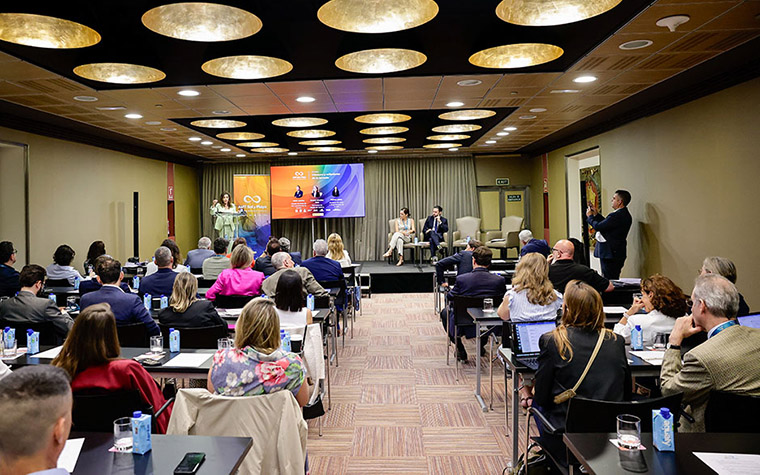
Experts from the tourism sector have analyzed in a meeting in Madrid the structural challenges of the sun and beach model, which currently represents more than 80% of the tourism that Spain receives. The main conclusions include the necessary rehabilitation of destinations and the design of sustainable financing schemes in a model that is more connected with residents.
In this context, the Coastal Tourism Plan 2030, the roadmap promoted by Exceltur and supported by the Alliance of Sun and Beach Tourism Municipalities (AMT), which proposes a new model for coastal destinations based on sustainability, resilience, digitization and greater connection with residents and the environment, has gained special relevance.
This plan was highlighted during the conference as a key initiative to address the social, climate and economic challenges affecting Spanish tourism.
During the conference ‘Challenges and future of sun and beach tourism in Spain’, organized by the AMT, with the support of the Ministry of Industry and Tourism of the Government of SpainñThe event was attended by more than 20 speakers from leading national tourist destinations and representatives of CEHAT, CEOE, Exceltur, FEHM, SEGITTUR, ITH, Sun&Blue Congress, Turespaña, Hosteltur and Spring Hotels Group emphasized the importance of applying tourism intelligence, translating data into decisions, and the transition towards a blue tourism model, conscious and differentiating, which combines the protection of the marine environment with the generation of authentic experiences to keep Spain on the path of competitiveness.
The opening of the conference was attended by the Deputy Minister of Culture, Tourism and Sport of the Community of Madrid, Luis Martín Izquierdo, and the mayor of Lloret de Mar and president of the AMT, Adrià Lamelasand the president of CEHAT, Jorge Marichal, who stressed that “rethinking the current tourism modelístico from an integral perspective, more sustainable, more intelligent and more connected with the territories, working from collaboration, innovation and responsibility”.
Marichal recalled that “sun and beach tourism in Spainña is an important engine that generates one hundred and thirty billion euros a yearño”, and recalledó that the eight municipalities that make up the AMT of Sun and Beach concentrate,moreás 65% of tourist visitsísticas”.
For his part, the founder of Ideas for Change, Javier Creus, opened the round of presentations with a clear message about the future of sun and beach tourism and affirmed that "it cannot be limited to attracting visitors. It must add value, re-evaluating resources, regenerate the territories and be a space of well-being for residents and tourists alike”.
During the morning, representatives of this tourism segment, such as the mayor of Benidorm, Toni Pérez, the mayor of Adeje, José Manuel Rodríguez Fraga, the president of the Tourism Council of the CEOE, Juan Cierco, or the president of the FEHM, Javier Vich, participated in a debate on urban rehabilitation, digital transformation or the role of tourism intelligence moderated by executive vice president of Exceltur, Óscar Perelli.
IA and big data in destination management
During the presentation ‘From data to decision making, tourism intelligence for more competitive and sustainable destinations’ starring the operations director of the data intelligence company Mabrian, Alex Villeyra, who stated that “an intelligent destination is one that knows how to read reality in real time and adapt its strategy with precision. Data must stop being a luxury and become a structural tool.
In the debate ‘Smart destinations, keys to lead the digital transformation’ moderated by the general director of the Instituto Tecnológico Hotelero (ITH), Álvaro Carrillo de Albornoz, participated the mayors of San Bartolomé de Tirajana, Marco Aurelio Pérez, and Lloret de Mar, Adrià Lamelas, where they analyzed the keys to lead the digital transformation of tourism and the opportunities offered by the analysis of large amounts of data and the application of ‘tourism intelligence’ to achieve more competitive and sustainable destinations.Also speaking during this debate was the president of SEGITTUR, Enrique Martínez, who defended digitization as a necessity to offer quality experiences and manage resources.
Blue tourism as a sustainable model
The session ‘Blue tourism, key to sustainable management’moderated by the director of the Climent Guitart Chair of the University of Girona, Ana Garriga, focused on the relationship between tourism and marine and coastal protection.
The mayor of Salou, Pere Granados, pointed out that “the coastline must stop being seen as a mere exploitable beach and start being treated as an ecosystem that needs balance”. The deputy mayor of Tourism, Beach and Coast of Calvià, Elisa Montserrat, stressed that “we have implemented active conservation policies “and it has given us results: the tourist increasingly values a destination that respects its environment”.
For his part, the director of Sun&Blue Congress, Tim Ott, delved into the importance of outlining a common strategy that, based on the active listening of all the agents involved, public institutions, the business community and the scientific community, allows the implementation of solutions to the problems and real needs”.
The conference is part of the actions of the Coastal Plan 2030, an initiative of the AMT that proposes a new model for sun and beach destinations more sustainable, resilient, digitized and prepared for the climatic, social and economic challenges of the next decade. This plan would act as a roadmap for the reinvention of coastal destinations, calling for greater institutional support and adequate resources for its implementation.