
Multicultural negotiation gains importance in the management of travel managers
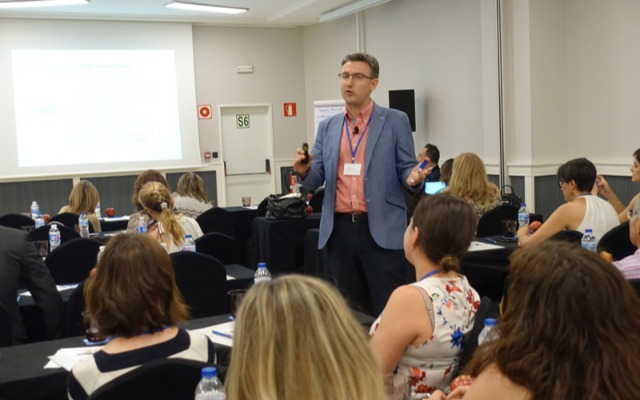
In a globalized world in which large companies spread their departments and business units across several countries with different cultures, travel managers need new skills to carry out their work. As the participants in the June Forum Business Travel sessions concluded, persuasion, leadership and trust speak different languages and need to be understood.
Company travel managers have many open fronts and, with the increasing internationalization of the economy, the imperative need to know in depth the protocols, customs and idiosyncrasies of the countries in which their company operates;The company's business activity will be carried out in the countries in which it operates, the imperative need to know in depth the protocols, customs and idiosyncrasies of those countries. According to the travel managers and experts gathered by Forum Business Travel in its June conference, a more and more cosmopolitan profile is increasingly required, with a high level of negotiating skills.
Based on the assumption that each department has its own personality, it is striking to see how this corresponds to the personality of the employees who make it up. By way of example, according to the so-called DISC model, departments such as Finance or Legal would fall into the category of "Personalities";Conscientious; Human Resources, in the category of Stable; Commercial, in the category of Influential; and Management, in the category of Dominant.
All these departments are involved in one way or another in travel and the travel manager is the figure in charge of coordinating them and finding the points of balance, since the interests of each one do not always coincide, although the objective is common. The job becomes even more complicated when the company's workforce is multicultural.
According to Christopher Wright, co-director of The English Training Company, “culture is like an iceberg: there are practices and behaviors that are visible and obvious, but most of them only manifest themselves in certain circumstances of daily, personal or professional life. Still more hidden are the learned ideas about what is considered good or bad, right or wrong, acceptable or unacceptable. All these factors have to do with religion, history, geographic location or economy, among others.
In negotiations, in addition to the formal aspects, time is perceived very differently in each culture, from the strictest (Switzerland or Germany) to the most flexible (Africa, Middle East, India...) Trust also works differently. In the U.S., for example, trade negotiations focus on the practical side because they rely on their legal system to enforce contracts. However, in many emerging market economies, in Latin America and in parts of Europe, personal relationships are much more important, partly because people don't believe in their systems as much.
The Forum Business Travel conference has counted with the intervention of María Romero, responsible for Protocol and Events at Club de Madrid;Cristina Llanas, head of Employee Services at Banco Sabadell; and José Manuel García Calatayud, travel manager at Mitsubishi Electric Europe.