
Air Europa reduces emissions by 21% and approaches its sustainability targets
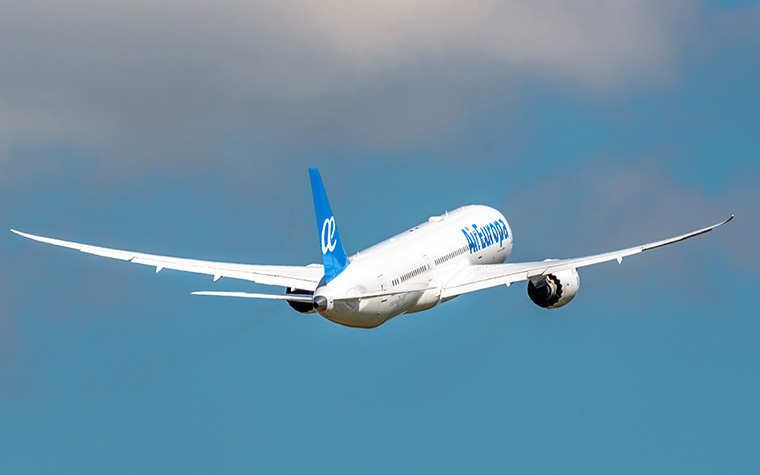
Air Europa is reducing its emissions by more than 21% and accelerating towards its sustainability targets. The airline, which set a 30% emissions reduction target for 2030 in 2015, is relying on three key factors: an efficient fleet, the use of SAF fuel and the implementation of technology. It continues to modernize its fleet, which will be joined this year by the first Boeing 737 MAX, one of the most efficient aircraft in its class.
Air Europa continues to take decisive steps towards achieving its sustainability targets. Data at the close of 2024 confirm that the airline has already reduced its CO2 emissions by more than 21% since 2015, and is approaching the 30% target then set for 2030.
The rapid progress made in decarbonization has been underpinned by three
key elements: fleet modernization, the use of sustainable aviation fuel (SAF) and the use of advanced technological solutions to improve operational efficiency.
The reduction in emissions has accelerated, especially since 2021 and 2022, when the fleet unification process around Boeing aircraft was completed. The 737 short- and medium-haul and 787 Dreamliner long-haul models have been instrumental in reducing fuel consumption.
Because they are larger-capacity aircraft, Air Europa has been able to carry more and more passengers on fewer and fewer flights. Also, the design and technology of the Dreamliner have been decisive, because they allow it to reduce fuel consumption and emissions by up to 25% compared to other models in the same category.
To continue in this line, three new Boeing 787s and the first 737 MAX will be added to the fleet this year. This model will contribute to further reducing emissions and will operate especially on European destinations and, occasionally, on domestic ones.
Although from this year it is mandatory for all EU airports classified as Union Airports to provide airlines with 2 % SAF fuel, Air Europa has already been using it on some of its routes since 2023. This was the case for certain flights between Madrid and Havana and Madrid and Buenos Aires in the last two years.
Sustainability
Since 2024, the OptiClimb application has been used, which provides specific and individual indications for each flight on the optimum climb speed to minimize fuel consumption without compromising the duration of the journey. This year, this solution is expected to help avoid some 10,100 tons of emissions.
On the ground, the aircraft apply the SETO (Single Engine Taxi Out) and SETI (Single Engine Taxi In) protocols, which involve taxiing out and taxiing in using a single engine. On the other hand, thanks to an agreement with Toyota, the fleet of vehicles is being renewed with electric units, taking advantage of the progressive availability of recharging points in the main Spanish airports.
Lastly, in addition to reducing the use of paper on board, a complete renovation of the materials used to present the gastronomic offer has been carried out. The menus are served with recyclable and biodegradable materials, maintaining at all times the quality of presentation and service.
Efficiency and sustainability measures represent a fundamental axis of the company's current Strategic Plan, and are reflected in the Vuelo 2030 project, launched two years ago. It includes more than 40 measures to achieve real sustainability at all levels, from environmental to operational and social.
The progress achieved is shared each year through participation in “The Aviation Challenge”, a challenge convened worldwide by the SkyTeam alliance to try to operate the most sustainable flight possible. In the 2023 edition, the airline won the award for "Lowest CO2 emissions on a short-haul flight" and "Lowest CO2 emissions for ground operations".