
What is the impact of corporate travel on carbon footprint?
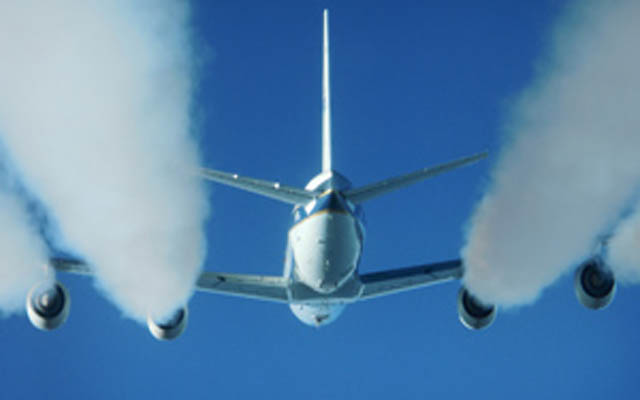
Green is in fashion, the "green" culture is making its way by leaps and bounds, and no wonder. With climate change on our heels and pessimistic forecasts, to say the least, about what the future holds, there is an extreme urgency and an increasingly widespread feeling of a radical change of course, a 180-degree turnaround in consumption policies that help reduce pollution.
?Did you know that half of a company's carbon footprint is caused by business travel?
The expansion of tourism, the growth and consolidation of new emerging markets or globalization in the business travel sector are key factors that significantly influence the carbon footprint.
The incorporation of export strategies for products and services will be key in the process of recovery of our economy, but at the same time will mean an exponential increase in the transport of goods, products and people, with the consequent energy expenditure and increase in global pollution. Every crisis has a positive point of view.
I have long argued that the negative effect of the crisis that Spain is going through, is a clear opportunity for the development of the business travel sector. The need to sell more in order to recover part of the market share lost within our borders will bring with it a logical increase in the volume of business travel. Proper planning and management could help reduce the impact that this growth could have on the carbon footprint.
A simple idea can make a big difference.
I will now offer you a compendium of ideas, organized under a set of three simple rules of application, which, when effectively integrated into our corporate travel management and planning policies, can help us reduce the company's impact on the environment. Measure to know where we are:
The first step before defining the set of measures to reduce the Carbon Footprint within our company, is to know where we are, that is, to know as accurately as possible what is the impact caused by our travel in the environment, in order to establish mechanisms to help measure the success and demonstrate the results of the strategies that we carry out. There are numerous tools that can help us measure the carbon footprint within our travel processes. In addition, they are perfect when it comes to helping us raise awareness among business travelers. Here are some interesting links:
-Iberia: A tool for the calculation of air travel (visit link)
-NH Hotels: A simple tool that allows us to make a calculation per trip and accommodation (visit link)
-GiveO2 APP: An interesting APP (available on iPhone and Android) to perform a real-time cálculo while traveling (visit link)
-Iberdrola: Another interesting tool for a more global cálculo (visit link)
-CeroCO2: The última of the cálculo tools of the Fundación ECODES (visit link)
2. Influence through responsible policies:
Once we know in detail the point where we are, we must implement measures that proactively promote a more sustainable travel model. In this sense, the participation of the travel manager is key, as he/she is the one who can influence future travelers through the elaboration of a manual of good practices, the selection of a catalogue of sustainable suppliers, such as hotels and restaurants, etc. If you have any ideas to start with, what if we do it with a competition game, I suggest that you launch a survey among all the travelers in your company. This way you will get better results. The key is to publicize all possible strategies and make everyone the policies finally selected… ¿Whoán winá the award for the most “green” traveler?
3. Know in depth what we buy:
Information is power and in the subject at hand, of course, too. Knowing our suppliers, their sustainability indexes, the environmental policies they establish, is vital to be able to develop a more sustainable travel procedure. But at the same time, knowing what we do and the needs of our company and those who travel the most can certainly help us in our goal to reduce the impact and carbon footprint within our company.
I propose that you establish within your travel supplier scorecards, a new metric for calculating the suitability and selection within the sourcing and procurement process: the sustainability profile or ratio. Ask yourselves the following questions and in the answer you will get the way: Do we hire the most sustainable suppliers? Do we know how much they influence our carbon footprint? How much does it increase the cost of making travel more sustainable? How can we sell our CSR policy?…
Once we have seen these three simple rules, ?how do we start being green?.
Next I give you some ideas, as simple to apply as useful when establishing mechanisms to reduce CO2 emissions within our company:
Fewer meetings…
One of the key points in the environmental impact within an organization focuses on the management of what we know as MICE. Travel of large groups to attend corporate meetings, commercial events or product presentations. An effective management of the MICE strategy will bring great savings in travel costs, per diems, accommodation, with a corresponding reduction in the impact of the carbon footprint.
More technology
Another key aspect in any environmental impact reduction policy lies in the use of new technologies to help us in the measurement, evaluation and communication processes. Make use of applications that allow us to measure the impact of our trips, in real time, through our smartphones or yablets, make use of IP video conferencing systems to avoid unnecessary travel, etc.
And finally, to finish, I would like us to ask ourselves the following question: "What are we doing and where do we want to get to? We still do not know if we are a wonder of nature, as special as unrepeatable, or the result of a set of universal rules, as simple as replicable. Why do we despise what could be our only support (for the moment known) where we can live? I am referring to our Planet.
The protection of the environment is not only a matter of governments, of global agreements forgotten in the drawer of some office. We are all responsible for the medium and long-term future and together we must work to reduce the impact on pollution and destruction that we ourselves cause to the environment.
Note: This articleículo has relied, among other sources, on comments by Leilani Latimer, co-chair of the CSR Committee of the National Business Travel Association in the US, at the “State of Green Business Forum” event in San Francisco.
Borja Rodríguez Niso
Founding Partner of Velentis
www.borjarodriguez.es
www.velentis.com
.