
What concerns do frequent travelers have about hotel security?
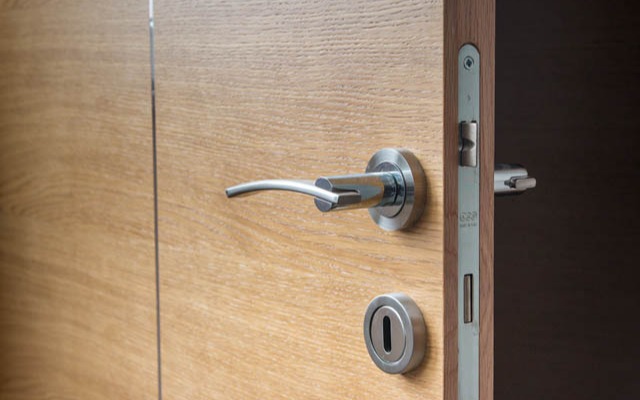
Hotel security is a concern for frequent travelers. According to a CWT study, more than half confess to being worried about intruders breaking into their room or their key ending up in the hands of a stranger by mistake. Spaniards are more fearful of these circumstances than the European average, and are in line with neighboring countries in their fear of eventualities such as a fire or a terrorist attack.
21% of Spanish respondents perceive hotels to be very vulnerable in terms of security, compared to UK (31%), Italian (28%) and German (23%) travelers surveyed, who are even more uneasy in this regard.
Asked about what exactly worries them about their stay in a hotel, more than half of Spanish business travelers (55%) confess to being worried about the possible intrusion of intruders in their room. This percentage is above the European average (46%), and more in line with the survey results among American (48%) and Asia Pacific (55%) travelers.
Other concerns mentioned by Spanish respondents were the possibility of hotel employees mistakenly giving their room keys to strangers (45%) or inconvenience created by other guests (45%). These figures stand out as being well above the European averages of 29 % and 34 % respectively.
The possibility of suffering a terrorist attack (36%) or a fire (27%) also keeps the Spanish business travelers surveyed awake at night, although to a lesser extent and more in line with European data (35% and 30%, in each case).
As would be expected, many of the Spanish respondents (63%) say that keeping their hotel room door locked at all times is a security measure. This precaution is the most widely used by citizens all over the world, even in percentages considerably higher than in Spain. In Europe, 71% of those surveyed are inclined to use this practice. Meanwhile, 75% of American business travelers surveyed and 79% in Asia Pacific also admit to using it.
“Although most hotel rooms already lock automatically, there are a number of solutions on the market that increase security, such as door locks, deadbolts and deadbolt locks;door locks, portable deadbolts and travel door alarms that can help travelers protect their room more effectively, according to David Falter, president of RoomIt by CWT. “Tools
35% of Spanish travelers surveyed remove the key card from the protector in which it is usually handed out so that, in the event of loss or theft, no one can link it to a specific room and hotel.Another widespread trick among Spanish business travelers (33%) is to put the Do Not Disturb sign on the door when they leave the room. The figures show that Spanñoles are quite cautious compared to Europeans as a whole, who only incorporate these measures in 29% and 23%, respectively.
Travelers also believe that the floor on which their room is located can influence their safety. Spanish respondents (18%) prefer higher floors. Only 4% prefer first floors, and 15% say they avoid staying on the first floor.
“Security experts tend to recommend rooms located between the third and sixth floors, because they are difficult for potential burglars but very accessible to firefighters in case of an emergency,”, concluded Falter.
On the other hand, one in four Spanish business travelers would be willing to sacrifice their personal security to earn points or incentives in hotel loyalty programs of which they are members, according to data from a report commissioned by CWT. This statistic (26%) is somewhat lower than the European (34%), U.S. (39%) and Asia Pacific (28%) averages.