
Travel agencies face the future with moderate optimism
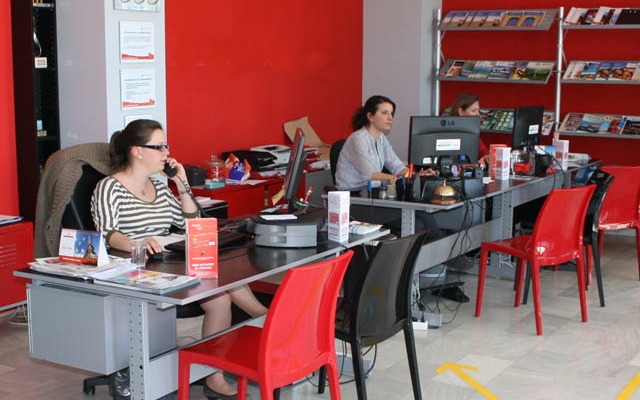
Spanish travel agencies currently live in a reasonably optimistic situation, after having suffered for years the setbacks of a difficult economic situation in our country, according to the Strategic Report of Travel Agencies in Spain;This is the result of the Informe Estratégico de las Agencias de Viajes en España (Strategic Report on Travel Agencies in Spain), carried out by Amadeus España and ACAVE.
According to this research, 56% of participating agencies say their sales have increased over the past year, and two out of three agencies have a positive view of their sales for the year;In addition, two out of three agencies have a positive outlook on their sales for the next five years.
According to this report, 58% of the outlets currently turn over more than one million euros per year.
However, this situation has been preceded by some difficult years, coinciding with the economic crisis, during which the number of travel agencies (from 5,500 to 4,500) and points of sale (from 14.500 in 2009 to 9,500 in 2017.
This process has meant a greater concentration of the sector, although the atomization continues to be the predominant factor. The number of agencies with more than two establishments has risen, and a third of agencies are already present in several autonomous communities.
The authors of the report consider the travel agency sector to be a mature market, where 85% of the companies are more than eight years old, and 13% have been created in the last three years, coinciding with the economic recovery that began in 2014.
STRUCTURE OF THE SECTOR
Between 2009 and 2017 it has doubled the number of agencies operating both as retailers and wholesalers. Currently, only 55% of travel agencies say they work exclusively as a retailer, compared with 80% who did so in 2009.
And regarding the profitabilityof products, the study notes that for 79% of agencies the vacation package is still the most profitable product, although its advantage has fallen by 11 points compared with the 2009 study. Hotel reservations and other types of services (such as booking and management of excursions, tickets to shows or transfers) are gradually gaining presence among the services with the highest economic margin for agencies.
Two out of every three Spanish agencies are dedicated exclusively to the travel emitter. In fact, in eight years the level of specialization has increased, as the number of agencies with dual activity (outbound and inbound) has decreased by 12 points.
52% of the outbound agencies are defined as vacation agencies (meaning that 70% of sales come from leisure products), although the number of travel agencies dedicated to corporate travel has increased, either exclusively or shared with leisure. In global terms, 60 percent of the total sales of the agency sector in Spain currently corresponds to vacation products.
At present, 56.5 percent of agencies are members of an association, 12.5 percent more than in 2009. The majority rate their membership in the association very positively, and particularly highlight the information, legal advice and advocacy services for the sector.
With regard to the expense structure of travel agencies, the report notes that, compared to 2009, personnel expenses remain the same (43%; the most important item of expenditure for the agency) and technology (13%, compared to 12% in 2009). The amount allocated to rents goes down (from 23% in 2009 to 10% in 2017) and the item for other supplies goes up (from 23% in 2009 to 34% today).
ON/OFF LINE SERVICE
A striking fact in the study is that, although most travel agencies report having their own website, only 11% of them do not;
While most travel agencies report having their own website, only 11% of high street travel agencies market their products through both channels (offline-online), 37 points less than in 2009, a year in which there was a boom through this channel.
The reason, according to the conclusions of the study, is the redefining of the value of face-to-face service that travel agencies have made during this time: aware that online competition is especially complex, high street agencies have repositioned direct contact with the customer as their main competitive value.
Although the Internet has lost importance as a sales channel for most of the physical agencies, it continues to be a fundamental factor in their strategy; in fact, 77% of the companies invest in this medium for their promotional action (either in their own informative websites, social networks, search engines, blogs...). At the same time, investment in more traditional promotional channels is decreasing.
The preferred means, in any case, to communicate with customers is still the telephone and e-mail. 75% of the agencies surveyed use chat tools such as Whatsapp, Wechat or Telegram to service their clients. Likewise, 60% of the agencies state that they have a telephone open 24h.
On the other hand, according to the analysis, the percentage dedicated to technology is still low, compared to the importance of this aspect for the business.
The Informe Estratégico de las Agencias de Viajes en España is the second study carried out Amadeus España y ACAVE after the 2009 edition, and is the first analysis of the dimensioning of the sector, following the changes that have taken place in recent years as a result of the crisis. The report has been prepared by the AQR Laboratory of the University of Barcelona.
University of Barcelona.
University of Barcelona.