
The level of use of the AVE is low in Spain, despite being at the forefront of high-speed railways.
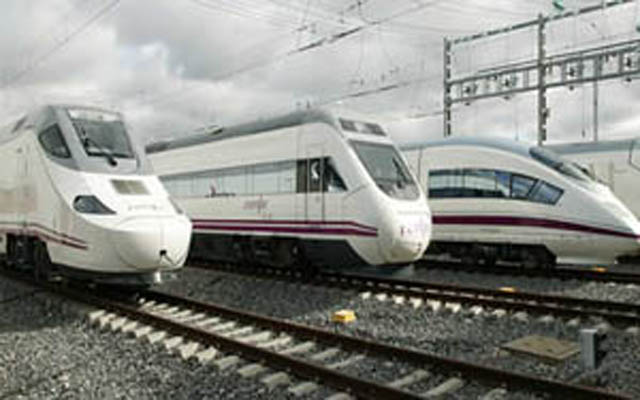
Even though Spain is the world's leading country in terms of the number of kilometers of high-speed rail per capita, it is also the country that uses this infrastructure the least, despite the intense growth in the number of passengers in recent years.
According to a study by Fedea,
Spain has the largest kilometers of high-speed rail network in the world and yet this network is the least used. Specifically, at the close of 2014, our country had54 kilometers of AVE per million inhabitants, although the intensity of its use was about 11,000 travelers per kilometer.
In fact, in terms of its use, our country is at the bottom of the ranking, despite the fact that last year closed with a total of 29 million passengers transported on High Speed trains.
The AVE ranking with the highest intensity of use is led by Japan, with a ratio of 158.12 passengers per kilometer of AVE network. It is followed by France, with 61,394 passengers per kilometer, China (37,950 users) and Italy (27,085 passengers).
China is the country with the most extensive AVE network in terms of absolute length, with a total of 11,067 kilometers, only ahead of Spain, which exceeds 2,500 kilometers. Next are Japan, with 2,087 kilometers of AVE, France (2,036 kilometers), Germany (1,013 kilometers) and Italy (923 kilometers).
AMONG THE CHEAPEST
Spain also ranks as the country with the lowest average construction costs for its high-speed train network, with the lowest average cost of the network;s lowest, with an average of 18 million euros per kilometer, although, according to the Fedea study, “these figures do not usually include investment in stations and expropriations”.
Only China –once again- presents a more economic amount (between 6 and 17 million euros per kilometer), far from the 61 million euros per kilometer in Italy and 53 million per kilometer in Japan.