
The effect of the AVE brings down the average cab fare for business transfers
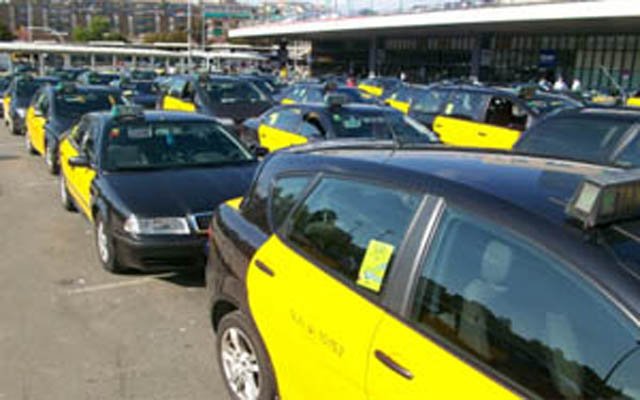
The average cab journey for business travel fell 9% in Madrid and 13% in Barcelona in 2013 compared to the previous year, according to a study published by Taksee. The reason is the strong rise of the AVE compared to the airplane, which has increased transfers to train stations, compared to airports, more distant and, therefore, more expensive.
Taksee, the cab platform for companies, has placed the average profile of the corporate journey in Spain ;a in this means of transport as a displacement of 15 km y 30 minutes de duraci n and a cost of 22 €.
The time of maximum use of this type of service is between 5:00 a.m. and 7:00 a.m., on working Wednesdays and in the month of October. The most requested point of origin and destination for cabs by companies in Spain is Terminal 4 of the Adolfo Suárez Madrid-Barajas Airport.
This is the radiography of the II Taksee Report on the corporate use of cabs in Spain that has just been made based on the analysis of data from the booking platform whose sample would be equivalent to 75 times around the world by cab with the 975.000 km that would add up to an average of more than 65,000 runs analyzed.
The use by companies of the AVE compared to the airplane can lead to significant savings in the cost of the cab. For example, on a round trip Barcelona-Madrid where the traveler uses four cabs for their journeys to and from Sants and Atocha stations, the average cab expense amounts to 84.2€ per trip in 2014.
The clear conclusion established in the study is that the cities to which people travel by AVE offer much lower fares for the business taxi than those to which people travel by plane. This could be a competitive advantage of these AVE cities and, for example, an argument for the meetings and events sector.
In the 90 % of business travel is used at some point the cab. This means of transport is usually the fourth item in terms of turnover of the corporate travel account, ahead of the cost of rent-a-car.
In general terms, spending on cabs represents between 5% and 10% of the travel bill (including hotel spending) or between 7% and 12% if only transportation (air, rail and rental car) is taken into account.
In general terms, spending on cabs represents between 5% and 10% of the travel bill (including hotel spending) or between 7% and 12% if only transportation (air, rail and rental car) is taken into account.