
Summary of the conference in Barcelona on the levers for negotiating with suppliers
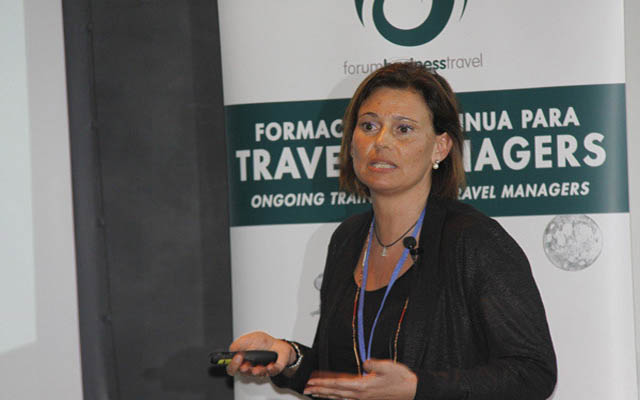
Forum Business Travel has analyzed the negotiation strategies with corporate travel suppliers in its training session held on April 21 in Barcelona. The presentation given by Esther Benavent, category manager of Indirect Services at GB FOODS, emphasized that these relationships must provide value to both parties and should not be focused on the purely economic aspect.
As Benavent explained to the fifty or so travel managers gathered at the NH Collection Barcelona Constanza hotel, the essential thing is to seek a balance between the different internal customers of the company, to create the right expectations, to measure the effort and dedication to the importance of the company;appropriate expectations, size the effort and dedication to the importance of the category being negotiated and define a strategy in the technologies that support the whole process.
To begin with, it is important to define the category of purchases, in this case, all the trips of all the business units, as well as the types of services demanded. The main ones have to do with the transportation (air, train, rent-a-car,..), the accommodation (room, parking, wifi, breakfast, early check in, late check out,… ), but we must also take into account the restauración (lunches, dinners, drinks,…), the transfers (cab, public transport, etc.) or the meeting rooms.
A critical indicator is the one that points out how the value of the purchase is generated and perceived among internal customers, both at management and traveler level. The speaker explained how to define the target value and the levers needed to achieve them.
For travelers it is in the degree of service of the suppliers (wifi, priority boarding, XL seats, paid vouchers, rent-a-car insurance, etc.), the level of service provided by the suppliers (wifi, priority boarding, XL seats, paid vouchers, rent-a-car insurance, etc.), the easiness to book, the possibility to make suggestions of hotels or the flexibility in the menus, among others. For the management, the value in the management lies in the compliance of the travel policy, the optimization of costs and the comfort and safety of the traveler. The company's management particularly values the conciliation of payments, automated processes, reports or electronic invoicing.
As Esther Benavent points out, in the negotiation process it is necessary to gauge the relative importance of the purchasing category within the company's expenditure and to measure the effort and value it contributes.In these times of economic change, do not just focus on the current situation, but on the evolution of the expected expenditure”, note. The ever-changing nature of the products and services on offer makes the task extremely difficult.
PURCHASING STRATEGY
For the purchasing strategy, the paper presented by Forum Business Travel recommends:
Air transport: Ask for information to draw conclusions; identify the routes most in demand by the company; establish real corporate agreements with KPIs that can be evaluated; contemplate the possibility of web fares for less demanded destinations.
Accommodation: Concentrate overnight stays in certain hotels to achieve bargaining power; establish agreements with chains with a strong presence in less frequented destinations.
Rent-a-car: Use only companies with an agreement.
Various: Deal directly with meeting room management; agreements with cab companies in major cities.
VALUE MEASUREMENT
From all the incoming data you have to extract useful information to have a control of the category or to evaluate the services:
KPIs travel program: To know if the marked levers (booking anticipation, SBT use, etc.) are working.
Impact KPIs: Indicate the spending of the category. There are different possibilities for comparison: periods, level of savings, degree of satisfaction, incidents, percentage of refunds and exchanges, etc.
Compliance KPIs: Number of bookings made outside and inside the travel policy, according to the parameterization of the booking tools,
For the speaker, benchmarking can be very useful because you always learn something. The ideal is to do it on companies in the same sector as far as possible so that the benchmarks are comparable.
Electronic Request for Quotes (eRFPs) are very effective, according to the speaker, “as they establish a fair and transparent relationship with suppliers”. The auction system is another option, but Benavent advised against using them for essential products or services, because they entail a risk. In addition, they do not usually contemplate complementary services.
As for collaborative consumption, so fashionable nowadays, the FBT expert indicated that purchasing centers can be unfair to the companies that provide the largest volume. Esther Benavent admitted her preference for trading centers with companies even from other sectors, since the savings are distributed more proportionally.