
Spanish companies are still not mature enough in terms of travel security
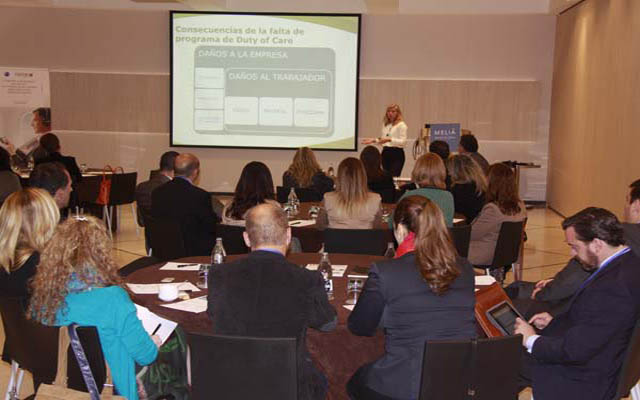
Although the safety of business travelers is an essential chapter, Spanish companies have not yet reached maturity when it comes to establishing protocols for dealing with incidents, as well as training and communication channels for traveling employees. Forum Business Travel has analyzed in Madrid and Barcelona the basic security requirements for business travel.
The need for Spanish companies to enter markets and countries hitherto little exploited is opening their eyes to the importance of reviewing their security policy when traveling. Beyond their natural regions of expansion, such as Latin America, the crisis has thrown them into places with very different security standards than ours. In addition, not all of them know that the law, from the Constitution to the Penal Code, obliges them to inform their employees of the risks they run in certain destinations.
“With increasing internationalization, Spanish companies are becoming aware that their security needs have changed, explained Raquel Gutiérrez, external travel manager for Gas Natural Fenosa and keynote speaker at the conferences organized by Forum Business Travel at the Meliá Galgos hotel in Madrid and the Meliá Sarrià hotel in Barcelona on October 9 and 16, respectively. Many of these companies have established training programs for their employees or improved information and communication systems.
Gutiérrez warns companies about the serious consequences of not having a crisis management program: “ua poorly resolved incident not only affects the traveler on a physical, emotional and material level, but can seriously impact the brand's reputation, spoil a project or an investment and, ultimately, cause serious economic damage”. With well-established protocols, costs are minimized, both in repatriations and in the management and care at destination, something in which companies have to advance.
Forum Business Travel advises to establish a list of destinations with their potential risks, which can be of very different kinds, from natural disasters to terrorist attacks, health alarms or socio-political instability. It also recommends that when an incident occurs, it is important to create a crisis committee, with a person in charge to coordinate the work of the company's departments involved.
As recalled in the session by Óscar García, founding partner of Forum Business Travel, the technologyía is playing a leading role in improving mobility assistance.“applications and geolocation tools, as well as direct communication channels with the head office, with the travel agency or with the service center of the contracted insurance greatly facilitate the management of incidents”, underlineó.
On the other hand, and as pointed out by Javier Ruz, head of Business Travel at Intermundial, it is not only vital to have good coverage from a specialized insurer that covers cases that are not covered by the policies associated with the means of payment:travel safety also requires an accessible, easy and quick response service, starting with a fast and inexpensive telephone number, an operator who speaks our language, and an operator who can speak our language;The first step is to have an operator who speaks our language fluently, who is willing to put himself in the place of the affected person and who is well trained, as well as the necessary information to set in motion all the necessary steps to solve the incident.