
Positive impacts and negative determinants for the recovery of business travel
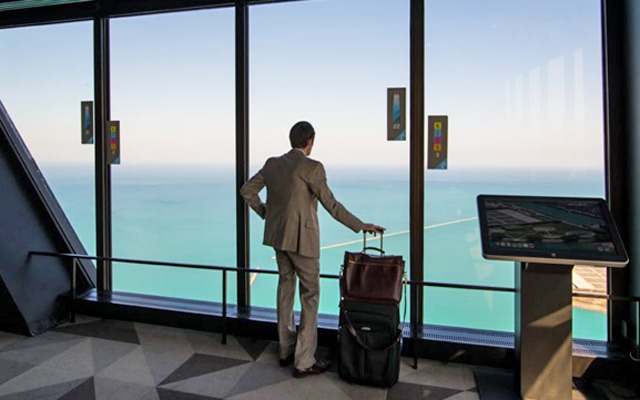
The latest tourism barometer prepared by Braintrust forecasts that the business travel sector will recover with growth rates of over 50% in the next two years, although it will not return to pre-pandemic levels until 2025. It also reveals that travelers are increasingly looking for environmentally friendly travel, so growth will moderate in the coming decades.
Braintrust anticipates that, although business travel will recover abruptly in the coming months, in the wake of the holiday market, its high growth rates of the last few decades will disappear in the face of a more conscious business travel.
As such, it reveals that this year will reach 52% of 2019 volume, with a significant upturn in 2022 and 2023 to reach 83%, to subsequently rise to pre-covid levels in the following two years, i.e., around 2025.
For thefutureit will continue to grow at much more moderate levels, given the strength of thesustainability that will characterize the entire tourism industry, as long as the evolution of the pandemic goes as planned.
Among the positive impacts, the consultancy highlights:
-Progress of mass vaccination in major Western business travel issuing countries and implementation of the digital green certificate in Europe.
-Increased number of trips in an evolved and globalized economy, where collaboration between large and small companies, as well as the self-employed, will be greater.
-New reasons for travel, such as meetings that will bring together remote workers more regularly, or strategic events that will bring together a smaller number of people much more frequently.
-Common policies in the European Union and global alliances that favor the exchange of people in international projects.
-Increased activity in the ‘bleisure’ segment, given the rise of new generations of travelers who combine work with leisure.
-New economies that will emerge in the heat of a new society, such as the green economy, the digital economy and the circular economy.
Among the negative constraints are:
-A scenario of volatility and health insecurity that will continue to affect long-haul travel, in countries still without group immunity, impacting significantly on total market volume in 2022 and 2023.
-Potential emergence of new variants of the coronavirus, which would slow down recovery in regions of the planet, if vaccines do not cover their performance.
-The increase in teleworking, which will remain for good, and whose influence will significantly reduce proximity travel.
-The use of digital tools, which have accelerated a hybrid face-to-face communication format, eliminating some non-essential travel, especially internal meetings to nearby destinations.
-The disappearance of a business fabric damaged by the crisis once public aid ends, especially SMEs and self-employed people, a large part of the travelers in these times of pandemic.
-The arrival of a new generation of travelers with work life balance in their DNA, where millennials and Z’s are the majority, and where baby boomers, more accustomed to traveling for work, are retiring from the work scene.
-The Sustainable Development Goals included in the 2030 agenda, fueled by all government policies, which will favor the culture of more respectful companies and more responsible travelers, with more restrictive policies, whose effect will be very relevant in travel in the coming years.