
Outsourcing in corporate travel will be a common practice in the coming years.
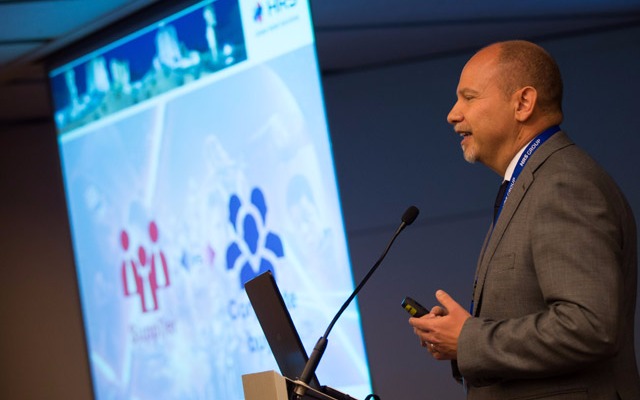
According to experts' forecasts, by 2025, outsourcing or externalization of hotel contracting for business travel will have become a common practice to obtain significant savings. This is one of the trends unveiled at the HRS Innovation Event, held at La Pedrera in Barcelona on May 4.
The meeting, organized by hotel solutions provider HRS, brought together leading business travel professionals to address the challenges facing the industry in the coming years.
As noted by Flavio Ghiringhelli, vice president of Corporate Solutions Eastern and Southwest Europe at HRS and member of the GBTA European Advisory Board, by 2015, “outsourcing in corporate travel will translate into savings of 20 to 35%, provided that the demand for chain and independent hotels is combined in the travel policy of companies”.
Ghiringhelli explained that the savings potential offered by hotel spend is significantly higher than air spend, which is estimated at 7 to 9 % by 2025, depending on discounts negotiated with airlines.
The current hotel market is characterized by a high degree of fragmentation. Of a global supply of approximately 450,000 hotels, around 340,000 are independent accommodations, i.e., not integrated into hotel chains. The HRS executive maintains that hotel chains will be the ones to lead the increase in rates over the next few years.
MACROTENDENCIES
The expert stressed that companies with an international presence must be prepared for further disruptions that may arise, given geopolitical uncertainty and financial market instability. Nevertheless, Ghiringhelli predicts, in line with Euromonitor's forecast, that global economic output will increase by 5% in 2017.
At the level of regions,Asia-Pacific will remain at the forefront of the fastest-growing geographic areas, with an expected 40% of global production. Meanwhile, the pharmaceutical industry will accelerate, driven by innovation. Meanwhile, primary products (metals, fertilizers and oil) will experience the strongest global growth.
Ricard Santomà, dean of the Faculty of Tourism and Hotel Management Sant Ignasi, Ramón Llull University, highlighted the role played by the consumer today, without forgetting the new digital buyer: “Technological advances, including the massive penetration of smartphones, are altering the way consumers browse and buy all kinds of products and services”.
Throughout the day, other topics of importance for the management of corporate travel were also addressed, in particular, the Intelligent Sourcing. This tool searches for suitable accommodations at the most advantageous price for companies. With its implementation, significant savings are achieved through the optimization of rates, alternative hotels and related sales volumes.
It is estimated that the share of hotel types in corporate programs is 27% independent hotels and 73% hotel chains. The Intelligent Sourcing solution helps address challenges in cost (regrouped booking volumes, rate optimization and alternative similar hotels); content provider (taking the entire market into consideration); and process (in high overhead costs due to the need for local expertise).
Isabel Torra, general manager for Spain and Portugal at HRS, opened and closed the first edition of the HRS Innovation Event: "Today we have gathered in Barcelona not to sell any product, but to share knowledge among the various actors that cooperate in the Business Travel business," she said.
HRS Innovation Event will also feature travel managers of long experience, such as Antonello Simoncini (Ricoh), Jos Jos (Ricoh), Jos Antonio Castellano (Viajes El Corte Inglés), Javier Pardo (NH Hoteles) or Raúl Sánchez (American Express).