
One third of Spanish drivers do not check the car for professional use
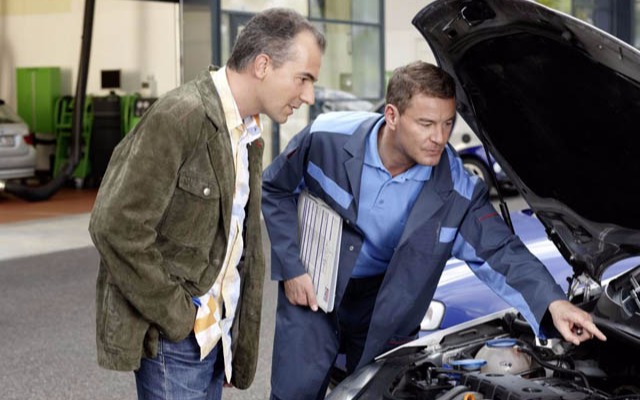
Many business travelers who drive their own cars for work, the so-called "gray fleet," do not always perform basic safety checks on their vehicles, according to a study by Enterprise Rent-A-Car in Europe. In addition, only half schedule a break every two hours, as is recommended.
One of the main conclusions gathered in this study shows that one in three drivers of the “grey” (the 33%) in Spain does not perform any regular maintenance checks on their cars.
When asked why they do not do so, 37% responded that they “wait for the car to tell them if something is wrong" and 35% alluded that "that's what the official services and the ITV" are for.
About the tasks to perform before a trip, more than half (54%) have never checked thebrake pads, 43% have not checked whether thefog lampsare working and 45% have not checked thetire tread. Nearly a third (29%) admit they have never opened the hood of the car.
“It is very likely that companies are simply unaware of some of the consequences to the company if the driver is involved in an accident due to lack of car maintenance,”, says Rob Ingram, director of business rental in Europe at Enterprise Rent-A-Car.
The company
recommends companies to “provide employees withother travel options when planning a trip, such as company fleet cars or rental vehicles, or even advise them on the availability of public transportation”.
The study also revealed that many drivers of the “gray fleet” in Spain” are unsure whether the car they use for work contains basic safety equipment. For example, more than half of gray fleet drivers (69%) do not know if they have a compressor or pump to inflate tires, and even 61% do not currently know if their car has a serviceable spare tire. Likewise, 20% do not know if their car has a reflective vest, even though these and other safety tools are mandatory in many European countries.
The survey also looks at how drivers behave when they are preparing for a trip of more than 150 km. According to the data extracted, 40% do not check whether they have enough fuel and 76% do not plan alternative routes in case there is a problem on the road.
Also, only half of drivers plan breaksat least every two hours, despite road safety organizations agreeing that regular breaks on long journeys are vital to maintaining driver focus and concentration.
Ingram suggests that “companies might even consider contributing to the cost of this equipment, as employees can be stopped and ticketed on the road. This is certainly an area that can be addressed by the companies themselves through a travel policy
.