
Mobile as a tool for the business traveler encounters security issues
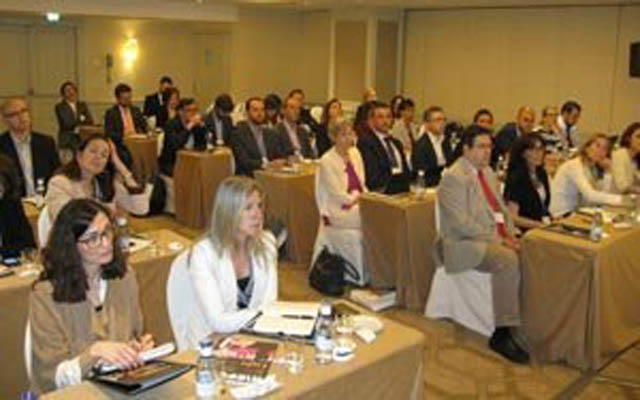
Mobile devices are ready to carry out all kinds of travel arrangements, from reservations to payments at the destination, but many companies limit the functions of the terminals they give to their employees to avoid security problems due to theft and misplacement. Forum Business Travel has analyzed the technological trends with fifty representatives of corporate travel agencies.
Connectivity and mobility. Business travelers want all the gadgets. The mobile phone does not replace the computer or tablet. They all coexist. But companies are more cautious. The terminals that they give to their employees when they travel for work purposes usually have limitations, even though their use is being imposed in making reservations or, more incipiently, making payments.
“There are business travelers who move around with their personal mobile, but when it is a device provided by the company there are many applications that they are prohibited from installing. In case of theft or loss, there can be serious damage if access to the intranet is enabled through the terminal or transactions are allowed," explains Agustín Casado, one of the experts of Forum Business Travel (FBT) who have spoken at the conference on technology applied to business travel.
Among the management that are gaining momentum are relatively new and useful services for the business traveler, such as Mytaxi or Cabify, oriented towards urban transfers, with the possibility of settling the bill from the same mobile phone. Other applications manage expenses such as parking, gasoline, restaurants or hotels by the hour. They are even integrated with self-booking tools, whose desktop versions are widely used in business travel.
In this sense, mobile phones are also becoming essential not only to control employee expenses, but also to keep track of them at all times, communicate with them in case of need and have a complete traceability of the trip in case of incidents;
They are the most important tools for the management of the company's employees, and they are also the most important ones for the company's employees.
According to the latest Observatory of Technology and Innovation applied to Business Travel published by FBT, 86.2% of Spanish travel managers carry out a control and monitoring of travel expenses. As Travel Management expert Verónica Ocaña points out,“we are moving from big data to smart data, that is, to the analysis of really relevant data for the most effective management of business travel”.
Another trend that may become prevalent in business travel is the use of wallet cards so that the employee does not have to advance money when making expenses at the destination. The companies that provide them usually limit the payments to certain services, at certain times or with established limits of amount.
Whether cards, mobile phones or laptops, Fernando Puelles, head of Business Travel at Amadeus Spain, believes that the implementation of travel-oriented technology in companies involves defining concrete and realistic objectives, defining the best way to achieve them, and setting up the best possible solution;defining concrete and realistic objectives, involving top management, choosing employees to act as ambassadors for the new tools, focusing on those who travel the most, and dedicating time to training, without forgoing incentives.