
MICE Forum Calls on Political Parties to Take Measures to Boost the Sector's Competitiveness
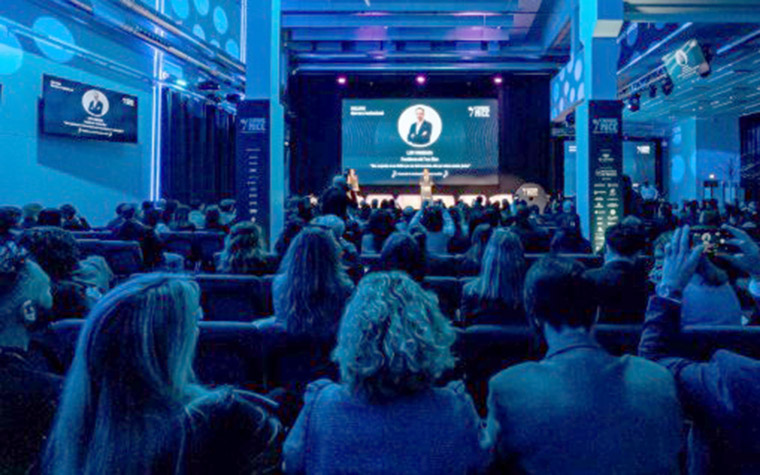
Foro MICE has released a document outlining proposals for political parties aimed at boosting the competitiveness and growth of the meetings and events industry in Spain. The trade association is calling for a regulatory, labor, and economic framework tailored to the sector?s specific characteristics, as well as greater institutional recognition of its contribution to job creation, investment, and the country?s international profile.
The initiative addresses the main demands of the MICE industry in areas such as employment, public procurement, taxation, training, sustainability, mobility, and internationalization, with the goal of incorporating the sector?s needs into the national political and economic agenda.
?The MICE industry is not asking for privileges or special treatment. It is asking for a regulatory, labor, and economic framework that recognizes its unique operational characteristics, facilitates its competitiveness, and allows companies to continue generating jobs, investment, and wealth for Spain,? notes Luis Gandiaga, president of Foro MICE.
Among the employers? association?s priorities is adapting the labor framework to the seasonal nature of the industry and the nature of its projects. In this regard, it proposes simplifying the management of periods of inactivity for permanent seasonal workers and establishing an automatic mechanism for financial compensation in public-sector contracts in response to mandatory increases in the minimum wage (SMI) or other labor costs.in response to mandatory increases in the minimum wage (SMI) or other labor costs.
It also calls for subsidies and tax credits for hiring young people in their first job, the long-term unemployed, and individuals over 45 who face difficulties re-entering the labor market.
Revision of Public Procurement and Tax Incentives
Foro MICE advocates for a public procurement model that prioritizes quality, experience, technical competence, innovation, and sustainability take precedence over purely economic criteria.
The organization also calls for simplifying bidding procedures, shortening decision-making timelines, and facilitating advance payments and payment guarantees, which are especially important for small and medium-sized enterprises (SMEs), which must cover significant expenses before events take place.
Another demand is the division of public contracts into lots related to institutionally sponsored events, trade shows, and conferences, in order to encourage the participation of small and medium-sized enterprises and prevent the concentration of contracting among a small number of operators.
In terms of taxation, the employers? association proposes exploring incentives for companies that invest in conferences, conventions, trade shows, and corporate experiences, as well as for those that allocate resources to digitization, technology, and the sustainable production of events.
The document also proposes the development of specialized training programs, in collaboration with companies, universities, and industry associations, and the creation offunding lines to facilitate the incorporation of artificial intelligence, the reduction of the carbon footprint, the circular economy, and the reuse of materials.
Mobility and Internationalization
Improving mobility and connectivity in destinations is another key area of focus. Foro MICE calls for greater regulatory flexibility to operate shuttle services and on-demand routes linked to events, as well as to guarantee access to low-emission zones (LEZs) and Bus-VAO lanes.
It also calls for the provision of boarding, drop-off, and parking areas for tour buses in the immediate vicinity of convention centers, exhibition halls, hotels, and other event venues.
Among the environmental measures, it proposes revising the vehicle labeling system to take into account vehicle occupancy and emissions per passenger transported, incentivizing public transportation, and promoting fleet renewal.
Furthermore, the trade association advocates for a national plan for the internationalization of the MICE industry that facilitates Spanish companies? access to new markets and helps attract major professional and corporate events.
Greater institutional recognition
As a cross-cutting demand, Foro MICE calls for the recognition of the meetings and events industry as a strategic economic sector, with ongoing dialogue with the government and greater participation in economic and tourism decision-making bodies.
The organization considers it necessary to develop specific statistics that allow for quantifying the sector?s contribution to GDP, as well as incorporating MICE activity into national strategies for competitiveness and economic development.
Foro MICE brings together 18 national business and professional associations representing more than 5,000 companies, with a total revenue exceeding 10 billion euros, according to data provided by the association itself.